Zelmarek Quntrivo Trading Platform Alternatives 2026
A data-led guide to Zelmarek Quntrivo alternatives in 2026: compare regulated brokers, markets, platforms, costs, and safer migration steps for US/EU traders.

A data-led guide to Zelmarek Quntrivo alternatives in 2026: compare regulated brokers, markets, platforms, costs, and safer migration steps for US/EU traders.
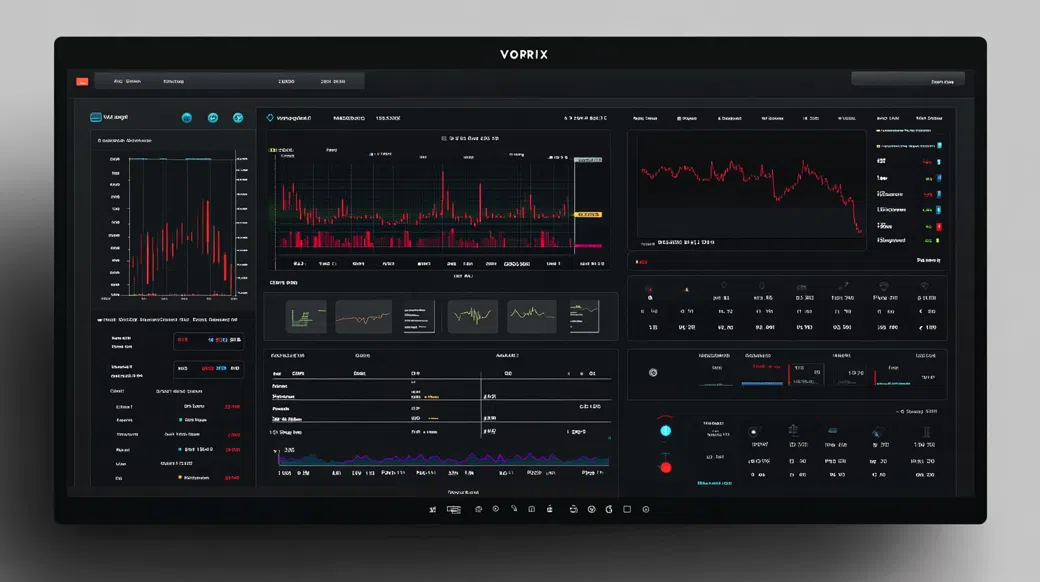
Leverage changes outcomes fast—sometimes faster than your risk controls. That’s the lens I use when readers ask about offshore CFD venues such as Zelmarek Quntrivo. Public-facing information typically places it in the “Forex/CFD-first” bucket: a proprietary WebTrader, mobile apps, and the familiar menu of FX pairs, indices, commodities, and crypto CFDs. The trade-off is usually the same: high headline leverage (often up to 1:500) paired with a lighter regulatory framework—commonly an offshore registration such as Seychelles FSA—where investor-protection layers can differ materially from FCA/ASIC/CySEC regimes.
For many active traders, the question is less about features and more about process integrity: execution model transparency, withdrawal friction, and whether client funds are segregated with meaningful oversight. Costs also add up. A “from 2.0 pips” EUR/USD spread may look tolerable until you convert it into monthly round-turn cost at your typical volume. This article maps practical Zelmarek Quntrivo alternatives for 2026—regulated brokers and platforms that tend to disclose more about execution, offer broader market access (including real stocks/ETFs in some cases), and provide clearer recourse mechanisms if disputes arise.
Disclaimer: This article is for informational purposes only and does not constitute investment advice. CFDs and other leveraged products carry a high risk of loss and may not be suitable for all investors.
From a market-structure perspective, Zelmarek Quntrivo looks like a typical offshore CFD broker: focused on FX and contracts for difference rather than a full multi-asset custody model. In that setup, you generally trade price exposure (CFDs) instead of owning the underlying shares or holding exchange-traded positions in your name. Access is commonly offered to non-US clients, while the USA is usually restricted. The product set often centers on ~30–50 FX pairs, a compact list of indices and commodities, and a smaller roster of crypto CFDs, aimed at retail traders who value simple onboarding and higher leverage more than deep venue transparency.
The platform stack is typically a proprietary WebTrader with basic-to-mid charting, plus iOS/Android apps designed for position monitoring and quick order entry. Expect the essentials: multiple timeframes, a standard indicator list, drawing tools, and a watchlist-driven workflow. Order tickets usually cover market and pending orders, with SL/TP fields prominent; advanced order types (like exchange-style algo orders) are less common in platforms like Zelmarek Quntrivo. Mobile parity is usually decent for chart review and trade management, but power users often miss granular execution reporting (fill quality, partial fills, slippage breakdown) that some regulated venues publish or make easier to audit.
Pricing for offshore CFD providers often comes in two layers: a “Standard” account with spread-only pricing and an “ECN/Raw-style” tier combining tighter spreads with commission. For comparison, EUR/USD on a Standard-style account is commonly presented around from ~2.0 pips. If a raw tier exists, the spread may compress toward ~0.0–0.4 pips, with a commission typically in the neighborhood of $6–$8 round-turn. Swap/overnight financing matters for multi-day holds, and non-trading fees (withdrawal or inactivity) can be the hidden variable. This cost profile is consistent with what you see across competitors to Zelmarek Quntrivo operating under offshore frameworks.
Switching tends to happen after a friction event rather than a single bad trade. For offshore CFD venues, the pressure points are predictable: uncertainty about regulatory recourse, inconsistent execution during volatility, and cost leakage (spread + swaps) that becomes obvious once you measure it over a month. Traders searching for Zelmarek Quntrivo alternatives are often trying to align their platform choice with their strategy—scalping needs different infrastructure than swing trading, and long-only investing needs custody and corporate-action support that CFD stacks don’t prioritize.
Think of broker selection as matching your strategy to a risk budget. Regulation is one pillar, but not the only one: the execution model, fee geometry, and platform tooling decide whether your edge survives contact with the market. For traders evaluating alternatives to the Zelmarek Quntrivo trading platform, I’d separate “must-haves” (jurisdiction, instruments, platform) from “optimizers” (spreads, rebates, add-on tools) before opening an account.
Start with the regulator’s public register: FCA (UK), ASIC (Australia), CySEC (Cyprus), and NFA/CFTC (US, where applicable). These regimes typically enforce segregated client funds and standardized disclosures. In the UK, FSCS coverage can protect eligible clients up to £85,000 if a firm fails; under CySEC, the ICF can cover eligible clients up to €20,000. That safety net is not a performance guarantee, but it changes the worst-case outcome envelope versus offshore setups.
Write down what you actually trade. FX and index CFDs are widely available, but real stocks/ETFs, options, and futures require different infrastructure—often a multi-asset broker with exchange connectivity (DMA) and custody. If your plan includes dividend collection, corporate actions, or longer holding periods, CFDs are structurally mismatched. For “platforms like Zelmarek Quntrivo” that concentrate on CFDs, the instrument menu can be adequate for tactical trading but thin for portfolio building.
Compare round-turn cost: spread + commission + expected slippage, then add swap/overnight fees if you hold beyond a session. For example, 2.0 pips on EUR/USD is 20 “pipettes” of friction before you even discuss volatility. In contrast, a raw account at a regulated FX specialist might price at ~0.0–0.3 pips plus commission—often cheaper for frequent traders. Also scan for inactivity charges and withdrawal fees; those are disproportionately painful for lower-frequency accounts.
Platform is not UI; it’s workflow and auditability. MT4/MT5 and cTrader matter for algorithmic trading, advanced order management, and third-party analytics. Proprietary platforms can be fine, but you want clarity on execution model (market maker vs STP/ECN/DMA), and what happens during news spikes—requotes, slippage tolerance, and margin-call sequencing. If you are leaving Zelmarek Quntrivo, insist on seeing how your new venue documents fills and handles negative balance protection (where offered).
Operational quality shows up in support: response time, clear escalation paths, and multilingual coverage (relevant across EU time zones). Education is useful only when it’s specific—margin mechanics, swap calculation, risk controls—not motivational content. Finally, mobile parity matters if you manage risk on the move: alerts, margin snapshots, and fast position edits are practical features, not luxuries, when leverage is involved.
FX/CFD is where Zelmarek Quntrivo is most likely concentrated: a mid-size list of currency pairs (often ~30–50), indices, and a handful of commodities. The differentiator in 2026 is less the instrument count and more the microstructure you experience—spread stability, slippage under load, and margin policy during volatility. With a typical EUR/USD spread presented around ~2.0 pips on a standard tier and leverage that can reach 1:500, the platform suits short-term speculation, but the cost-of-trade can be punitive for high turnover. Regulated FX specialists like Pepperstone and IC Markets are frequently chosen as regulated options vs Zelmarek Quntrivo because they tend to offer raw pricing structures (spread + commission) and platform stacks (MT4/MT5/cTrader) that cater to systematic traders. The practical test: run the same strategy at small size and measure realized spread + slippage, not just the quote.
Stock/ETF access is often where offshore CFD brokers show their limits. Even when “shares” appear on the menu, the exposure is commonly via CFDs—no shareholder voting, no direct custody, and dividends handled as cash adjustments rather than corporate-action workflows. Traders who want long-horizon holdings or to route orders to exchanges should look at top substitutes for Zelmarek Quntrivo that provide real equity and ETF trading. Interactive Brokers (IBKR) is hard to beat for breadth: stocks, ETFs, options, futures, FX, and bonds under a market-access model built for transparency. Saxo Bank is another strong fit for EU-based investors who want multi-asset coverage with a refined platform stack. If your objective is “invest and occasionally hedge,” these venues change the toolkit—especially around reporting, tax documents, and corporate actions.
Crypto on offshore CFD platforms is typically crypto CFDs—price exposure without on-chain ownership. That can be adequate for tactical hedging or short-term directional trades, but it doesn’t solve use cases like withdrawals to a wallet, staking, or long-term custody in your name. If you want crypto exposure inside a regulated derivatives wrapper, brokers similar to Zelmarek Quntrivo on the CFD side—such as IG—often provide crypto CFDs where permitted, alongside indices and FX in the same margin account. For multi-asset investors, Saxo Bank can be relevant depending on jurisdiction and product availability, because it’s built around broader market access rather than a crypto-first offering. Whichever route you choose, treat crypto CFDs as leveraged derivatives: overnight fees, weekend gaps, and rapid margin changes can dominate outcomes.
Regulation: SEC/FINRA (US), FCA (UK), IIROC (Canada) (entity depends on your region)
Markets: Stocks, ETFs, options, futures, FX, bonds; CFDs in some jurisdictions
Fees: FX spreads often competitive (variable); commissions apply on many products (tiered or fixed depending on region/product)
Platform: Trader Workstation (TWS), IBKR Mobile, Client Portal; API access
Best For: Multi-asset traders who need global market access and advanced routing
Regulation: FCA, ASIC, CySEC, DFSA (entity depends on your region)
Markets: FX and CFDs (indices, commodities, some shares/crypto CFDs depending on jurisdiction)
Fees: EUR/USD from ~1.0–1.2 pips on Standard; from ~0.0–0.3 pips + commission on Razor/Raw-style accounts
Platform: MT4, MT5, cTrader, TradingView (availability varies by entity)
Best For: Algorithmic and scalping setups built around MT4/MT5/cTrader
Regulation: FCA, MAS, DFSA (entity depends on your region)
Markets: Stocks, ETFs, bonds, FX, options, futures, CFDs
Fees: Pricing varies by tier and product; FX spreads typically competitive for larger accounts; commissions apply on exchange-traded instruments
Platform: SaxoTraderGO, SaxoTraderPRO
Best For: Portfolio builders who also trade derivatives from one account
Regulation: ASIC, CySEC, FSA Seychelles (entity depends on your region)
Markets: FX and CFDs (indices, commodities, some crypto CFDs depending on jurisdiction)
Fees: EUR/USD from ~1.0 pip on Standard; from ~0.0–0.3 pips + commission on Raw/ECN-style accounts
Platform: MT4, MT5, cTrader
Best For: High-frequency discretionary traders focused on tight pricing
Regulation: FCA, ASIC, BaFin (entity depends on your region)
Markets: CFDs (FX, indices, commodities, shares/treasuries in CFD form depending on region)
Fees: Costs typically spread-based for many products; FX spreads can be competitive on major pairs (variable by market conditions)
Platform: Next Generation platform; MT4 (availability varies by region)
Best For: Chart-centric traders who want strong in-platform research and tooling
Regulation: FCA, CySEC, ASIC, MAS (entity depends on your region)
Markets: CFDs (FX, indices, commodities, shares CFDs, crypto CFDs where permitted)
Fees: Primarily spread-based pricing; overnight funding applies for held positions
Platform: Plus500 WebTrader and mobile app
Best For: Simplicity-first CFD trading with a streamlined interface
| Platform | Regulation | Main Markets | Typical Costs | Best For |
|---|---|---|---|---|
| Interactive Brokers (IBKR) | SEC/FINRA, FCA, IIROC | Stocks/ETFs, options, futures, FX, bonds | Variable spreads/commissions by product; generally sharp at scale | Multi-asset traders who need global market access and advanced routing |
| Pepperstone | FCA, ASIC, CySEC, DFSA | FX + CFDs | ~1.0–1.2 pips (Standard) or ~0.0–0.3 + commission (Raw) | Algorithmic and scalping setups built around MT4/MT5/cTrader |
| Saxo Bank | FCA, MAS, DFSA | Stocks/ETFs, options/futures, FX, CFDs, bonds | Tiered pricing; commissions on exchanges; FX pricing improves with size | Portfolio builders who also trade derivatives from one account |
| IC Markets | ASIC, CySEC, FSA Seychelles | FX + CFDs | ~1.0 pip (Standard) or ~0.0–0.3 + commission (Raw) | High-frequency discretionary traders focused on tight pricing |
| CMC Markets | FCA, ASIC, BaFin | CFDs across FX/indices/commodities/shares (CFD form) | Mostly spread-based; variable by product/market conditions | Chart-centric traders who want strong in-platform research and tooling |
| Plus500 | FCA, CySEC, ASIC, MAS | CFDs across major asset classes | Spread-based; overnight funding for multi-day holds | Simplicity-first CFD trading with a streamlined interface |
Operationally, a broker switch is a sequence problem: identity verification, cash movement, and strategy continuity. Treat it like risk management, not housekeeping. The goal is to avoid being “flat” unintentionally, stuck mid-withdrawal, or forced into rushed trades because margin rules differ. And remember: leverage magnifies execution errors as efficiently as it magnifies returns.
If you’re still evaluating the platform, review onboarding requirements, regional eligibility, and trading conditions side by side with the regulated options above. A short test—demo plus a small live deposit—often reveals more about execution and usability than any feature list.
Visit Zelmarek QuntrivoThe best choice depends on whether you prioritize multi-asset access or low-cost FX/CFD execution. For broad, real-market coverage (stocks/ETFs/options/futures), Interactive Brokers and Saxo Bank are strong best Zelmarek Quntrivo alternatives 2026 candidates. For MT4/MT5/cTrader-driven FX strategies, Pepperstone or IC Markets are commonly selected among Zelmarek Quntrivo alternatives because their pricing models and platform ecosystems suit systematic trading.
Zelmarek Quntrivo appears to operate under an offshore framework (commonly associated with Seychelles FSA in this broker segment), which can mean fewer investor-protection layers than FCA/ASIC/CySEC regimes. That doesn’t automatically imply wrongdoing, but it does change your recourse options, transparency standards, and compensation scheme coverage. If safety is your primary constraint, regulated platforms like the Zelmarek Quntrivo trading platform alternatives 2026 listed above generally provide clearer oversight and complaint channels.
Zelmarek Quntrivo is typically positioned around FX and CFDs, with crypto exposure commonly offered as crypto CFDs rather than on-chain ownership. Real stocks/ETFs and exchange-traded futures are often not the core proposition in platforms like this; if “stocks” exist, they’re frequently CFDs. If you need exchange-traded stocks or futures, consider Zelmarek Quntrivo alternatives such as Interactive Brokers or Saxo Bank that are built for those markets.
Before switching, verify the new broker’s regulated entity on the official register, then compare margin rules, negative balance protection (if offered), and the execution model (market maker vs STP/ECN/DMA) against your strategy. Next, quantify costs using spread + commission + swaps; that’s where two brokers that “look similar” diverge in real life. Finally, export your history from Zelmarek Quntrivo and complete KYC at the new venue first to reduce operational risk during withdrawals.
About the Author: Elena Marchetti is a Milan-based fintech analyst covering European trading platforms, broker infrastructure, and market microstructure. Her work focuses on execution quality, fee mechanics, and how platform ecosystems shape real-world outcomes for retail and semi-professional traders.