Wealthsimple Capital Trading Platform Alternatives 2026
Compare Wealthsimple Capital alternatives for 2026 with a US/EU focus. Review regulated brokers, fees, platforms, execution quality, and migration steps.

Compare Wealthsimple Capital alternatives for 2026 with a US/EU focus. Review regulated brokers, fees, platforms, execution quality, and migration steps.
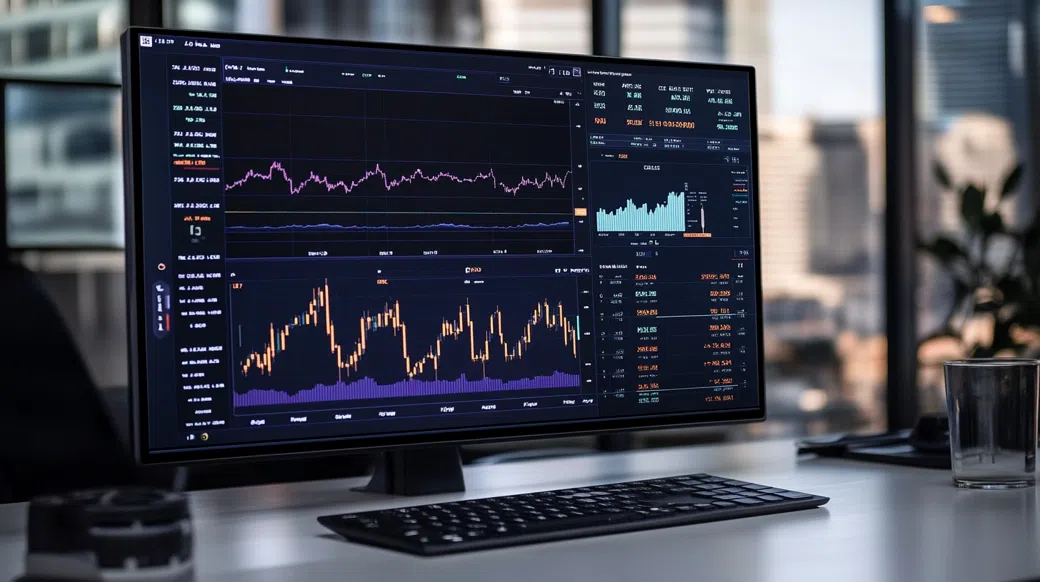
Leverage is a feature until it becomes a constraint. That’s usually the moment retail traders start stress-testing their broker choice—spreads, execution, withdrawal rails, and the simple question of “who stands behind the platform if something breaks.” In the case of Wealthsimple Capital, public signals line up with what I typically see in offshore CFD-first venues: a proprietary WebTrader plus mobile app, access centered on forex and CFDs (often including crypto CFDs), and commercial terms that look attractive on the surface—like leverage up to 1:500—while embedding risk in the fine print.
From a market-microstructure lens, the platform layer matters as much as the product list. A basic-to-mid WebTrader can be perfectly workable for directional trading, yet it can be limiting if your edge depends on precise order handling, algorithmic execution (MT4/MT5/cTrader ecosystems), or granular post-trade reporting. Costs also compound: a “from ~2.0 pips” EUR/USD typical spread on a standard-style account may be manageable for swing traders, but it becomes expensive for high-turnover intraday strategies when you convert pips into monthly transaction cost.
This guide maps Wealthsimple Capital alternatives for 2026 with a US/EU emphasis, prioritizing regulated venues, clearer investor-protection frameworks, and more transparent platform stacks. The goal is not hype; it’s to help you match broker plumbing to your strategy and risk budget.
Disclaimer: This article is for informational purposes only and does not constitute investment advice. CFDs and other leveraged products can amplify losses; you may lose more than your initial deposit depending on the product and broker protections.
Across offshore CFD brokers, the typical operating pattern is consistent: a broker-led dealing environment (often effectively market making) packaged through a proprietary browser platform and a companion mobile app. Wealthsimple Capital fits that silhouette. The instrument menu tends to revolve around forex pairs (roughly 30–50), index CFDs, a small set of commodities, and a crypto CFD list (often 10–30 coins), with stock/ETF exposure more commonly offered as CFDs rather than exchange-held assets. For traders comparing brokers similar to Wealthsimple Capital, the key distinction is not “can I place a trade?”—it’s the quality of the rails (pricing, execution, protections, reporting) behind that trade.
The WebTrader stack is generally designed for accessibility: quick watchlists, one-click trade tickets, and basic charting that works well enough on desktop and mobile. Expect standard order controls (market, limit, stop), chart timeframes suited to retail workflows, and a compact indicator set for common technical routines. Where these platforms often fall short is depth: fewer advanced order types, limited strategy automation, and less granular trade analytics. Mobile parity is usually decent for monitoring and placing orders, but the heavier work—risk slicing, journaling exports, and execution diagnostics—can feel thin compared with MT4/MT5/cTrader ecosystems or multi-asset professional terminals.
On pricing, the baseline you often see in this category is a standard-style EUR/USD spread around ~2.0 pips, with “tighter” tiers sometimes structured as a raw/ECN-style option that pairs ~0.0–0.4 pips with an added commission (commonly $5–$8 round-turn). Minimum deposits frequently start near $250. Overnight financing (swap) is usually a meaningful cost for multi-day CFD holds; it’s not unusual for swaps to dominate spread costs on longer holding periods. Also watch for non-trading fees—withdrawal charges, currency conversion mark-ups, or inactivity rules—because these can become the silent driver of realized P&L for small accounts.
Switching brokers is rarely about curiosity; it’s about friction. In my notes, the triggers cluster around verifiability (regulation and fund safeguards), repeatable execution (slippage, requotes, order handling), and cost-of-trade when strategy frequency rises. For many traders, Wealthsimple Capital alternatives become relevant once they quantify their “all-in” trading cost per month—spread plus commissions plus swaps—then compare it to a regulated peer with clearer protections and a more mature platform stack. Add regional constraints (the USA is typically blocked in this segment) and the case for a move becomes operational, not emotional.
Think of broker selection as matching infrastructure to intent. Your strategy dictates what “good” looks like: a long-horizon investor needs custody and corporate-action handling; a short-term FX trader needs tight pricing and stable execution; a cross-asset trader needs breadth and reporting. The right comparison is systematic: protections first, then product coverage, then round-turn costs and execution quality, and only then the interface polish.
Start with the regulator, not the app store rating. FCA (UK), ASIC (Australia), CySEC (EU), and NFA/CFTC (US) supervision changes the rulebook around disclosures, conduct, and (in some jurisdictions) compensation. In the UK, FSCS protection can cover eligible claims up to £85,000; under CySEC, the ICF framework can cover up to €20,000 for eligible clients. Look for segregated client funds, clear negative balance protection policies, and a track record you can verify on the regulator’s public register.
List your must-haves in plain language: “spot FX majors,” “index CFDs,” “real US equities,” “options for hedging,” “futures for macro.” Offshore CFD venues tend to cluster around FX/indices/commodities/crypto CFDs; they rarely compete on true multi-venue access. If you want real stocks/ETFs (with corporate actions and ownership rights), a multi-asset broker is typically the cleanest route. If your world is purely FX/CFDs, depth of instruments and consistent margining matter more than the longest list on a landing page.
Cost comparisons should be normalized into a single metric: round-turn cost per trade. A “0.1 pip” raw spread is not cheap if commissions turn it into a higher effective cost at your typical trade size. Conversely, a wider spread might be fine if you trade infrequently. Don’t ignore swaps/overnight fees—carry costs can dominate on CFD holds—and check inactivity, withdrawal, and FX conversion charges. This is where regulated options vs Wealthsimple Capital often separate: clearer fee schedules and fewer “surprise” line items.
Platform choice is also ecosystem choice. MT4/MT5 and cTrader support automation, VPS workflows, and a mature analytics universe; proprietary platforms can be fast and clean but narrower. Execution model matters: market maker setups can be efficient for small tickets, while STP/ECN/DMA-style routing may appeal to traders sensitive to slippage and latency. Before funding, test order behavior in fast markets (news, opens), measure slippage, and inspect fill reports—especially if you’re moving from Wealthsimple Capital to a broker where your strategy relies on tight execution.
Operational quality shows up on the worst day, not the best. Evaluate support hours across your time zone, languages (for EU traders, Italian/German/French coverage can matter), and response consistency. Education is useful when it’s specific—platform tutorials, margin mechanics, and risk tools—rather than generic market commentary. Finally, check mobile parity: if you manage risk on the go, you want full order management, alerts, and account controls on the app, not a “viewer” with limited actions.
FX and CFD access is usually the center of gravity for this category, and that’s where the comparison becomes quantitative. If you assume a typical EUR/USD spread around ~2.0 pips on a standard-style setup, a high-turnover trader quickly feels the drag: multiply that spread by your monthly round trips and the cost becomes strategy-defining. Regulated FX/CFD specialists such as Pepperstone and OANDA tend to offer clearer pricing ladders (standard vs raw/commission accounts) and a more established execution/tooling stack (MT4/MT5/cTrader and/or proprietary platforms). Another differentiator is risk controls: negative balance protection policies and margin-call mechanics are often better documented under top-tier regulators, which matters when leverage—sometimes as high as 1:500 in offshore settings—meets volatility.
Here the gap is usually structural. Offshore CFD platforms frequently provide equity exposure as stock CFDs rather than custody of real shares or ETFs; that can be fine for short-term directional views, but it doesn’t replicate ownership (no voting rights, different dividend treatment, and counterparty risk sits with the CFD provider). Traders wanting long-only portfolios, tax-efficient ETF building, or multi-venue execution should look at brokers built for real-market access. Interactive Brokers is the obvious “infrastructure” choice for broad equities/options/futures coverage, while Saxo Bank is strong for investors who want a curated but still institutional-grade multi-asset stack. For this asset class, alternatives to the Wealthsimple Capital trading platform are less about UI and more about the legal nature of what you hold.
Crypto exposure on CFD-first venues is typically delivered as crypto CFDs, not on-chain ownership. That means you’re trading price movement with leverage and financing, without withdrawing coins to a wallet. For traders, the practical implications are straightforward: you’re taking broker counterparty risk, paying spreads/financing, and you’re exposed to weekend gapping and margin dynamics. If you specifically want regulated-style crypto CFDs within a familiar derivatives framework, brokers like IG and Plus500 can be relevant in supported regions, with clearer disclosures and established supervision. If your intention is custody and blockchain transfers, you may need a dedicated regulated exchange rather than a CFD broker—an important distinction when you’re comparing top substitutes for Wealthsimple Capital.
Regulation: SEC/FINRA (US), FCA (UK), IIROC (Canada) (entity depends on residency)
Markets: Stocks, ETFs, options, futures, bonds, FX (spot), funds (region-dependent)
Fees: Varies by market; FX spreads typically from ~0.1–0.6 pips equivalent depending on conditions; commissions apply on many exchange products
Platform: Trader Workstation (TWS), IBKR Desktop, mobile app, Client Portal; API access
Best For: Multi-asset traders who want exchange access and analytics
Regulation: FCA (UK), ASIC (Australia), CySEC (EU), DFSA (Dubai) (entity depends on residency)
Markets: FX and CFDs (indices, commodities, some shares as CFDs; product list varies by entity)
Fees: EUR/USD often ~0.0–0.3 pips on Razor/Raw-style pricing + commission (commonly ~$6–$7 round-turn); Standard accounts often ~1.0–1.2 pips
Platform: MT4, MT5, cTrader, TradingView integration (availability by region)
Best For: Cost-focused FX traders using MT4/MT5 or cTrader
Regulation: FCA (UK), MAS (Singapore), DFSA (Dubai) (entity depends on residency)
Markets: Stocks, ETFs, options, futures, FX, bonds, CFDs (offering varies by jurisdiction)
Fees: Pricing is tiered; FX spreads commonly from ~0.6–1.2 pips depending on account level; commissions apply on many exchange products
Platform: SaxoTraderGO, SaxoTraderPRO
Best For: Investors blending portfolios with tactical trading
Regulation: FCA (UK), ASIC (Australia), MAS (Singapore) (entity depends on residency)
Markets: CFDs (indices, FX, commodities, shares as CFDs), spread betting (UK/IE), some regions offer share dealing
Fees: FX spreads often from ~0.6–1.0 pips on majors (variable); CFDs/spread betting costs vary by instrument; financing applies for overnight holds
Platform: IG Web Platform, mobile app; MT4 support in many regions
Best For: Macro and index-CFD traders who value robust risk tools
Regulation: CFTC/NFA (US), FCA (UK), ASIC (Australia), IIROC (Canada) (entity depends on residency)
Markets: FX (core), CFDs in some regions (indices/commodities; availability varies)
Fees: Typically spread-only pricing; EUR/USD often ~0.8–1.4 pips depending on market conditions and entity
Platform: OANDA web/mobile, MT4 (region-dependent), API access
Best For: FX traders prioritizing regulatory clarity and APIs
Regulation: FCA (UK), CySEC (EU), ASIC (Australia), MAS (Singapore) (entity depends on residency)
Markets: CFDs (FX, indices, commodities, shares as CFDs, ETFs as CFDs, crypto CFDs where permitted)
Fees: Spread-only model; major FX spreads often ~0.6–1.5 pips equivalent (variable); overnight financing applies
Platform: Plus500 proprietary web platform and mobile app
Best For: Simplicity-first CFD users who want a clean proprietary UI
| Platform | Regulation | Main Markets | Typical Costs | Best For |
|---|---|---|---|---|
| Interactive Brokers (IBKR) | SEC/FINRA, FCA, IIROC | Real stocks/ETFs, options, futures, bonds, FX | FX ~0.1–0.6 pips eq.; exchange commissions vary | Multi-asset traders who want exchange access and analytics |
| Pepperstone | FCA, ASIC, CySEC, DFSA | FX + CFDs | Raw ~0.0–0.3 pips + ~$6–$7 RT; Std ~1.0–1.2 pips | Cost-focused FX traders using MT4/MT5 or cTrader |
| Saxo Bank | FCA, MAS, DFSA | Real stocks/ETFs, options, futures, FX, bonds, CFDs | FX ~0.6–1.2 pips; commissions on many assets | Investors blending portfolios with tactical trading |
| IG | FCA, ASIC, MAS | CFDs (FX/indices/commodities/shares); spread betting in UK/IE | FX often ~0.6–1.0 pips; financing for holds | Macro and index-CFD traders who value robust risk tools |
| OANDA | CFTC/NFA, FCA, ASIC, IIROC | FX (core); CFDs in some regions | Spread-only; EUR/USD often ~0.8–1.4 pips | FX traders prioritizing regulatory clarity and APIs |
| Plus500 | FCA, CySEC, ASIC, MAS | CFDs (FX/indices/commodities/shares/crypto where permitted) | Spread-only ~0.6–1.5 pips eq. on majors; overnight fees | Simplicity-first CFD users who want a clean proprietary UI |
Migration is a sequence problem: reduce operational risk first, then move capital. The most common mistake I see is closing positions and requesting withdrawals before the new account is fully verified—then time and documentation friction collide. Keep in mind that leveraged CFDs can move quickly; if you’re closing positions, do it intentionally, not during a volatility spike. If you’re transitioning away from Wealthsimple Capital, treat the process like a checklist you can audit later.
If you’re still evaluating whether the current platform fits your needs, start by checking onboarding requirements, regional eligibility, and the product list in your jurisdiction. Compare spreads, financing, and platform tooling side-by-side before committing meaningful capital.
Visit Wealthsimple CapitalThe best option depends on whether you need real-market access or CFD-only trading. For true multi-asset breadth (stocks, ETFs, options, futures), Interactive Brokers is hard to beat; for EU-focused multi-asset with strong platform tooling, Saxo Bank is a close contender. For active FX/CFD trading, Pepperstone and OANDA are often more relevant competitors to Wealthsimple Capital because they combine established regulation with mature platform ecosystems.
Wealthsimple Capital appears to operate within an offshore/unregulated-style framework typical of CFD-first providers, which generally offers fewer investor protections than FCA/ASIC/CySEC/NFA-regulated brokers. That doesn’t automatically mean a platform is unusable, but it does change the risk profile: dispute resolution, segregation practices, and compensation coverage may be weaker or absent. If safety is your priority, compare regulated options vs Wealthsimple Capital and verify the legal entity on a public regulator register.
On platforms like Wealthsimple Capital, stocks and ETFs are commonly offered as CFDs rather than as real, exchange-held assets, and futures access is often not part of the standard retail CFD menu. Crypto exposure, where available, is typically via crypto CFDs (price exposure without on-chain ownership). If you require real equities/ETFs or listed futures, look to multi-asset brokers such as Interactive Brokers or Saxo Bank; for crypto CFDs in regulated environments, IG or Plus500 may be relevant depending on your region.
Verify regulation first, then reconcile costs and execution quality. Confirm the new broker’s entity on FCA/ASIC/CySEC/NFA registers, review client-fund segregation language, and understand compensation scheme eligibility (FSCS/ICF) where relevant. Finally, run a small test: place a few low-size trades, observe slippage and spread behavior, and compare your effective round-turn cost to what you were paying at Wealthsimple Capital alternatives you’re considering.
About the Author: Elena Marchetti is a Milan-based fintech analyst focused on European trading platforms, market microstructure, and how product design shapes real-world execution. She writes with a data-first approach, translating broker mechanics—spreads, slippage, margin rules, and protections—into practical decision points for traders.