Valoria Capital Trading Platform Alternatives 2026
Valoria Capital alternatives for 2026: compare regulated brokers, platforms, fees, execution quality, and safety checks for US/EU-focused traders.

Valoria Capital alternatives for 2026: compare regulated brokers, platforms, fees, execution quality, and safety checks for US/EU-focused traders.
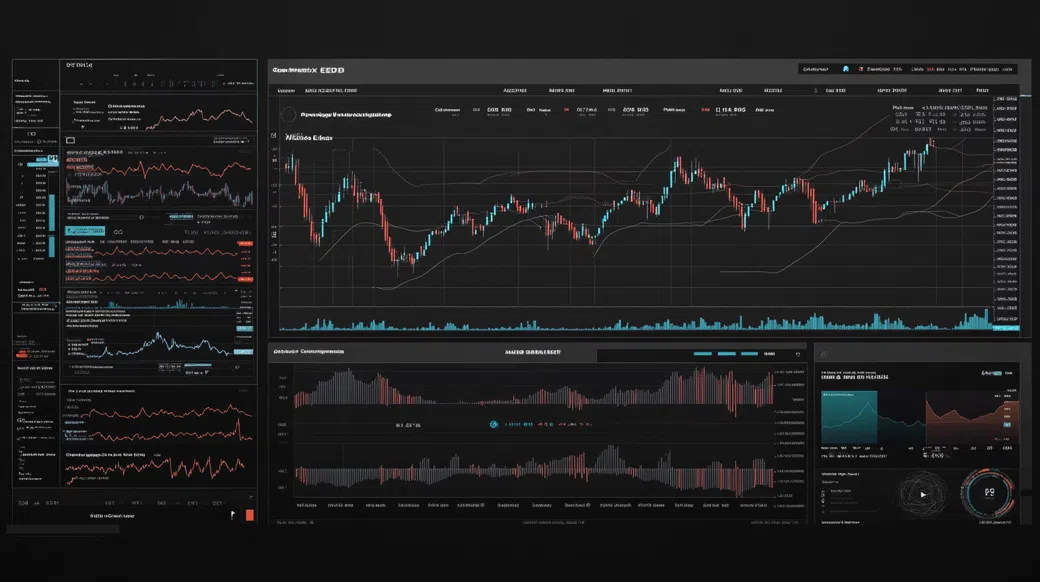
Across Europe’s retail trading stack, the same pattern repeats: a slick WebTrader, high leverage, and a product menu dominated by FX and CFDs. That’s broadly the lane where Valoria Capital appears to sit—an offshore-style CFD provider profile, typically marketed to short-term traders who value quick onboarding more than deep market access. In this category, you usually see a proprietary web platform plus mobile apps, instrument lists heavy on major FX pairs, indices, a handful of commodities, and crypto CFDs, with real stocks/ETFs either absent or offered only synthetically.
For a trader, the question is not “does it work,” but “does it fit my risk budget and operational needs.” Execution model, slippage during volatile prints, and the frictions around funding/withdrawals matter more than banner spreads. The other non-negotiable is jurisdictional protection: the difference between a broker supervised by FCA/ASIC/CySEC/NFA and an offshore framework is not cosmetic—it changes segregation rules, complaint channels, and (in some regions) investor compensation coverage. That is why Valoria Capital alternatives come up in conversations, especially among EU-based traders who increasingly want platform flexibility (MT4/MT5/cTrader or robust APIs), transparent cost-of-trade, and clearer guardrails like negative balance protection.
Disclaimer: This article is for informational purposes only and does not constitute investment advice. CFDs and other leveraged products carry a high risk of loss and are not suitable for everyone.
From a microstructure lens, Valoria Capital resembles a CFD-first brokerage that routes clients into leveraged OTC products—primarily forex and index/commodity CFDs—rather than an exchange-connected, multi-venue investment platform. The service profile most consistent with this segment includes a relatively low entry point (often around a $250 minimum deposit), aggressive leverage (commonly up to 1:500), and instrument coverage designed for short-horizon speculation rather than portfolio construction. Access is typically restricted for the USA and frequently limited across other high-compliance jurisdictions. For traders benchmarking competitors to Valoria Capital, the core distinction is whether you’re buying an execution stack and risk controls—or just a trading interface.
On the tooling side, the usual setup is a proprietary WebTrader with basic-to-mid charting, plus iOS/Android apps designed to mirror the essentials. Expect functional but not institutional-grade analytics: standard indicators, drawing tools, and an order ticket oriented around market/limit/stop placement with margin visibility. The platform experience in this category tends to be clean for one-screen monitoring, yet limited for strategy automation—MT4/MT5 or cTrader integration is not something I would assume without verifying. Where advanced traders notice the gap is workflow: multi-chart layouts, hotkeys, depth-of-market views, and granular execution reports are typically thinner than what regulated multi-asset venues provide.
Cost disclosure at offshore-style CFD brokers often centers on spreads rather than a complete “all-in” picture. A reasonable expectation for a Standard-style account is EUR/USD around 2.0 pips in typical conditions, with tighter pricing sometimes marketed for higher tiers. If a Raw/ECN-like tier exists in this segment, it’s often paired with a commission model roughly in the $6–$8 round-turn range and spreads that can print close to zero in liquid hours—though realized cost still depends on slippage. Also watch swap/overnight financing (material for multi-day holds), plus any inactivity or withdrawal charges that can quietly dominate smaller accounts.
Regime shifts expose platform weaknesses. When volatility spikes—think macro releases, weekend gaps in crypto CFDs, or sudden liquidity thinning—execution quality and the broker’s dealing setup become visible through slippage, re-quotes, and widened spreads. That’s typically the moment traders search for Valoria Capital alternatives, not because they want novelty, but because they want tighter operational control: clearer margin policy, better reporting, and supervision that comes with enforceable rules.
Selection works best as “strategy-fit plus risk controls.” Start with the instruments you actually trade (FX scalping, index CFDs, long-only equities) and map that to a platform stack and supervision regime. Then run the numbers: what does a round-turn trade cost after spreads, commissions, and typical slippage? The point is to replace hope with constraints—especially when evaluating platforms like Valoria Capital.
In the US/EU context, supervision is the first filter: FCA (UK), ASIC (Australia), CySEC (EU), and NFA/CFTC (US) each impose conduct standards that offshore regimes often don’t. Under FCA oversight, eligible clients may fall under the FSCS with coverage up to £85,000; under CySEC, the ICF can cover eligible claims up to €20,000. Ask directly about segregated client funds, negative balance protection, and where the entity that holds your account is legally domiciled—group branding can obscure the actual counterparty.
If you only trade EUR/USD and a couple of indices, a CFD specialist can be sufficient. The moment you need real equities, ETFs, options, or futures, the venue matters: direct market access (DMA) is structurally different from a CFD wrapper. Multi-asset brokers can also reduce “platform sprawl”—one account for FX conversion, equity execution, and risk hedges. For regulated options vs Valoria Capital, focus on whether you get exchange-traded instruments or only synthetic exposure.
Costs aren’t just the spread printed on a calm Tuesday. Measure the round-turn: spread + commission + typical slippage, then add holding costs via swap/overnight financing if you keep positions open. Inactivity and withdrawal fees matter for smaller accounts and for traders who park capital between strategies. A broker quoting “raw” spreads with a commission can be cheaper for high-frequency traders, while a wider all-in spread may still suit low-turnover setups.
Platform choice becomes a constraint on what strategies are even possible. MT4/MT5 and cTrader enable automation, custom indicators, and a larger ecosystem of third-party tools; proprietary stacks can be efficient but closed. Execution model is the other hinge: market maker setups can be fine for small tickets, while STP/ECN/DMA routing tends to be preferred when you care about fills, partial execution, and transparent reporting. If you’re comparing with Valoria Capital, prioritize execution stats you can observe: speed, slippage distribution, and behavior during high-impact events.
Support quality is operational risk management. Look for clearly stated hours, multilingual coverage (relevant in the EU), and response times that match your trading window. Education matters less as “videos” and more as precise documentation: margin policy, corporate actions on equity CFDs, and swap calculation examples. Finally, check mobile parity: if you manage risk on the move, the app must allow full order control, not just monitoring.
In FX/CFDs, the practical comparison is execution + all-in costs, not marketing leverage. Valoria Capital-style pricing often sits around ~2.0 pips on EUR/USD in a Standard setup, with leverage up to 1:500—a combination that can magnify both opportunity and error. Regulated specialists such as Pepperstone and OANDA typically offer tighter pricing structures (especially on commission-based accounts) and stronger reporting discipline. For active traders, that shows up in fewer surprises around spread widening and clearer post-trade records. Also note the margin mechanics: a high-leverage environment makes margin calls faster, and negative balance protection (where offered) becomes more than a policy line—it’s a tail-risk limiter during gap events.
Equities are where many offshore CFD platforms show their ceiling. If a broker mainly offers stock exposure as CFDs, you don’t receive shareholder rights, you may face wider financing costs on longs, and corporate actions can be handled in ways that are harder to audit. Traders who want real ownership, multi-currency settlement, and exchange connectivity usually end up with multi-asset venues. Interactive Brokers is a reference point for breadth (stocks, ETFs, options, futures, bonds, and FX) and for tooling that supports serious portfolio workflows. Saxo Bank is another strong option in Europe for cross-asset access with a polished platform stack. For readers comparing alternatives to the Valoria Capital trading platform, the “real shares vs CFDs” distinction is often the single most material change in product risk.
Crypto exposure on CFD-first brokers is typically delivered as crypto CFDs, meaning you are trading price movements rather than holding coins on-chain. That can be useful for hedging and short-selling, but it introduces counterparty risk and financing/spread considerations—particularly over weekends when liquidity fragments. Regulated CFD providers like IG (where available) are often used for crypto CFD access in a more tightly supervised framework, while Saxo Bank may provide crypto-linked instruments depending on region and classification. If your goal is custody and transferability, a CFD account won’t deliver it; if your goal is tactical exposure with defined margin, a regulated CFD venue tends to be the cleaner comparison set for brokers similar to Valoria Capital.
Regulation: SEC/FINRA (US), FCA (UK), IIROC (Canada)
Markets: Stocks, ETFs, options, futures, bonds, FX (and related margin products)
Fees: FX spreads typically competitive at scale; equities often low per-share/commission schedules (varies by venue and plan)
Platform: Trader Workstation (TWS), IBKR Desktop, mobile app, Client Portal; API access
Best For: Multi-asset, execution-focused traders who want DMA-style market access
Regulation: FCA (UK), ASIC (Australia), CySEC (EU), DFSA (UAE)
Markets: FX and CFDs (indices, commodities, some crypto CFDs depending on region)
Fees: EUR/USD from ~0.0–0.3 pips + commission on Razor/Raw accounts; ~1.0+ pip typical on Standard
Platform: MT4, MT5, cTrader, TradingView integration (region-dependent)
Best For: Algo and scalping setups needing MT4/MT5/cTrader flexibility
Regulation: FCA (UK), MAS (Singapore), DFSA (UAE)
Markets: Stocks, ETFs, options, futures, FX, bonds, CFDs (availability varies by entity)
Fees: FX spreads generally from ~0.6+ pips (tier/volume dependent); commissions apply on exchange-traded products
Platform: SaxoTraderGO, SaxoTraderPRO
Best For: Portfolio builders combining FX with listed markets in one ecosystem
Regulation: CFTC/NFA (US), FCA (UK), ASIC (Australia), IIROC (Canada)
Markets: FX (and CFDs in certain regions; product set varies by jurisdiction)
Fees: EUR/USD often ~0.6–1.4 pips on spread-only pricing (varies by account and region)
Platform: OANDA web/mobile platforms; MT4 support in some regions
Best For: FX-first risk managers who value strong regulatory coverage
Regulation: FCA (UK), ASIC (Australia), MAS (Singapore)
Markets: CFDs (indices, FX, shares), spread betting (UK/IE where eligible), crypto CFDs where permitted
Fees: Spreads typically from ~0.6 pips on major FX; financing costs apply on overnight CFD holds
Platform: IG web platform, mobile app; MT4 available in many regions
Best For: Event-driven CFD traders needing broad market coverage and tooling
Regulation: FCA (UK), CySEC (EU), FSC Bulgaria
Markets: Stocks and ETFs (investment accounts); CFDs (region/product dependent)
Fees: Investing often commission-free on many stocks/ETFs (other costs may apply); CFD spreads vary by instrument
Platform: Proprietary web and mobile platforms
Best For: Mobile-led investors mixing long-only equities with light CFD use
| Platform | Regulation | Main Markets | Typical Costs | Best For |
|---|---|---|---|---|
| Interactive Brokers (IBKR) | SEC/FINRA, FCA, IIROC | Stocks/ETFs, options, futures, bonds, FX | Competitive FX pricing at scale; commissions on exchange venues | Multi-asset, execution-focused traders who want DMA-style market access |
| Pepperstone | FCA, ASIC, CySEC, DFSA | FX and CFDs | EUR/USD ~0.0–0.3 pips + commission (Raw); ~1.0+ pip (Standard) | Algo and scalping setups needing MT4/MT5/cTrader flexibility |
| Saxo Bank | FCA, MAS, DFSA | Multi-asset (listed + CFDs) | FX spreads from ~0.6+ pips (tiered); commissions on stocks/options/futures | Portfolio builders combining FX with listed markets in one ecosystem |
| OANDA | CFTC/NFA, FCA, ASIC, IIROC | FX (plus CFDs in some regions) | EUR/USD often ~0.6–1.4 pips (spread-only, varies by region) | FX-first risk managers who value strong regulatory coverage |
| IG | FCA, ASIC, MAS | CFDs (FX, indices, shares), spread betting (eligible regions) | Major FX spreads from ~0.6 pips; overnight financing on CFDs | Event-driven CFD traders needing broad market coverage and tooling |
| Trading 212 | FCA, CySEC, FSC Bulgaria | Stocks/ETFs (investing), CFDs (where offered) | Often commission-free investing; CFD spreads vary by product | Mobile-led investors mixing long-only equities with light CFD use |
Switching brokers is less about “opening a new login” and more about controlling operational risk while capital is in transit. Treat it like a short project: verify the new entity, stage the account, then unwind exposure and cash out in a way that aligns with AML rails. If you’re moving from Valoria Capital, assume you cannot transfer open CFD positions—plan the exit so you’re not forced to close during illiquid conditions. Remember: leverage cuts both ways, and rushed migrations often crystallize losses through poor timing.
If you’re benchmarking platforms, it can help to re-check the current onboarding flow, product list, and regional eligibility directly—then compare those conditions against the regulated substitutes in this guide. Focus on the platform stack you need (MT4/MT5/cTrader vs proprietary) and the protections your jurisdiction actually provides.
Visit Valoria CapitalThe best option depends on whether you need multi-asset access or primarily FX/CFDs. For broad market coverage and exchange access, Interactive Brokers or Saxo Bank are strong benchmarks; for FX/CFD execution with MT4/MT5/cTrader, Pepperstone is a common pick. In practice, the “best Valoria Capital alternatives 2026” short-list is the one that matches your strategy, jurisdiction, and cost-of-trade after slippage.
Valoria Capital appears to fit an offshore/unregulated profile rather than a clearly FCA/ASIC/CySEC/NFA-supervised broker, which typically means fewer formal investor protections. Safety is not only about cybersecurity; it’s also about legal recourse, segregation standards, and whether negative balance protection is enforceable under your entity. If you are considering Valoria Capital alternatives, prioritize verifiable supervision and transparent policies over headline leverage.
Valoria Capital-style platforms usually focus on forex and CFDs, with crypto often offered as crypto CFDs rather than on-chain ownership. Real stocks/ETFs and listed futures are commonly not the core offering, or they may appear only as CFDs without exchange access. Traders who need real equities or futures typically use multi-asset brokers such as Interactive Brokers or Saxo Bank instead of platforms like Valoria Capital.
Before switching, verify the exact legal entity on the regulator’s register and confirm which protections apply (segregated client funds, negative balance protection, and any compensation scheme such as FSCS up to £85k or ICF up to €20k where relevant). Next, compare the platform stack you require—MT4/MT5/cTrader, APIs, and reporting—plus round-turn trading costs including swap/overnight fees. Finally, stage the operational steps: KYC the new account first, export records, then withdraw via the original funding rail.
About the Author: Elena Marchetti is a Milan-based fintech analyst covering European trading platforms, broker infrastructure, and market microstructure. Her work focuses on observable metrics—execution quality, cost-of-trade, and regulatory architecture—so readers can separate platform ergonomics from real trading outcomes.