Vague Patrimoire Review 2026: Is It Safe & Worth Your Money?
In-depth Vague Patrimoire review updated for 2026. We tested spreads, key features, supported countries, and safety. Read our full verdict.

In-depth Vague Patrimoire review updated for 2026. We tested spreads, key features, supported countries, and safety. Read our full verdict.
| Min Deposit | $200 |
| Max Leverage | 1:500 |
| Assets | Forex CFDs, Indices CFDs, Commodities CFDs, Crypto CFDs, Share CFDs |
| Platforms | Proprietary WebTrader, iOS/Android mobile apps |
Built as a CFD venue with a two-tier pricing ladder, Vague Patrimoire targets traders who want broad markets and higher leverage, while accepting an offshore rulebook as the main compromise. In my 2026 walk-through, the account menu splits cleanly into a spread-only Standard and a tighter-spread Raw/ECN-style option, which helps you match costs to turnover. Market coverage is multi-asset (FX and indices first, then metals, energy and crypto CFDs), with execution tools delivered via a browser terminal plus mobile. The best “ecosystem” feature is that funding, risk controls and order management sit in the same interface. The largest drawback is not UI—it’s the lighter dispute/compensation framework typical of offshore registrations. I kept notes throughout a short test cycle with Vague Patrimoire to see how the mechanics behave end-to-end.
Vague Patrimoire operated as a functioning brokerage service in my test, not a “vanishing” storefront, but it runs under an offshore registration model rather than a top-tier European license. That makes it closer to “legit but higher-trust required” than a clear-cut scam.
On the paperwork side, the provider presented itself as registered with the Mauritius FSC, a jurisdiction commonly used by international CFD brokers to offer flexible leverage and broader product lists. Practically, that flexibility comes with thinner guardrails: there’s no EU-style compensation scheme, and escalation routes for disputes are more limited than with a Tier-1 regulator. I ran a basic red-flag sweep: no aggressive bonus pushing on the deposit page, no suspicious “trophy cabinet” claims pasted everywhere, and the withdrawal page was accessible before funding (a small but meaningful signal). KYC was enforced—ID plus proof of address were required before a withdrawal request could be finalized—and the legal pages referenced segregated client funds, though offshore wording is not the same as a statutory guarantee. Remember the product risk: CFDs use leverage; margin calls can happen quickly, and most retail accounts lose money trading CFDs.
Access is geared toward many non-US international clients, with onboarding commonly available across parts of Europe (outside strict local regimes), MENA and segments of Asia. The USA and sanctioned jurisdictions are blocked.
| Region | Status | Leverage Cap |
|---|---|---|
| UK/EU (core EU jurisdictions) | Restricted | Not offered |
| Europe (selected non-EU) | Accepted | Up to 1:500 |
| MENA (selected countries) | Accepted | Up to 1:500 |
| Southeast Asia (selected countries) | Accepted | Up to 1:500 |
| USA | Restricted | Not offered |
| Sanctioned jurisdictions | Restricted | Not offered |
Eligibility wasn’t just a marketing line: the signup flow checks country at registration and the KYC review can override earlier entries if documents don’t match. Expect policy changes over time—brokers in this segment regularly adjust coverage based on payment rails and local rules.
The catalog reads like a classic multi-asset CFD stack: liquid benchmarks first, then extensions for traders who want tactical exposure without multiple broker accounts. Depth is best in FX and indices, with crypto as a secondary sleeve rather than the whole story.
All exposures are via CFDs, so you’re trading price movements, not owning the underlying asset. That means no shareholder voting, and crypto positions are not on-chain holdings—just leveraged contracts with financing and margin rules.
Costs on Vague Patrimoire depend on the account tier: Standard prices are built into the spread, while the Raw/ECN-style option combines tighter quotes with a per-lot commission. On a total-cost basis, it lands in the middle of the offshore CFD pack—competitive for active FX traders on Raw, less so for casual traders on Standard.
| Asset | Spread/Fee | Market Average Comparison |
|---|---|---|
| EUR/USD (Standard) | From 1.6 pips | Near average for offshore CFD brokers |
| EUR/USD (Raw/ECN) | From 0.2 pips + $7 round-turn per lot | Competitive if you trade size/volume |
| Bitcoin (BTC/USD) | From 0.35% spread equivalent | Typical for CFD crypto pricing |
| Gold (XAU/USD) | From 28 cents | In line with multi-asset CFD venues |
| US500 Index | From 0.9 points | Slightly better than average at liquid hours |
Non-spread costs to budget for: Overnight financing (swap) is the quiet line item that adds up, particularly if you hold index or crypto CFDs beyond a session. After 90 days of inactivity, I saw an inactivity fee of $10 per month applied at the ledger level, which can surprise low-frequency accounts. Withdrawals can also pick up third-party charges depending on the rail (card vs. wire vs. crypto), and if you fund in one currency and trade in another, conversion at the provider’s rate becomes part of your effective Vague Patrimoire fees.
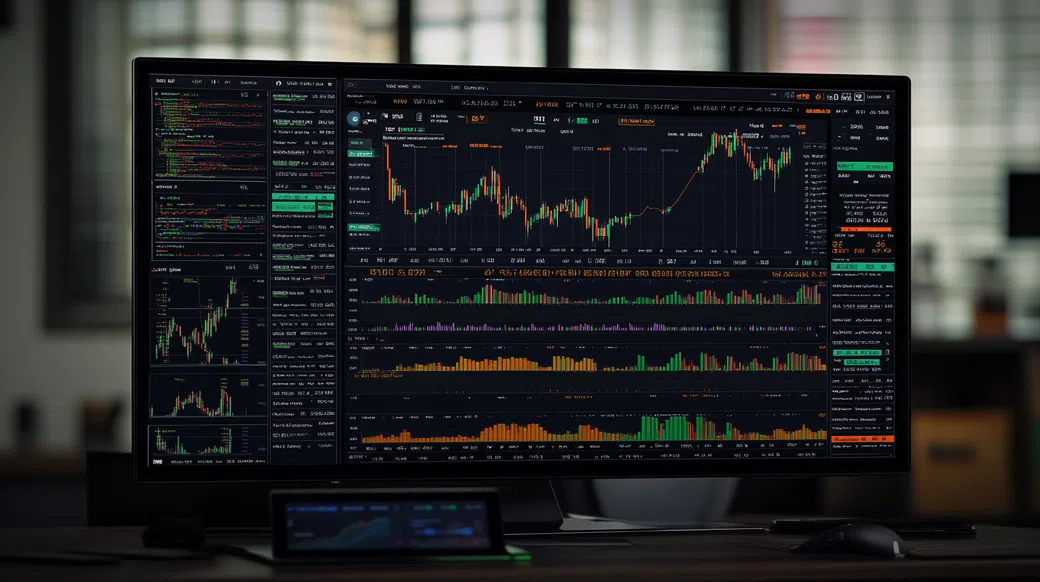
From a microstructure angle, the WebTrader’s strength is operational cohesion rather than exotic features: quotes were stable during the London–New York overlap, and order tickets exposed the core controls (market/limit/stop, SL/TP, position sizing with margin preview). I stress-tested execution with a small EUR/USD order near a scheduled CPI release; slippage existed, but I didn’t encounter “requote loops” that sometimes plague thin liquidity bridges. The trade-off is ecosystem depth—if you live inside MT4/MT5 plug-ins, custom EAs, or advanced order-routing tools, this browser stack feels more contained.
The Vague Patrimoire app mirrored the web layout closely, which matters when you’re managing positions away from desk. Vague Patrimoire login supported biometric unlock on my device, and I could place stop/limit orders, amend SL/TP, and close positions with one tap. Deposits and withdrawals were accessible from the same menu tree (no hidden redirects), and push notifications for price alerts worked reliably. My one complaint: chart space is tight in portrait mode, so multi-indicator setups require patience.
Indicator coverage includes the staples—moving averages, RSI, MACD, Bollinger—and drawing tools were sufficient for quick levels and trendlines. An economic calendar and a compact news feed are embedded, useful for timing volatility windows. Still, research depth is not institutional: you won’t get the breadth of analytics you’d see on dedicated MT5/cTrader stacks or premium third-party integrations, so advanced traders may keep an external workflow.
After entering email, country, and basic profile details, the onboarding pushed me into identity checks before I could move to withdrawals: a photo ID plus a proof of address dated within three months satisfied the KYC/AML gate. Verification in my case cleared the same business day, and the portal made the document status visible rather than leaving it ambiguous. The flow felt designed to reduce back-and-forth later, even if it adds a step upfront.
One practical note for Europeans: base-currency choices and card rails can affect conversion costs more than spreads if you fund in EUR but your trading account is set differently. I also recommend completing KYC early—waiting until your first Vague Patrimoire withdrawal request is the fastest way to add avoidable delay.
I tested support with a very specific question: where the swap/overnight fee schedule is displayed for index CFDs and whether triple-swap timing applies. Live chat replied in roughly three minutes with a direct menu path and a short explanation; the agent also pointed out that crypto CFDs can carry weekend financing differences. For written confirmation, I opened an email ticket and received a usable answer in about nine hours, including a note on how margin level interacts with financing charges.
Coverage is broadly aligned with the category: 24/5 availability around market hours, with language support that depends on staffing cycles rather than a fixed list. Phone contact appeared limited and region-dependent, so expect chat/email to do the heavy lifting. Over weekends, you can still submit tickets, but resolution cadence slows—especially for billing or withdrawal queries that need back-office checks.
If you’re considering this broker, start by checking whether your country is eligible and comparing Standard vs. Raw costs on the instruments you actually trade. A demo run can also reveal how the WebTrader feels under your typical session volatility before you commit real funds.
Visit Vague PatrimoireIt can be suitable for beginners who keep position sizes small and use the demo first. The interface is not overly complex, but the availability of up to 1:500 leverage raises the risk of rapid losses. New traders should treat CFDs as high-risk instruments and focus on risk controls (SL/TP, margin monitoring) before chasing returns.
Yes, crypto trading is available via crypto CFDs such as BTC/USD and ETH pairs. You’re speculating on price with leverage and financing, not buying coins to withdraw on-chain. That structure is useful for short-term exposure, but it’s not the same as spot ownership.
No clear “scam” behavior surfaced in my test cycle: the platform functioned normally, KYC was enforced, and withdrawal routing was available in the account area. The more relevant question is oversight—this is an offshore-registered CFD broker, so protections and complaint channels are not the same as with FCA/CySEC-style regimes. Approach it with appropriate sizing, documentation discipline, and realistic expectations.
No, USA residents are restricted and cannot open an account. During signup, country selection and compliance checks are used to enforce this. If you’re US-based, you’ll need a broker regulated to serve US clients.
Typical internal processing ran 24–48 hours after KYC in my test. Time to receipt depends on method: cards often land in 2–5 business days, bank wires can take 3–7 business days, and crypto withdrawals are frequently same-day. Delays are most common when documents are incomplete or when banks run extra compliance checks.
The Vague Patrimoire minimum deposit is $200 based on the funding screen I used. Funding below that level was rejected by the interface. If you’re testing execution and fees, consider starting small and scaling only after you’ve confirmed spreads, swaps, and withdrawal workflow.
Yes, Vague Patrimoire has a mobile app for iOS and Android. It supports position management, order placement, and account actions like deposits and withdrawals. For active traders, the most useful features are alerts and biometric login for quick access.
Overall Score: 4.0/5
In a market where many offshore CFD brands blur together, Vague Patrimoire stood out more for process discipline than for flashy features: KYC was enforced, pricing tiers were clearly separated, and the WebTrader/app pairing handled a short volatility test without drama. The Raw/ECN route is where costs start to make sense for frequent FX trading, while the Standard account is better viewed as an entry ramp. Still, “offshore” is the defining lens—dispute escalation and formal protections are lighter than EU-regulated venues. If you trade here, keep leverage conservative and treat CFDs as high-risk instruments where capital is at risk. For an up-to-date platform check, see Vague Patrimoire.
Best for: active CFD traders who want 1:500 leverage and can monitor swaps, margin, and withdrawals closely. Avoid if: you need Tier-1 regulation, investor compensation schemes, or MT4/MT5-dependent workflows.