Tréfonange Trading Platform Alternatives 2026 Guide
Tréfonange alternatives for 2026: compare regulated brokers, fees, platforms, and safety steps. US/EU-focused guide to safer trading choices.

Tréfonange alternatives for 2026: compare regulated brokers, fees, platforms, and safety steps. US/EU-focused guide to safer trading choices.
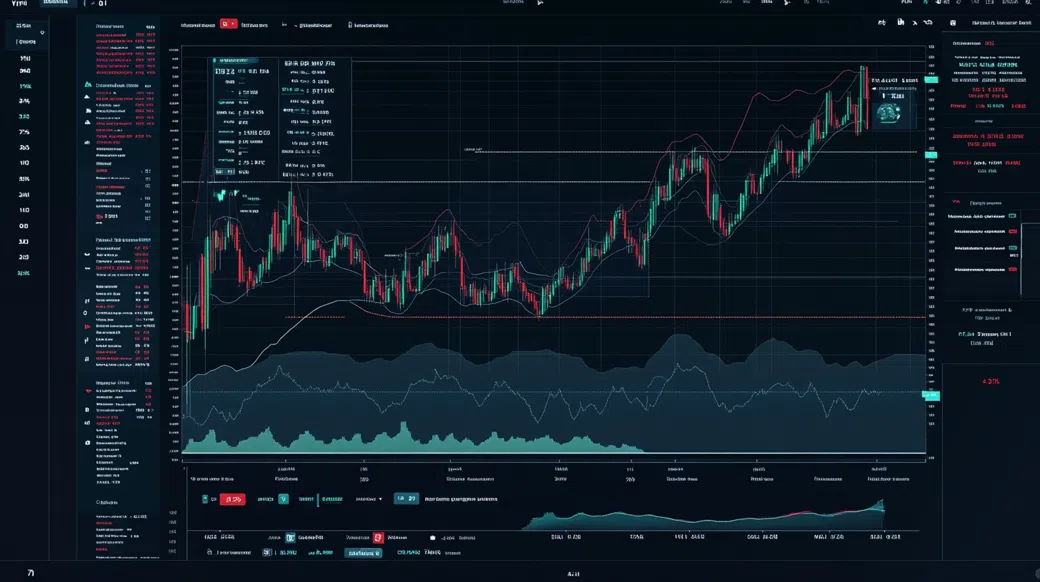
A useful way to think about offshore CFD platforms is to treat them as a “product bundle”: leverage, a proprietary WebTrader, and a curated list of FX/indices/commodities—often with crypto CFDs on top. That bundle can be tempting when the onboarding is fast and the marketing headline is leverage. Still, the microstructure reality matters: execution model, slippage, funding and withdrawal rails, and whether a regulator can enforce client-money rules if something goes wrong. Those are the lenses I use when readers ask for Tréfonange alternatives in 2026.
Based on what is typically observable for this segment, Tréfonange appears positioned as a CFD-first broker with a proprietary WebTrader (basic-to-mid toolset) and mobile apps for iOS/Android. Conditions in this category often cluster around a minimum deposit near $250, headline leverage up to 1:500, and a EUR/USD spread around 2.0 pips on a “Standard” style account—numbers that can look acceptable until you convert them into monthly cost-of-trade. The second pressure point is jurisdiction: US clients are commonly restricted, and certain regions face tighter limits due to sanctions and AML rules.
This guide is built for a global audience with a US/EU focus. It prioritizes regulated venues, transparent fee schedules, and platform stacks that fit real workflows—MT4/MT5/cTrader for systematic traders, or multi-asset brokers for those who need real stocks and futures rather than CFD proxies.
Disclaimer: This article is for informational purposes only and does not constitute investment advice. Trading leveraged products such as CFDs involves a high risk of loss and may not be suitable for all investors.
From a market-structure viewpoint, Tréfonange reads like a retail CFD venue that concentrates on FX and index/commodity CFDs, with crypto CFDs often included in the same package. The regulatory posture commonly associated with this category is offshore; in this article I treat it as operating under a Seychelles FSA-style framework rather than a tier‑1 regulator. That matters because enforcement, complaint handling, and client-money supervision look very different across jurisdictions. For traders benchmarking platforms like Tréfonange, the real question is not “can I place an order?”—it is “what protections and execution constraints come with this workflow?”
The proprietary WebTrader experience is usually built around fast access: account dashboard, watchlists, basic technical indicators, and a small set of order controls. Expect adequate charting for discretionary trading—standard timeframes, drawing tools (trendlines, Fibonacci), and a familiar library of indicators—without the depth that systematic traders rely on (custom indicators, robust strategy testing, or API tooling). Mobile parity tends to be functional rather than identical: you can monitor margin, place/close CFD positions, and manage funding, but power features like multi-chart layouts and granular order templates can feel compressed on a phone. Execution “feels” responsive on liquid instruments, yet in volatile moments slippage and requotes (or partial fills) become the real test.
Cost-wise, brokers in this bracket typically present a Standard account with EUR/USD around 2.0 pips. Some also advertise a “Raw/ECN-style” tier where spreads can print near 0.0–0.4 pips, paired with a round-turn commission in the $5–$8 range. Financing costs (swap/overnight fees) are a material line item for multi-day CFD holds, and they are frequently underappreciated compared with the headline spread. You may also encounter non-trading charges: withdrawal fees depending on method, and inactivity fees after a period without trades. With a minimum deposit around $250 and leverage up to 1:500, the key risk is not access—it is position sizing discipline under margin-call dynamics.
Regulation is often the first tripwire. In EU desks I speak with, traders start scanning Tréfonange alternatives once they realize how much of their account “safety” is really a function of jurisdiction, segregation rules, and dispute resolution. Costs are the second driver: a 2.0‑pip EUR/USD spread is not catastrophic for occasional trades, but it compounds quickly for higher turnover strategies. Finally, platform constraints show up in the workflow—especially if your process depends on MT4/MT5, cTrader, or a broader market universe than CFDs.
Selection works best as “fit-to-strategy plus risk budget.” Start by defining what you must have (assets, platforms, execution model), then layer the non-negotiables (regulation, client-money safeguards, negative balance protection where applicable). Only after that should pricing decide the shortlist—because a low spread is not helpful if the venue cannot support your order flow during volatility.
For US/EU readers, the regulator sets the floor. FCA (UK), ASIC (Australia), CySEC (Cyprus), and NFA/CFTC (US) each impose different conduct and reporting standards. In the UK, FSCS coverage can reach £85,000 for eligible claims; under CySEC, the ICF can cover up to €20,000. Also look for segregated client funds language and whether negative balance protection is explicit for retail clients. This is where regulated options vs Tréfonange often diverge most sharply.
Write down what you actually trade. FX and index CFDs are common nearly everywhere; real stocks/ETFs, listed options, bonds, and futures are not. If you’re building a portfolio, a multi-asset broker that offers cash equities and ETFs can reduce product mismatch and financing drag. If your priority is short-term directional trading, a CFD specialist with deep FX liquidity and tight indices pricing may be the better tool. Competitors to Tréfonange vary widely on this axis.
Compare round-turn cost-of-trade: spread paid on entry/exit plus commission (if any). A raw account at 0.1–0.3 pips + commission can beat a 1.0–2.0 pip spread-only model for active traders, even after fees. Then factor swaps/overnight financing for holds, plus non-trading costs such as inactivity or withdrawal charges. Pricing transparency matters as much as the number itself.
Platform choice is not cosmetic—it defines what order types, risk controls, and analytics you can deploy. MT4/MT5 support matters for EAs; cTrader is popular for depth-of-market and execution tooling; proprietary platforms can be excellent if they invest in them. Ask about execution model (market maker vs STP/ECN/DMA) and how orders are handled during fast markets. A broker can quote a tight spread and still deliver poor outcomes if slippage is consistently adverse. If you’re comparing to Tréfonange, pay special attention to how each venue documents execution and rejections.
Onboarding is where friction becomes visible: KYC/AML steps, funding methods, and how quickly support resolves verification or withdrawal questions. For EU clients, multilingual coverage and local-time responsiveness can be decisive. Education also differs: some brokers provide serious platform tutorials and risk modules; others stop at surface-level webinars. Finally, check mobile parity—if you manage risk on the move, you want the same order controls you rely on at your desk.
FX and index CFDs are the natural habitat here: think roughly 30–50 forex pairs, 8–15 indices, and a small menu of commodities. With leverage up to 1:500, the practical differentiator becomes execution quality and cost structure, not instrument access. A EUR/USD spread around 2.0 pips can be workable for occasional trades, but active intraday traders tend to gravitate toward raw+commission models. Pepperstone and IC Markets are two examples of regulated FX/CFD specialists that frequently appeal to cost-sensitive traders because they pair tight spreads on Razor/Raw-style accounts with MT4/MT5/cTrader ecosystems. The caution: leverage magnifies both slippage and behavioral errors—so risk limits and margin discipline matter more than the platform label.
This is where the product definition often changes. Many offshore CFD venues offer “stocks” primarily as CFDs, which means you’re trading a derivative: no shareholder rights, no exchange voting, and financing costs can bite on longer holds. If your goal is portfolio building, top substitutes for Tréfonange are usually multi-asset brokers with access to cash equities and ETFs. Interactive Brokers (IBKR) is built for broad market access—stocks, ETFs, options, futures, FX, and bonds—while Saxo Bank is strong for multi-asset execution and portfolio tooling in a single stack. Even if you still use CFDs tactically, having real equity rails changes how you manage dividends, tax lots, and exposure precision.
Crypto exposure on CFD platforms is typically via crypto CFDs—price exposure without on-chain ownership. That’s not automatically “bad,” but it is a different contract: no wallet transfers, and costs are embedded via spreads and overnight financing (depending on broker policy). If crypto CFDs are a key part of your playbook, brokers like IG and Plus500 are commonly referenced in the regulated universe for offering crypto CFDs in eligible jurisdictions, alongside FX and indices. For traders who specifically want spot crypto custody, that is a different ecosystem entirely (and outside the scope of this CFD-focused comparison). As always, check regional eligibility—crypto CFD access is restricted in several jurisdictions, including the US.
Regulation: SEC/FINRA (US), FCA (UK), IIROC (Canada)
Markets: Stocks, ETFs, options, futures, FX, bonds (multi-asset access)
Fees: Varies by venue/product; FX spreads can be competitive with commissions; equities often priced per share or via tiered plans
Platform: Trader Workstation (TWS), IBKR Desktop, web and mobile platforms, API access
Best For: Cross-asset traders who need real market access and advanced order controls
Regulation: FCA (UK), ASIC (Australia), CySEC (Cyprus), DFSA (Dubai)
Markets: FX and CFDs (indices, commodities; product set depends on entity/region)
Fees: Standard spreads often around ~1.0+ pip on EUR/USD; Razor/Raw-style pricing can be ~0.0–0.3 pips plus commission (varies by platform/entity)
Platform: MT4, MT5, cTrader
Best For: Systematic FX traders using EAs who want MT4/MT5/cTrader flexibility
Regulation: FCA (UK), MAS (Singapore), DFSA (Dubai)
Markets: Stocks, ETFs, bonds, options, futures, FX, CFDs (broad multi-asset)
Fees: FX spreads and commissions vary by account tier; typically tighter for higher tiers; non-FX pricing depends on market and schedule
Platform: SaxoTraderGO, SaxoTraderPRO
Best For: Portfolio-focused investors who want one account across multiple asset classes
Regulation: FCA (UK), ASIC (Australia), MAS (Singapore)
Markets: CFDs (indices, FX, commodities, shares where available), spread betting (UK/IE)
Fees: CFD pricing varies by market; FX spreads often from ~0.6–1.0+ pip on majors depending on conditions; financing applies to leveraged positions
Platform: IG web platform, mobile apps; MT4 supported in many regions
Best For: Active CFD traders who value risk tools and broad index coverage
Regulation: CFTC/NFA (US), FCA (UK), ASIC (Australia), IIROC (Canada)
Markets: FX (core) and CFDs in some regions (availability varies by jurisdiction)
Fees: FX spreads vary by pair and market conditions; typically competitive on majors; some regions offer spread-only pricing, others may have commission options
Platform: OANDA web and mobile platforms; MT4 supported
Best For: FX-first traders who want a long-established regulated venue (including US eligibility for FX)
Regulation: FCA (UK), CySEC (Cyprus), ASIC (Australia), MAS (Singapore)
Markets: CFDs (FX, indices, commodities, shares, crypto CFDs where permitted)
Fees: Spread-only model; typical costs vary by instrument and volatility; overnight financing applies for leveraged holds
Platform: Plus500 proprietary web and mobile platform
Best For: Beginners who prefer a simple CFD interface over multi-platform complexity
| Platform | Regulation | Main Markets | Typical Costs | Best For |
|---|---|---|---|---|
| Interactive Brokers (IBKR) | SEC/FINRA, FCA, IIROC | Stocks/ETFs, options, futures, FX, bonds | Product- and venue-based; FX competitive with commissions | Cross-asset traders who need real market access and advanced order controls |
| Pepperstone | FCA, ASIC, CySEC, DFSA | FX + CFDs | Std ~1.0+ pip; Raw ~0.0–0.3 pip + commission | Systematic FX traders using EAs who want MT4/MT5/cTrader flexibility |
| Saxo Bank | FCA, MAS, DFSA | Multi-asset: equities, ETFs, options, futures, FX, CFDs | Tier-based; generally tighter pricing for higher tiers | Portfolio-focused investors who want one account across multiple asset classes |
| IG | FCA, ASIC, MAS | CFDs + (UK/IE) spread betting | FX often ~0.6–1.0+ pip; financing on leveraged holds | Active CFD traders who value risk tools and broad index coverage |
| OANDA | CFTC/NFA, FCA, ASIC, IIROC | FX (and CFDs in some regions) | Spread varies by pair/conditions; pricing model depends on region | FX-first traders who want a long-established regulated venue (including US eligibility for FX) |
| Plus500 | FCA, CySEC, ASIC, MAS | CFDs (FX, indices, commodities, shares; crypto CFDs where allowed) | Spread-only; instrument-dependent; overnight fees apply | Beginners who prefer a simple CFD interface over multi-platform complexity |
Switching platforms is a process, not a click. Treat it like a controlled cutover: validate the new venue, rehearse funding/withdrawal rails, and only then scale size. The practical reason is risk containment—operational mistakes (wrong transfer method, missing documentation, mis-sized leverage) can be as damaging as a bad trade. If you’re exiting Tréfonange, aim to keep your exposure flat during the transition.
If you’re still evaluating whether the current platform fits your trading plan, review the onboarding steps, instruments, and fee schedule in your region. Then compare that reality—spread, swaps, and execution notes—against the regulated brokers above before allocating meaningful capital.
Visit TréfonangeThe best choice depends on whether you need multi-asset access or primarily FX/CFDs. For real stocks/ETFs and futures, Interactive Brokers (IBKR) and Saxo Bank are strong benchmarks; for FX platform ecosystems and tighter raw pricing, Pepperstone is often a better functional match. If you mainly want a simple CFD app, Plus500 is closer in workflow but within a tier‑1 regulatory perimeter in many regions.
Tréfonange appears aligned with an offshore regulatory framework (treated here as Seychelles FSA-style), which generally offers a different level of investor protection than FCA/ASIC/CySEC/NFA regimes. That doesn’t automatically imply malpractice, but it does change your recourse if there is a dispute and how client-money safeguards are supervised. For risk control, keep leverage (often marketed up to 1:500) in proportion to your drawdown tolerance and expect CFDs to amplify losses as well as gains.
On platforms in this category, “stocks” are frequently offered as CFDs rather than real shares, and exchange-traded futures are often not available to retail users in the same way they are at multi-asset brokers. Crypto exposure is commonly provided via crypto CFDs (price exposure without on-chain ownership), subject to regional restrictions. If your requirement is real equities or listed futures, IBKR or Saxo are more direct fits than most Tréfonange trading platform alternatives 2026 lists focused on CFDs.
Before switching, confirm the new broker’s legal entity on the regulator register, then verify funding/withdrawal methods and any fees tied to them. Next, compare execution model and total trading cost (spread + commission + swaps), because that is where “best Tréfonange alternatives 2026” can differ more than marketing suggests. Finally, complete KYC first and move capital in small increments until your trade workflow and support response are proven.
About the Author: Elena Marchetti is a Milan-based fintech analyst covering trading platforms, broker plumbing, and market microstructure across Europe. Her work focuses on execution quality, fee mechanics, and regulatory perimeter—data first, opinions second.