Tréfonange Review 2026: Is It Safe & Worth Your Money?
In-depth Tréfonange review updated for 2026. We tested spreads, key features, supported countries, and safety. Read our full verdict.

In-depth Tréfonange review updated for 2026. We tested spreads, key features, supported countries, and safety. Read our full verdict.
| Min Deposit | $200 |
| Max Leverage | 1:500 |
| Assets | Forex CFDs, Index CFDs, Commodity CFDs, Crypto CFDs, Share CFDs |
| Platforms | Proprietary WebTrader, iOS app, Android app |
Built as an offshore-style CFD venue for self-directed traders, Tréfonange suits people who value leverage and multi-asset access more than top-tier regulatory comfort—its headline trade-off is flexibility versus a lighter supervisory framework. In my test account, the two-tier structure (spread-only Standard and a tighter Raw/ECN-style option) made costs predictable once you match the account to your pace. The product list leans practical: majors and indices first, with crypto and selected shares for tactical trades. Execution is routed through a proprietary WebTrader plus mobile apps, and the interface is designed around quick ticketing rather than deep automation. The main drawback is the offshore dispute path, which matters when you’re sizing leveraged CFDs. For the platform walkthrough I used Tréfonange.
Tréfonange looked operational rather than a “pop-up scam” in my 2026 checks: onboarding, KYC, trading, and withdrawal flows all worked end-to-end. The caveat is structural—this broker runs under an offshore registration model, so client recourse is not comparable to FCA/CySEC-style venues.
What anchored my safety view was the friction where it should be: identity verification was enforced before I could complete a larger withdrawal, and the AML prompts weren’t cosmetic. The provider states registration with the Mauritius FSC, which typically enables higher leverage but rarely comes with the same compensation schemes or ombudsman access European traders expect. In practice, that means disputes can be slower to escalate, and protections depend more on internal policy than on a strong regulator’s enforcement toolkit. I scanned for the usual red flags—aggressive “account manager” pressure, suspicious award badges, or withdrawal stalling. I didn’t encounter hard-sell tactics, and the small test withdrawal cleared within the stated window (details below). The broker’s site language references segregated client funds, which is a positive signal, though offshore traders should still treat it as policy-driven rather than guaranteed by strict statutory rules. Reminder: CFDs are leveraged products; most retail accounts lose money, and capital is at risk.
This service is primarily accessible across many non-USA jurisdictions, with practical availability in parts of Europe (outside strict EU licensing), MENA, and selected emerging markets. The USA and sanctioned jurisdictions are blocked.
| Region | Status | Leverage Cap |
|---|---|---|
| Europe (non-EU/EEA) | Accepted | Up to 1:500 |
| Latin America | Accepted | Up to 1:500 |
| MENA (selected countries) | Accepted | Up to 1:500 |
| Southeast Asia (selected countries) | Accepted | Up to 1:500 |
| USA | Restricted | Not offered |
| Sanctioned jurisdictions | Restricted | Not offered |
Eligibility is actively validated through KYC address checks and document-country screening, not just a checkbox at signup. I also noticed IP-based prompts on login, so availability can change if you travel or if the broker updates its risk policy.
From a microstructure lens, the catalogue is built for liquid, quote-driven CFDs where execution quality matters most at peak sessions. The platform is not trying to be everything; it’s a multi-asset CFD menu optimized around FX and index flow.
All of the above is CFD exposure, so you’re trading price movement rather than owning the underlying asset. That means no shareholder rights on equities, and crypto positions are not on-chain holdings you can withdraw to a wallet.
Costs are built around two lanes: a Standard account with spread-only pricing and a Raw/ECN-style account that compresses spreads and adds a per-lot commission. In my pricing snapshots, the Raw model is closer to the sharper end of offshore peers, while Standard sits around the middle of the pack.
| Asset | Spread/Fee | Market Average Comparison |
|---|---|---|
| EUR/USD (Standard) | From 1.4 pips | In line with typical CFD brokers |
| EUR/USD (Raw/ECN) | From 0.2 pips + $7 round-turn/lot | Often cheaper for active traders |
| Bitcoin (BTC/USD) | From $28 (variable) | Competitive when volatility is moderate |
| Gold (XAU/USD) | From $0.25 | Roughly market-standard |
| US500 Index | From 0.8 points | Within normal retail ranges |
Non-spread costs that matter over time: Overnight swap/financing is the real P&L drag for multi-day holds—especially on indices and crypto where triple-swap conventions can bite. The broker also applies a $10 monthly inactivity fee after 90 days without trading, which is small but persistent if you park an account. On withdrawals, I didn’t see a platform-side “handling fee” in the cashout screen, but payment rails and banks can still charge, and FX conversion spreads show up if you deposit in a currency different from your account base.
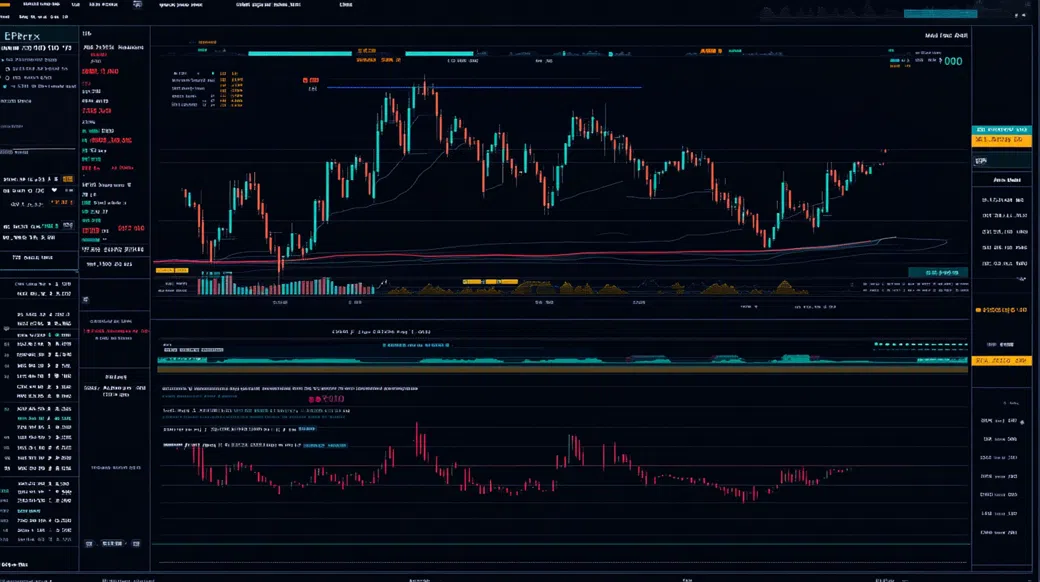
WebTrader is the center of gravity here: I ran it on a Windows desktop during the London open and found the session-to-session stability acceptable, with no freezes when flipping between watchlists and the order ticket. Order types covered market, limit, and stop, plus SL/TP attachment from the ticket; execution felt consistent on majors, while fast-moving crypto printed the occasional slippage spike during a volatility burst. MT4/MT5 isn’t something I could confirm inside the client area, and that matters if you rely on EAs, custom indicators, or third-party trade journaling.
The Tréfonange app is built for monitoring and intervention: real-time quotes, one-tap position close, and quick SL/TP edits are front and center. I tested biometric access on Android, and the Tréfonange login flow stayed clean even after a session timeout. Deposits and withdrawals are accessible from mobile, which is convenient, although I’d still rather initiate larger cashouts from desktop for record-keeping. Push notifications exist for price moves and order events, but alerts are basic compared to specialist platforms.
Charting is functional: multiple timeframes, the familiar indicator set (MA, RSI, MACD, Bollinger), and enough drawing tools to map levels and channels. There’s an integrated economic calendar and a lightweight news feed, useful for avoiding accidental exposure into scheduled data. The ceiling shows up when you want strategy testing, depth-of-market analytics, or advanced alert logic—areas where MT5 or cTrader ecosystems remain deeper.
After entering email, phone, and a short suitability/risk questionnaire, the dashboard pushed me directly into identity checks rather than leaving KYC as an afterthought. The document upload asked for a government-issued photo ID plus proof of address (I used a bank statement dated within three months), and verification cleared the same business day. Funding was available immediately after approval, and trading permissions were enabled without additional forms.
One practical note: account base currency choices were limited in my panel, so multi-currency funding can introduce conversion costs that aren’t labeled as “fees.” For the deposit test I used a card top-up, and the confirmation screen showed balance crediting instantly, with an email receipt in parallel.
I used live chat to ask a very trader-specific question: where to find swap/overnight financing for US500 and whether it changes into the week-end. The agent responded in about three minutes, pointed me to the instrument specs page, and explained the timing convention without pushing an upsell. To double-check withdrawal timing, I opened an email ticket and received a complete answer in roughly eight hours on a business day, including the internal 24–48 hour processing window after KYC.
Support coverage is broadly 24/5, which aligns with the FX week rather than crypto’s 24/7 reality. Language availability felt Europe-friendly (English was smooth), while phone support looked region-dependent and not prominently advertised. Weekend responses were slower in my test, so time-sensitive queries (margin call policy, corporate actions on share CFDs) are best handled mid-week.
If you’re comparing offshore-style CFD venues, the fastest way to judge fit is to check spreads, margin requirements, and the instrument list in your own timezone. Start with a demo, then verify funding rails and withdrawal steps before sizing positions with high leverage.
Visit TréfonangeIt can be, provided you keep position sizes small and respect leverage risk. The WebTrader is not intimidating, and the $10,000 demo helps you learn margin and stop placement. Still, beginners should be cautious with 1:500 leverage and focus on risk controls before chasing returns.
Yes, crypto CFDs are available, including BTC/USD and ETH/USD plus a small set of large-cap coins. Remember these are CFDs, so you’re speculating on price and paying financing where applicable. For weekend holds, the financing line is worth checking in the instrument specs.
No—based on my 2026 hands-on checks, the broker behaved like a functioning trading service (KYC, trading, and cashout all completed). That said, “not a scam” doesn’t equal “Tier-1 regulated,” and offshore registration changes your legal protections. Treat it as a higher-risk venue appropriate only for money you can afford to lose.
No, Tréfonange is not offered to clients in the USA. The signup flow and compliance checks are designed to block restricted jurisdictions. If you’re traveling, expect additional verification prompts at login.
A Tréfonange withdrawal typically clears internal processing within 24–48 hours after KYC is satisfied. After that, receipt time depends on the rail: cards often take 2–5 business days, bank wires 3–7 business days, and crypto is often same-day. In my test, timing matched the stated window rather than stretching beyond it.
The Tréfonange minimum deposit is $200 on the funding screen I used. Card deposits credited immediately in my test, while wires and crypto depend on external confirmation times. If you’re optimizing costs, consider your base currency to reduce conversion spread.
Yes, there is a Tréfonange app for iOS and Android. It supports trading, account management, and funding/withdrawal actions, with biometric access on compatible devices. For advanced research and multi-window analysis, the desktop WebTrader remains the better workspace.
Overall Score: 4.0/5
From a trader’s perspective, the strongest case for Tréfonange is the combination of a clean proprietary platform, multi-asset CFD coverage, and a fee model that rewards active flow via the Raw/ECN-style tier. My end-to-end test—card deposit, a few intraday FX and index positions around the London/NY overlap, and a small withdrawal—was operationally coherent. The constraint is governance: offshore registration (Mauritius FSC) means fewer formal protections and a narrower dispute path than EU-regulated brokers. If you proceed, keep leverage modest and treat CFDs as high-risk instruments. For details, start at Tréfonange.
Best for: self-directed CFD traders who want higher leverage and a simple WebTrader/mobile stack. Avoid if: you require Tier-1 regulation, deep MT4/MT5 automation, or plan to hold high-leverage positions for weeks where financing dominates outcomes.