Trade Sired Trading Platform Alternatives 2026
Trade Sired trading platform alternatives 2026: compare regulated brokers, costs, execution quality, and migration steps to switch with more confidence.

Trade Sired trading platform alternatives 2026: compare regulated brokers, costs, execution quality, and migration steps to switch with more confidence.
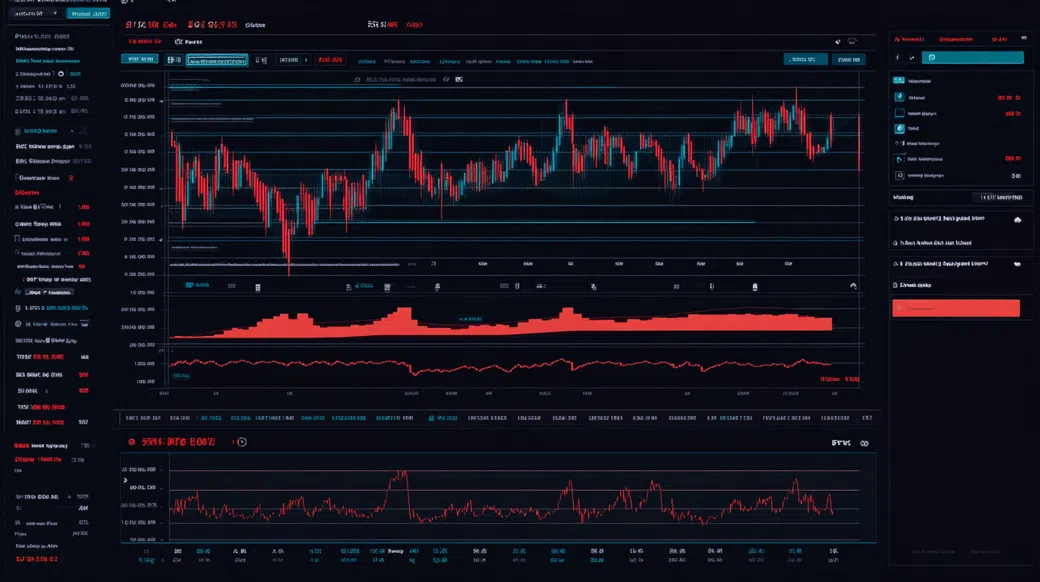
Spreads, execution, and the custody chain matter more in 2026 than flashy leverage banners. Trade Sired sits in a familiar corner of the market: an offshore-style CFD venue (commonly associated with Seychelles FSA frameworks), focused on forex and index/commodity CFDs, often paired with a proprietary WebTrader and a mobile app. From what is typically observable with this category of provider, the headline proposition is simple—easy onboarding, a low-ish entry point (often around a $250 minimum deposit), and leverage that can reach 1:500. The trade-off is that the safety envelope can be thinner than at Tier‑1 regulated firms, and the platform stack can feel “good enough” rather than institutional.
That’s why search interest for Trade Sired alternatives keeps rising among EU and US readers: some want tighter all‑in trading costs (spread + commission + swaps), others want a clearer regulatory perimeter (FCA/ASIC/CySEC/NFA), and many want better tooling—MT4/MT5, cTrader, APIs, or true multi‑asset access rather than CFDs on everything. If you are currently using Trade Sired, treat this guide as a structured comparison, not a verdict. My lens is microstructure-first: who controls execution, where slippage can appear, and what protections exist when something goes wrong.
Disclaimer: This article is for informational purposes only and does not constitute investment advice. CFDs and other leveraged products carry a high risk of loss and may not be suitable for all investors.
Across Europe, Trade Sired tends to be discussed as a CFD-first broker proposition rather than a full multi-asset brokerage. The product mix is usually centered on FX pairs and CFDs on indices and commodities, with crypto CFDs commonly appearing on the menu as well. The operating setup is consistent with what traders see at offshore venues: simplified onboarding, high leverage (often up to 1:500), and a platform experience designed to be accessible on web and mobile. For traders evaluating brokers similar to Trade Sired, the key question is not “can I place a trade?”—it’s “what is the execution model, and what protections exist around client money and disputes?”
The platform stack is typically a proprietary WebTrader with an iOS/Android companion app. Charting usually covers the basics—multiple timeframes, a standard indicator set, and common drawing tools—enough for discretionary FX/CFD trading but not always ideal for systematic workflows. Order entry generally supports market and limit orders, sometimes stop orders, with quick ticket-based execution; however, depth-of-market views, advanced order routing, and granular execution reporting can be limited versus DMA/STP environments. Mobile parity is often decent for monitoring and simple trade management, while account dashboards focus on margin, equity, and P/L rather than detailed transaction-cost analytics.
Fee schedules in this segment commonly combine a spread-first model with optional “raw-style” tiers. A reasonable working assumption for comparison is EUR/USD spreads from about 2.0 pips on a standard account. Where a raw/ECN-like account exists, it is often framed as near-zero spread (roughly 0.0–0.4 pips) plus a commission in the region of $6 round-turn. Swap/overnight financing is usually charged on leveraged CFD positions held past rollover, and it can dominate cost for swing traders. Watch for non-trading frictions too: withdrawal fees, currency-conversion markups, or inactivity charges can matter more than a 0.2‑pip spread difference.
Regulation is often the first pressure point—especially for EU-based traders who want the predictability of FCA/CySEC oversight and the discipline it forces on disclosures, complaints handling, and client-money rules. Costs are the second: a 2.0‑pip EUR/USD spread can be survivable for occasional trading, but it becomes expensive for high turnover. Platform constraints come next; if your process relies on MT5 strategy testing, cTrader depth-of-market, or API execution, a proprietary WebTrader can become a ceiling. Those are the typical pathways that lead people to Trade Sired alternatives, and the right substitute depends on whether you prioritize markets, microstructure, or simplicity.
Selection works best as a fit-to-strategy audit. Write down what you trade (and how), then map that to regulation, execution model, and total cost of ownership. The goal isn’t to “find the cheapest broker”; it’s to find a stable venue where the rules are legible—margin, stop-outs, negative balance protection, and dispute resolution—so your risk management actually holds under stress. For alternatives to the Trade Sired trading platform, I also look at ecosystem depth: platform tooling, reporting, and whether pricing is designed for active flow.
Start with the regulator’s public register: FCA (UK), ASIC (Australia), CySEC (Cyprus), or NFA/CFTC (US). These frameworks typically require segregated client funds and set expectations around disclosures and conduct. Compensation schemes vary: the UK’s FSCS can cover eligible clients up to £85,000, while Cyprus’ ICF coverage is up to €20,000 for eligible retail clients. These are not “profit guarantees,” but they do change the downside distribution in operational failure scenarios.
Match the broker to the instruments you genuinely need. FX/CFDs are fine for tactical exposure, but long-horizon investors often want real stocks and ETFs, and derivatives traders may need listed options or futures. If you trade macro themes, access to bonds or futures can be more efficient than rolling CFDs and paying ongoing swap. Crypto is its own fork: decide whether you want CFD exposure (no on-chain ownership) or spot crypto access, noting that many mainstream brokers restrict this by region.
Compare using round-turn costs: spread plus commission, plus realistic slippage assumptions for your order sizes. A raw account with a $6 round-turn commission can beat a spread-only account if your average spread saving exceeds roughly 0.6 pips on a standard lot—simple arithmetic, but many traders skip it. Then layer in swap/overnight fees if you hold positions, and check non-trading charges such as inactivity or withdrawal fees. Cost discipline is risk discipline.
Platform choice determines what kind of trader you can be. MT4/MT5 ecosystems support automation and a deep indicator marketplace; cTrader tends to appeal to traders who care about level-II style views and execution transparency. Proprietary platforms can be clean, but they may limit third-party integrations. Execution model matters: market maker setups can be fine for small flow, while STP/ECN/DMA routing is usually preferred for larger size and for traders monitoring slippage. If you are still on Trade Sired, treat this as a prompt to review execution quality logs, not just the UI.
Support quality shows up when volatility spikes and margin calls cascade. Check local language coverage (especially for EU users), live-chat responsiveness, and whether the broker publishes clear margin/stop-out rules. Education is only useful if it’s specific—platform tutorials, risk modules, and product explanations like swaps and negative balance protection. Finally, mobile parity matters more than marketing suggests: many traders manage risk from a phone during travel, so app stability is not optional.
In FX/CFDs, Trade Sired’s likely value proposition is accessibility—high leverage (often up to 1:500) and a straightforward WebTrader. The microstructure question is pricing quality: with EUR/USD around 2.0 pips on a standard-style account, frequent traders can end up paying materially more per month than they expect, even before swaps. Regulated FX/CFD specialists such as Pepperstone and IC Markets tend to be built for tighter all-in costs and platform choice (MT4/MT5/cTrader), which matters if you optimize entries, automate, or monitor latency. For active strategies, also look at how brokers describe execution (STP/ECN vs internalization) and whether they provide robust trade reporting—your slippage distribution is part of your edge, or part of your leak.
Many offshore CFD platforms focus on synthetic equity exposure—stock CFDs rather than direct share dealing. That can work for short-term speculation, but it’s a different product: no shareholder rights, financing costs can accrue on long holds, and corporate actions can be handled differently across providers. If your goal is portfolio building—real stocks, real ETFs, optional access to options or futures—the center of gravity shifts toward multi-asset brokers. Interactive Brokers (IBKR) is the reference point for breadth (equities, ETFs, options, futures, bonds, FX) and for execution tooling suited to experienced users. Saxo Bank is also strong in Europe for multi-asset access and platform depth. For traders comparing platforms like Trade Sired, this is often the biggest functional upgrade: moving from “trade the price” to “own the asset” where appropriate.
Where Trade Sired offers crypto, it is typically via crypto CFDs—price exposure without holding coins on-chain. That structure can be efficient for short-term views and for hedging, but it introduces leverage risk and overnight financing; it also doesn’t solve custody preferences for spot holders. Regulated CFD providers such as IG and Plus500 commonly offer crypto CFDs (availability varies by jurisdiction), and they tend to wrap them in clearer risk disclosures, margin rules, and standardized KYC/AML processes. For US readers in particular, crypto and CFDs sit behind additional restrictions; broker eligibility can be narrower. If crypto is central to your plan, treat margin requirements, weekend liquidity, and gap risk as first-order inputs—not an afterthought.
Regulation: SEC/FINRA (US), FCA (UK), IIROC (Canada) (entity and region dependent)
Markets: Stocks, ETFs, options, futures, bonds, FX, funds (broad multi-asset access)
Fees: FX pricing varies by schedule; commissions apply on many listed products; designed for low friction at scale rather than “spread-only” simplicity
Platform: Trader Workstation (TWS), web platform, mobile app, APIs
Best For: Multi-asset traders who care about routing and analytics
Regulation: FCA (UK), ASIC (Australia), CySEC (Cyprus), DFSA (Dubai)
Markets: FX and CFDs (indices, commodities, some crypto CFDs where permitted)
Fees: EUR/USD often ~0.0–0.3 pips on Razor/Raw-style pricing + commission (commonly ~$6–$7 round-turn); standard accounts typically wider (often ~1.0+ pip)
Platform: MT4, MT5, cTrader, TradingView (integration), mobile apps
Best For: Cost-focused FX traders running MT4/MT5 or cTrader
Regulation: FCA (UK), MAS (Singapore), DFSA (Dubai) (entity dependent)
Markets: Stocks, ETFs, bonds, options, futures, FX, CFDs (broad multi-asset suite)
Fees: FX spreads typically from ~0.6 pips depending on tier; commissions apply on many listed instruments
Platform: SaxoTraderGO, SaxoTraderPRO
Best For: Portfolio investors who still want active-trading tools
Regulation: FCA (UK), ASIC (Australia), MAS (Singapore)
Markets: CFDs (FX, indices, commodities, shares/ETFs CFDs), some regions offer share dealing; crypto CFDs where permitted
Fees: Spread-based CFD pricing; EUR/USD commonly from ~0.6–1.0 pips on main accounts (varies by region and conditions)
Platform: IG web platform, mobile app, MT4 (where available)
Best For: Hedgers and macro traders who value broad CFD coverage
Regulation: ASIC (Australia), CySEC (Cyprus), FSA Seychelles (group-level, entity dependent)
Markets: FX and CFDs (indices, commodities, some crypto CFDs where allowed)
Fees: Raw spreads often ~0.0–0.3 pips on EUR/USD + commission (commonly around $6–$7 round-turn); standard spreads typically wider (often ~1.0+ pip)
Platform: MT4, MT5, cTrader
Best For: High-frequency styles that need deep liquidity and VPS workflows
Regulation: FCA (UK), CySEC (Cyprus), ASIC (Australia), MAS (Singapore)
Markets: CFDs (FX, indices, commodities, shares CFDs, ETFs CFDs, crypto CFDs where permitted)
Fees: Spread-based CFD pricing; costs vary by instrument and volatility; overnight funding applies on leveraged positions
Platform: Plus500 proprietary web platform and mobile app
Best For: App-first traders who want a simple, regulated CFD interface
| Platform | Regulation | Main Markets | Typical Costs | Best For |
|---|---|---|---|---|
| Interactive Brokers (IBKR) | SEC/FINRA, FCA, IIROC | Stocks/ETFs, options, futures, bonds, FX | Commissions on many products; FX pricing by schedule; optimized for active/pro use | Multi-asset traders who care about routing and analytics |
| Pepperstone | FCA, ASIC, CySEC, DFSA | FX + CFDs | Raw: ~0.0–0.3 pips + ~$6–$7 round-turn; Standard: ~1.0+ pip | Cost-focused FX traders running MT4/MT5 or cTrader |
| Saxo Bank | FCA, MAS, DFSA | Multi-asset (incl. listed markets) | FX from ~0.6 pips (tiered); commissions for stocks/options/futures | Portfolio investors who still want active-trading tools |
| IG | FCA, ASIC, MAS | CFDs across FX/indices/commodities; shares/ETFs CFDs | Spread-based; EUR/USD often ~0.6–1.0 pips; financing on holds | Hedgers and macro traders who value broad CFD coverage |
| IC Markets | ASIC, CySEC, FSA Seychelles | FX + CFDs | Raw: ~0.0–0.3 pips + ~$6–$7 round-turn; Standard: ~1.0+ pip | High-frequency styles that need deep liquidity and VPS workflows |
| Plus500 | FCA, CySEC, ASIC, MAS | CFDs (broad retail list) | Spread-based; instrument-dependent; overnight funding on leverage | App-first traders who want a simple, regulated CFD interface |
A clean migration is less about speed and more about reducing operational risk while you change venues. Sequence matters: verify the new broker first, get your identity checks cleared, then unwind exposure on the old account in an orderly way. This is also where leverage can bite—closing positions under stress can lock in losses—so plan the move when markets are calm, not during a CPI print.
If you are benchmarking competitors to Trade Sired, it can still help to review the current onboarding steps, fee schedule, and regional restrictions directly on the site—then compare them line-by-line against regulated options. Focus on what changes your outcomes: execution reporting, total trading costs, and the protections attached to your account jurisdiction.
Visit Trade SiredThe best option depends on whether you need multi-asset access or FX/CFD specialization. For broad, real-market coverage, Interactive Brokers (IBKR) and Saxo Bank are strong Trade Sired alternatives in 2026. For platform choice and tight all-in FX costs, Pepperstone or IC Markets are often a better fit than offshore-style CFD venues.
Trade Sired is typically discussed as operating under an offshore framework (often associated with Seychelles FSA-style setups) rather than a Tier‑1 regulator like the FCA, ASIC, CySEC, or NFA. That doesn’t automatically mean malpractice, but it usually implies weaker investor-protection mechanisms (and different dispute pathways) than EU/UK-regulated brokers. If safety is your priority, compare the regulatory entity, segregation policy, and compensation eligibility at regulated options vs Trade Sired.
Trade Sired is generally positioned around forex and CFDs, with crypto CFDs commonly offered; real stocks/ETFs and listed futures are often not the core proposition (or are provided only as CFDs). If you need listed futures or options, Interactive Brokers is typically the most direct route among the best Trade Sired alternatives 2026. For crypto exposure under a CFD wrapper, brokers like IG or Plus500 may offer crypto CFDs where local rules permit.
Before switching, verify the new broker’s exact legal entity on the regulator’s public register and confirm your account jurisdiction. Then compare all-in costs (spread + commission + swap), platform requirements (MT4/MT5/cTrader vs proprietary), and risk controls like negative balance protection and margin policies. Finally, run a small live test to observe fills and slippage before scaling size—this is where Trade Sired trading platform alternatives 2026 can differ materially in practice.
About the Author: Elena Marchetti is a Milan-based fintech analyst covering European trading platforms, broker ecosystems, and market microstructure. Her work emphasizes observable data—execution models, fee mechanics, and regulatory perimeter—over marketing narratives.