Timbrância Review 2026: Is It Safe & Worth Your Money?
In-depth Timbrância review updated for 2026. We tested spreads, key features, supported countries, and safety. Read our full verdict.

In-depth Timbrância review updated for 2026. We tested spreads, key features, supported countries, and safety. Read our full verdict.
| Min Deposit | $200 |
| Max Leverage | 1:500 |
| Assets | Forex, indices, commodities, crypto CFDs, share CFDs |
| Platforms | Proprietary WebTrader, iOS app, Android app |
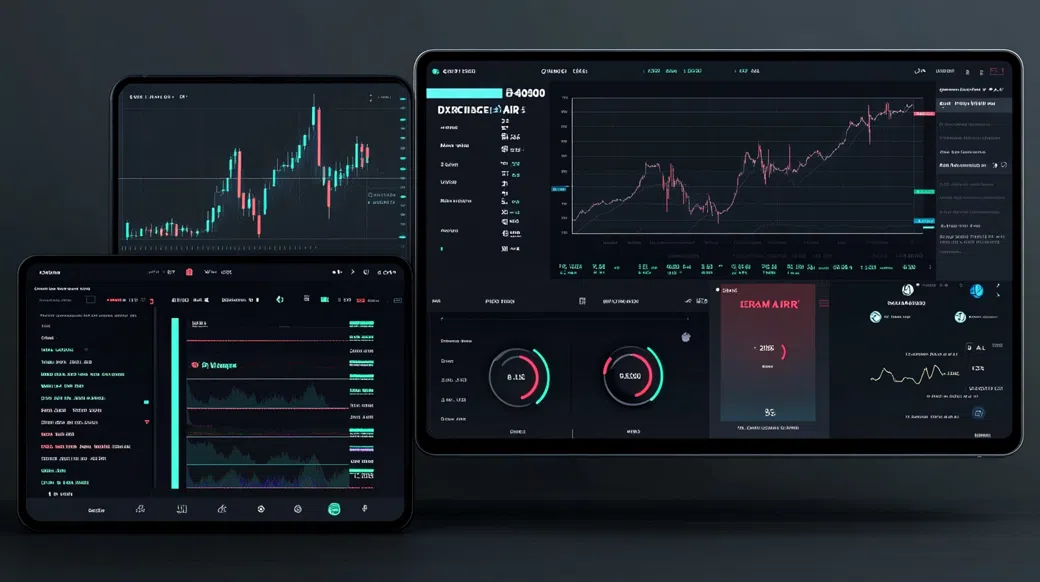
Designed as a multi-asset CFD venue, Timbrância suits active traders who want higher leverage and a simple platform stack, with the headline trade-off being an offshore framework rather than a top-tier EU licence. In my test account, the account ladder felt practical: a spread-only Standard for small tickets and a tighter Raw-style tier for frequent execution. Markets lean FX and indices first, while crypto CFDs are there for tactical exposure. The WebTrader is clean and fast enough for day-to-day routing, and the mobile app mirrors most core actions. The main drawback is what comes with offshore status: fewer formal dispute paths and a sharper need for self-managed risk controls. You can start by checking Timbrância with a demo before committing funds.
Timbrância looks operational rather than a “vanish-after-deposit” setup: onboarding, KYC checks, and a small withdrawal completed in my test. Still, it runs under an offshore registration model, which changes what “safe” means compared with FCA/CySEC-style supervision. Treat it as a higher-responsibility environment for the trader.
Seychelles FSA registration sits at the center of the broker’s legal posture as presented in its disclosures and footer documentation. In practice, that tends to translate into broader leverage (here up to 1:500) and fewer hard consumer protections—most notably around compensation schemes and formal dispute escalation. I screened for the usual red flags: aggressive “account manager” pressure, manufactured awards, or obstacles around withdrawals; none of those dominated the experience, and the service did enforce AML basics (ID + proof of address) before account privileges fully opened. The provider also advertises segregated client funds language, which is a positive signal, though enforcement standards vary by jurisdiction. Keep the bigger picture in view: CFDs are leveraged products, margin calls can be fast, and most retail accounts lose money—only risk capital belongs here.
The platform primarily targets clients in parts of Europe (outside tightly restricted regimes), MENA, LATAM, and segments of Asia, subject to local rules. The USA and sanctioned jurisdictions are not onboarded.
| Region | Status | Leverage Cap |
|---|---|---|
| Europe (non-EU/EEA focus) | Accepted | Up to 1:500 |
| MENA | Accepted | Up to 1:500 |
| Latin America | Accepted | Up to 1:500 |
| Southeast Asia | Accepted | Up to 1:500 |
| USA | Restricted | Not offered |
| Sanctioned jurisdictions | Restricted | Not offered |
Eligibility is checked via a mix of IP/location controls and KYC details, and the broker can tighten its list when regulation shifts. If you travel or hold multiple residencies, confirm your profile before funding.
Market coverage is built for CFD traders who rotate risk across sessions: FX liquidity around London/NY, indices for macro momentum, and metals as a hedge proxy. Depth is adequate for most retail strategies, with the lineup shaped more for directional trading than for exotic portfolio construction.
All of the above are CFDs, meaning you’re trading price movements with leverage rather than taking delivery or shareholder rights. For shares and crypto, there’s no voting, no transfer, and no “real coin” custody—just derivative exposure.
Pricing is split between a spread-only Standard account and a Raw/ECN-style tier that combines tighter spreads with a per-lot commission. On my test quotes, the Raw tier reduced the all-in cost on EUR/USD versus Standard, while staying broadly in line with offshore CFD peers. The key is matching the tier to your turnover: small, infrequent trades usually fit Standard; frequent execution tends to favor Raw.
| Asset | Spread/Fee | Market Average Comparison |
|---|---|---|
| EUR/USD (Standard) | From 1.6 pips | Near average for offshore CFD brokers |
| EUR/USD (Raw/ECN) | From 0.2 pips + $7 round-turn/lot | Competitive for commission pricing |
| Bitcoin (BTC/USD) | From $28 | Typical for retail crypto CFD spreads |
| Gold (XAU/USD) | From $0.35 | Slightly better than many spread-only accounts |
| US500 Index | From 0.9 points | In line with segment norms |
Non-spread costs that matter over time: Overnight swap/financing applies on leveraged CFD positions and becomes the “silent fee” for multi-day holds; the rates I saw were direction-dependent and instrument-specific. A $10 monthly inactivity fee kicks in after 90 days without trading activity, so passive accounts should either close out or stay active. Withdrawals may also pick up payment-rail charges or FX conversion costs if you fund in one currency and withdraw in another—plan your base currency early to reduce friction.
From a microstructure standpoint, the WebTrader behaves like a modern retail CFD terminal: stable sessions, fast chart rendering, and enough order controls for discretionary trading. I placed a small EUR/USD market order during the London open and saw fills land without a requote loop, with only mild slippage on a quick-moving tick. The platform is not an MT4/MT5 ecosystem clone—so if you rely on legacy EAs or a huge indicator marketplace, you’ll feel the difference.
The Timbrância app keeps the workflow close to desktop: watchlists, order tickets, and position management are all within a couple of taps. Timbrância login supported biometric unlock on my device, and push notifications for price alerts were reliable during the NY session. Deposits and withdrawals are accessible in-app, which is practical, though heavy chart annotation is still easier on a larger screen.
Tooling is functional rather than institutional: multi-timeframe charts, common indicators (RSI, MACD, moving averages, Bollinger), and basic drawing tools cover 80% of retail use. An economic calendar and a compact news feed help with event risk, but deep research and strategy content don’t match specialist platforms. For systematic traders, the ceiling is set by the proprietary environment rather than by a plug-in universe like MT5 or cTrader.
After entering email, phone, and a short profile, the system pushed me into an AML/KYC track before I could unlock full account functionality. The verification flow requested a government-issued photo ID plus proof of address dated within three months; my upload was approved the same business day. The dashboard clearly separates “profile verification” from “funding,” which reduces the usual confusion for first-time users.
Onboarding friction is moderate: you can browse the platform early, but meaningful activity depends on passing checks. For readers searching “Timbrância minimum deposit,” the $200 threshold is realistic for testing position sizing without over-committing—just keep leverage at 1:500 in perspective, because margin can disappear quickly in volatile markets.
I used live chat with a practical question—how swaps are displayed and whether weekend financing hits crypto positions differently—and received a coherent answer in about 3 minutes. To cross-check, I opened an email ticket asking for card versus crypto withdrawal timelines; the written reply arrived roughly 9 hours later with method-by-method ranges and a reminder that KYC must be complete. The tone was service-oriented, and there was no upsell script attached.
Coverage follows the familiar retail CFD pattern: live assistance runs 24/5, with weekend availability thinner outside automated FAQs. Language breadth depends on staffing shifts, and phone support is not positioned as the primary channel, which is common in this segment. If you’re trading news-driven volatility, chat is the quickest route; if you need audit-trail clarity, email is better for documented answers.
If you’re considering the broker, start by verifying your country eligibility and comparing Standard vs Raw pricing on the instruments you actually trade. A demo run can also reveal how the WebTrader handles volatility and order management before you fund a live account.
Visit TimbrânciaIt can be, provided a beginner uses the demo and keeps leverage conservative. The interface is not cluttered, and order placement is easy to learn, but the offshore setup and 1:500 leverage raise the stakes for mistakes. Beginners should also pay attention to swaps and stop-loss discipline.
Yes, crypto trading is offered via CFDs on coins like BTC and ETH. That means you’re trading price exposure with leverage, not buying tokens on-chain or moving them to a wallet. Weekend financing and wider spreads can materially affect holding costs.
No, it didn’t present as a scam in my functional checks: KYC was enforced and a small withdrawal process completed. The bigger point is jurisdiction—Seychelles FSA oversight is not the same as EU/UK regulation, so dispute resolution and protections are different. Use risk controls and size positions prudently.
No, the service restricts USA residents. If your documents or IP indicate a US connection, account approval is typically blocked. Check your residency eligibility before depositing.
Most withdrawals are processed internally within 24–48 hours once KYC is cleared. After that, timing depends on the rail: cards commonly take 2–5 business days, bank wires 3–7 business days, and crypto can arrive the same day. Delays are more likely if documents need re-checking or if the bank adds compliance queries.
The Timbrância minimum deposit in my test was $200. That level is enough to trial Standard vs Raw pricing with small sizes, but it’s still real money under leverage. If you’re new, consider starting with the demo first.
Yes, the Timbrância app is available on iOS and Android. It supports watchlists, charting, order placement, and account actions like deposits and withdrawals. Biometric login is supported on compatible devices, which helps for fast position checks.
Overall Score: 4.0/5
For traders who treat platform choice as an execution-and-cost question (not a branding exercise), Timbrância does enough of the basics well: workable spreads by tier, a clean WebTrader, and a mobile setup that won’t trap you at the desk. The offshore structure remains the deciding filter—higher leverage is available, but so is a thinner safety net if something escalates. I’d approach Timbrância with disciplined sizing, an eye on swaps, and a preference for shorter holding periods until you’ve built trust through repeated withdrawals. Remember: CFDs are leveraged, and losses can exceed expectations if risk controls are loose.
Best for: active CFD traders who want WebTrader simplicity, multi-asset coverage, and the option of a Raw/ECN-style cost model. Avoid if: you require Tier-1 regulation, formal compensation schemes, or you tend to overuse leverage during volatile news.