Royal Kapithorne Review 2026: Is It Safe & Worth Your Money?
In-depth Royal Kapithorne review updated for 2026. We tested spreads, key features, supported countries, and safety. Read our full verdict.

In-depth Royal Kapithorne review updated for 2026. We tested spreads, key features, supported countries, and safety. Read our full verdict.
| Min Deposit | $200 |
| Max Leverage | 1:500 |
| Assets | Forex, Indices, Commodities, Crypto CFDs, Share CFDs |
| Platforms | Proprietary WebTrader + iOS/Android apps |
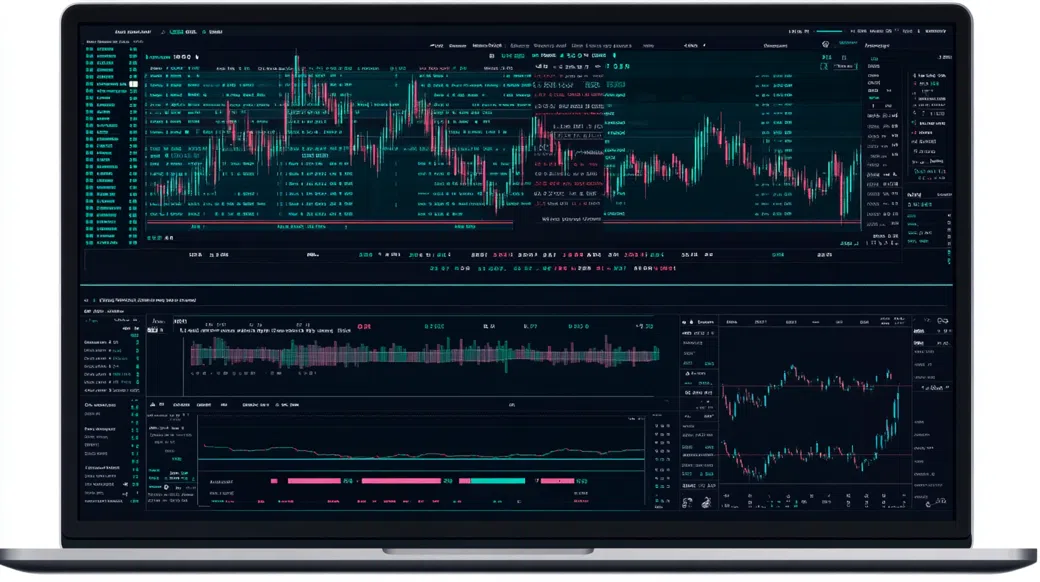
Built as a multi-asset CFD venue with offshore-style leverage, Royal Kapithorne suits traders who prioritize instrument coverage and flexible margin over top-tier investor protections. In my 2026 test, the account structure split cleanly between a spread-only Standard tier and a tighter-spread Raw/ECN-style option with per-lot commission, which matters once you scale position size. The lineup leans FX and indices first, with crypto CFDs as a secondary sleeve rather than the core. Execution and charting live in a proprietary WebTrader plus mobile apps; I didn’t see verified MT4/MT5 access in the client area. The upside is speed-to-market features; the drawback is the offshore dispute and compensation framework. For the platform tour and pricing pages, see Royal Kapithorne.
Royal Kapithorne is operational and behaved like a functioning CFD broker in my tests, including KYC checks and successful withdrawal processing. That said, it runs under an offshore framework, which changes the safety profile and the practical routes for dispute resolution. “Legit” here means the service executes and settles trades—not that it carries the same protections as FCA/CySEC-style regimes.
On the paperwork side, the provider presented itself under a Mauritius FSC-style registration footprint, a common setup for internationally marketed CFD venues. Offshore status typically comes with two edges: higher leverage availability (useful for margin efficiency) and lighter investor-compensation structures (less helpful when something goes wrong). I ran a red-flag scan during onboarding and trading: no aggressive “account manager” pressure in-platform, no trophy-badge theatrics on the dashboard, and the withdrawal pathway was visible from day one. Safeguards were present in a pragmatic way—KYC (ID + proof of address) was required before withdrawal, and the legal pages referenced segregated client funds language. Still, treat this as a higher-risk perimeter: CFDs are leveraged products; most retail accounts lose money, and you can burn capital quickly when volatility spikes.
The broker targets a cross-border client base, with onboarding generally open across parts of Europe (outside tightly restricted jurisdictions) and several emerging-market regions; the USA and sanctioned countries are not onboarded.
| Region | Status | Leverage Cap |
|---|---|---|
| Europe (non-EU/EEA) | Accepted | Up to 1:500 |
| Latin America | Accepted | Up to 1:500 |
| MENA (select countries) | Accepted | Up to 1:500 |
| Southeast Asia (select countries) | Accepted | Up to 1:500 |
| USA | Restricted | Not offered |
| Sanctioned jurisdictions | Restricted | Not offered |
Eligibility isn’t just a dropdown choice: IP/location signals and KYC documentation can trigger additional checks, and availability can shift as the provider adjusts its compliance perimeter. If you travel often, expect the platform to re-validate access when logins come from new regions.
The catalog reads like an FX-and-macro trader’s toolkit: majors and index CFDs are the center of gravity, with commodities and crypto CFDs available for tactical positioning. Depth is adequate for active retail trading, but this is not an exchange order book.
All exposure here is via CFD contracts: you don’t receive shareholder voting rights, and “crypto” positions are synthetic rather than wallet-held coins. Dividend adjustments, where applicable, are typically cash adjustments on the CFD rather than actual dividend entitlement.
Royal Kapithorne fees are built around two cost lanes: Standard accounts pay via spread, while the Raw/ECN-style tier compresses spreads and adds a per-lot commission. In my pricing checks, EUR/USD on Standard started around 1.6 pips, while the Raw/ECN-style feed hovered near 0.2 pips plus commission—broadly in line with offshore CFD peers. The practical winner depends on your trade count and average holding time.
| Asset | Spread/Fee | Market Average Comparison |
|---|---|---|
| EUR/USD (Standard) | From 1.6 pips | Near average for spread-only CFD accounts |
| EUR/USD (Raw/ECN) | From 0.2 pips + $7 round-turn/lot | Competitive if you trade size or scalp |
| Bitcoin (BTC/USD) | From $35 spread (variable) | Typical for CFD crypto pricing, widens on volatility |
| Gold (XAU/USD) | From $0.30 | Reasonable versus multi-asset CFD venues |
| US500 Index | From 0.8 points | In the usual retail CFD range |
Non-spread costs that change the real bill: Overnight swap/financing was the biggest variable during my hold-time tests—especially on indices and crypto where weekend financing can compound. An inactivity fee of $10 per month applied after 90 days without trading, which is easy to miss if you treat the account as a backup venue. Withdrawal charges looked method-dependent (card versus wire versus crypto), and funding in a non-USD base currency can introduce conversion costs at the payment-rail level.
From a microstructure angle, I care less about glossy UI and more about repeatable execution and clear margin math. The WebTrader stayed stable across multiple sessions, and the order ticket exposed the basics (market/limit/stop, SL/TP, position sizing) without hiding key parameters. During the London open I ran small tickets on EUR/USD and GER40 and saw fills that tracked the quote stream with occasional slippage when the tape accelerated—nothing unusual for a CFD model, but not the place to expect exchange-like certainty. If you’re embedded in MT4/MT5 plugin ecosystems, you’ll feel the gap in third-party automation and indicator marketplaces.
The Royal Kapithorne app mirrored the web layout closely, which reduced the “where did they move that button?” friction. Royal Kapithorne login supported biometric unlock on my device, and positions, orders, and available margin were readable at a glance. I could place stop orders, adjust SL/TP, and initiate deposits/withdrawals directly from mobile; push notifications for order fills were available, though alert granularity was more basic than pro charting apps. One minor quirk: chart redraws were slightly heavy when stacking indicators on older hardware.
Tooling was practical rather than boutique: multi-timeframe charts, standard indicators (MA, RSI, MACD, Bollinger), drawing tools, and watchlists did the job for discretionary trading. An economic calendar and integrated news feed helped with event risk, but the research layer won’t replace a dedicated terminal for macro mapping. In short, it’s serviceable for execution and monitoring, with a clear ceiling if you rely on advanced alerts, strategy testing, or cTrader/MT5-grade analytics.
After entering email, phone, and a short profile questionnaire, the client area prompted an identity workflow aligned with AML expectations. I uploaded a passport photo page plus a recent bank statement (under three months) as proof of address; verification cleared the same business day, and the dashboard then unlocked full funding and withdrawal menus. The KYC sequencing felt purposeful: trading access was available early, but withdrawal required the documents to be approved.
Funding via card posted immediately on my test account, with the confirmation screen showing the credited amount and account currency in a single receipt-style view. If you plan to operate in EUR while the account base is USD, factor conversion into your cash-management routine; it’s a quiet drag that doesn’t show up in the spread widget.
I used live chat to ask for the current swap policy on US500 and whether weekend financing is applied as a triple charge—an area where brokers often blur details. The agent joined after roughly three minutes and pointed me to the instrument-spec page while summarizing the rule in plain terms. I followed up by email requesting written confirmation of withdrawal processing times for card versus crypto; the ticket reply landed in about nine hours with a concise breakdown and a reminder that KYC approval is a prerequisite.
Coverage is positioned as 24/5, which fits the CFD week and aligns with peers in this segment. Language breadth appears region-driven (English was consistently available; additional languages depended on time of day), and phone support wasn’t emphasized in the client area. Over the weekend, I saw the usual pattern: chat intake remained visible, but substantive account actions were clearly framed as business-day operations.
If you’re considering this broker, start by comparing the Standard versus Raw/ECN-style pricing on the instruments you actually trade, then test order behavior on a demo before funding. Also confirm your country eligibility and available payment rails—these can change faster than the marketing pages.
Visit Royal KapithorneIt can be, provided you stay conservative with leverage and use the demo first. The interface is not overly technical, and the Standard account avoids commission math. The bigger issue for novices is risk control: CFDs are leveraged, and losses can accelerate quickly during volatile sessions.
Yes, crypto CFDs were available, including BTC and ETH in my platform menu. These are derivative positions rather than on-chain holdings, so you won’t be withdrawing coins to a wallet. Expect wider spreads during sharp moves and weekend financing effects.
No—based on my 2026 hands-on checks, it operated like a real broker: KYC was enforced and withdrawals processed. The caution is regulatory, not operational: it follows an offshore model, so client protections and escalation routes are not the same as Tier‑1 licensed firms. Treat it as higher-risk infrastructure and size positions accordingly.
No, the USA was restricted in the onboarding flow. If you attempt registration from a US location, access is typically blocked or fails eligibility at verification. This aligns with common cross-border CFD policy constraints.
Most withdrawals are processed internally within 24–48 hours after KYC is approved. Receipt time then depends on the rail: cards typically take 2–5 business days, bank wires 3–7 business days, and crypto transfers are often completed the same day. My test followed that pattern, with the longest delay coming from card settlement timing.
The Royal Kapithorne minimum deposit is $200 on the live account path I used. That level is typical for offshore multi-asset CFD brokers aiming to balance accessibility with basic KYC/AML controls. If you deposit in another currency, conversion may affect the final credited USD amount.
Yes, it offers iOS and Android apps alongside the WebTrader. Mobile included order placement, position management, and funding/withdrawal access, plus biometric unlock on supported devices. For heavy technical analysis, the desktop charting still feels more comfortable.
Overall Score: 4.0/5
For traders who think in spreads, financing, and execution frictions, the strongest point is that the cost model is coherent: Standard for simplicity, Raw/ECN-style for tighter pricing when frequency rises. My deposit, trading, and withdrawal checks behaved predictably, and the platform tools covered the essentials without pretending to be a full pro terminal. The structural compromise remains the offshore wrapper—useful for leverage flexibility, weaker for formal protections. If you proceed, keep position sizing disciplined; CFDs are leveraged and capital is at risk. More details and the current onboarding flow are on Royal Kapithorne.
Best for: active CFD traders who want a simple WebTrader/app stack with optional Raw/ECN-style pricing. Avoid if: you require Tier‑1 regulation, extensive research, or MT4/MT5-dependent automation.