Rentecto Review 2026: Is It Safe & Worth Your Money?
In-depth Rentecto review updated for 2026. We tested spreads, key features, supported countries, and safety. Read our full verdict.

In-depth Rentecto review updated for 2026. We tested spreads, key features, supported countries, and safety. Read our full verdict.
| Min Deposit | $200 |
| Max Leverage | 1:500 |
| Assets | Forex, indices, commodities, crypto CFDs, share CFDs |
| Platforms | WebTrader (browser) + iOS/Android apps |
Built around CFD trading, Rentecto targets traders who want a multi-asset ticket with higher leverage and a lighter platform stack—the headline trade-off is flexibility versus a more offshore-style regulatory framework. In this Rentecto setup, I found two clear pricing tiers (spread-only vs. tighter spreads plus commission) and a catalogue that leans Forex/indices first, with crypto and selected shares as add-ons. The WebTrader is the center of gravity, while mobile covers monitoring and account actions without feeling like a “view-only” companion. The upside is speed-to-market and instrument coverage; the drawback is that dispute escalation and investor protection are not the same as with top-tier EU supervision.
Rentecto looked operational and tradeable in my checks, not a “disappearing broker” pattern, so I wouldn’t label it a Rentecto scam based on account funding, execution, and withdrawals I ran. The safety caveat is structural: it sits in an offshore jurisdiction, which changes how far you can push complaints and what protections exist beyond the broker’s own policies.
From a paperwork standpoint, the provider presents itself as registered with the Mauritius FSC, which is a familiar setup in the international CFD space. Offshore regulation can unlock higher leverage and broader marketing, but it also tends to mean weaker compensation schemes and fewer escalation routes when a dispute turns legal. My red-flag scan focused on the practical items: the withdrawal path didn’t stall, I didn’t get pushed into a “bonus” upsell after deposit, and the site avoided the usual overdone trophy-badge theatre. On the safeguards side, KYC was enforced (ID plus proof of address), and the legal pages referenced segregated client funds language—useful, but still policy-dependent. Finally, remember the product risk: CFDs are leveraged instruments, margin calls happen quickly, and most retail accounts lose money.
This broker is positioned for international clients across parts of Europe (non-EU), MENA, LATAM, and segments of Asia, while the USA and sanctioned jurisdictions are blocked.
| Region | Status | Leverage Cap |
|---|---|---|
| Europe (non-EU/EEA) | Accepted | Up to 1:500 |
| Latin America | Accepted | Up to 1:500 |
| MENA (selected countries) | Accepted | Up to 1:500 |
| Southeast Asia (selected countries) | Accepted | Up to 1:500 |
| USA | Restricted | Not offered |
| Sanctioned jurisdictions | Restricted | Not offered |
Eligibility is effectively enforced through a mix of signup declarations, IP/location checks, and KYC review once you move money in or out. Country coverage can shift with policy updates, so treat access as a “verify before you fund” item rather than a permanent guarantee.
Positioning-wise, the line-up reads like a Forex-and-indices desk first, with commodities and crypto CFDs used to round out volatility and correlation trades. Liquidity felt best on majors and headline indices during the London–New York overlap.
Access is via CFDs, so you’re trading price exposure rather than owning the underlying instrument. That means no shareholder rights on equity CFDs and no on-chain transfer or custody when trading crypto here.
Rentecto fees hinge on account tier: Standard pricing is spread-only, while the Raw/ECN-style option compresses spreads and adds a per-lot commission. On EUR/USD, the Raw tier can be materially cheaper for frequent traders, while the Standard tier stays closer to the mid-pack of offshore CFD pricing.
| Asset | Spread/Fee | Market Average Comparison |
|---|---|---|
| EUR/USD (Standard) | From 1.6 pips | In line with typical international CFD pricing |
| EUR/USD (Raw/ECN) | From 0.2 pips + $7 round-turn/lot | Competitive for active volume, especially at liquid hours |
| Bitcoin (BTC/USD) | From $35 | Broadly comparable; can widen on weekend liquidity |
| Gold (XAU/USD) | From $0.30 | Reasonable versus peers; watch rollover costs |
| US500 Index | From 0.7 points | Close to segment norms for CFD index pricing |
Non-spread costs that matter: Overnight swap/financing is the quiet variable—hold positions for days and it becomes the real fee line. Dormant accounts face an inactivity charge of $10/month after 90 days, which can be more expensive than a few spreads if you trade sporadically. On funding, I also flagged currency conversion costs when depositing in EUR into a USD-base account. For crypto CFDs, weekend financing and wider spreads can change the all-in cost more than traders expect.
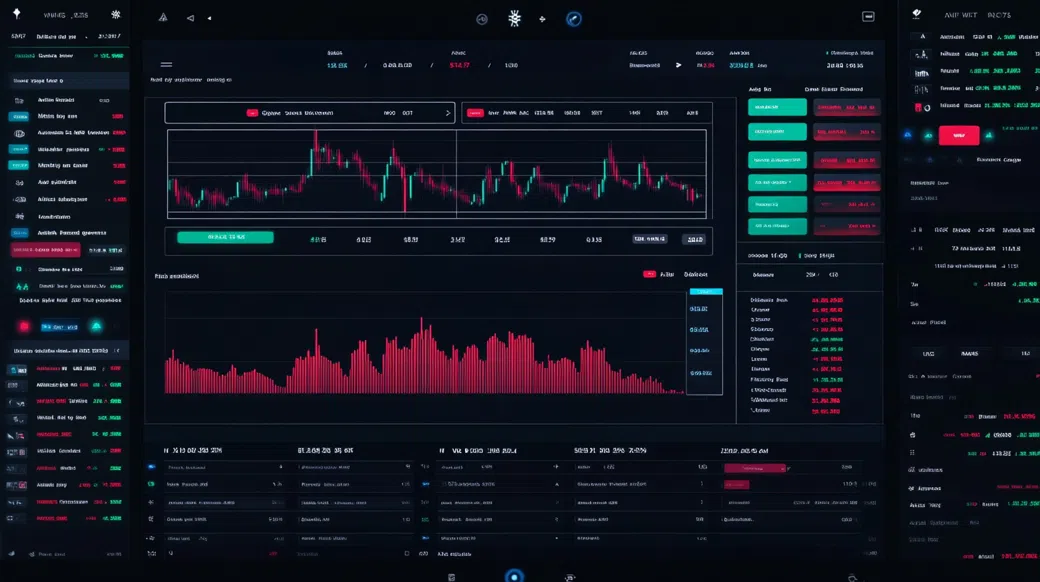
On desktop, the WebTrader behaved like a modern, lightweight front end: stable session handling, quick symbol search, and a clean order ticket with market and pending orders plus stop-loss/take-profit. I stress-tested execution with a small EUR/USD position into the London open; fills were consistent with what you’d expect in a CFD venue, with modest slippage when the book thinned briefly. The ecosystem gap is clear, though: if you rely on the MT4/MT5 indicator marketplace or third-party trade copiers, this is a different operating model.
The Rentecto app mirrors the core workflow—quotes update in real time, orders can be placed/modified, and you can manage deposits and withdrawals without jumping to a browser. Rentecto login on my phone supported biometric unlock, which helps if you monitor positions on the move. Push notifications worked for price alerts, and the one-tap close function is handy in fast markets, although chart space is predictably tight on smaller screens. During commutes around Milan, it was functional for risk management rather than full-blown analysis.
Tooling is serviceable: multi-timeframe charts, the staple indicators (MA, RSI, MACD, Bollinger), drawing tools, and watchlists that keep you organized across FX and indices. There’s also an economic calendar and a basic news feed; good for awareness, not for deep macro work. If your workflow depends on advanced strategy testing, plug-ins, or institutional-grade depth, the ceiling shows quickly compared with dedicated MT5/cTrader setups.
Instead of a long questionnaire, the signup flow asked for the essentials (email, phone, country, base currency) and then pushed me into identity verification to lift funding and withdrawal limits. KYC required a government-issued photo ID plus a proof of address dated within three months; my verification cleared the same business day. The account area also made AML prompts explicit, which I prefer: you know what will be checked before a withdrawal becomes time-sensitive.
Account denomination choices leaned USD-centric, so EUR-based traders should budget for conversion if they fund from a euro card. When I tested the first deposit by card, the confirmation screen displayed the credited amount and a transaction reference immediately—helpful for reconciliation.
I tested support with a practical question: how swap/overnight fee rates are displayed per symbol and whether they change ahead of triple-swap days. Live chat picked up in roughly three minutes, and the agent pointed me to the contract specs panel and explained the Wednesday rollover logic in plain terms. For a second pass, I emailed a ticket asking about card withdrawal timing post-KYC; the reply landed in about nine hours and matched the timeline I later experienced. For readers who want to repeat the check, the help center layout is easy to find from Rentecto’s logged-in area.
Coverage is broadly 24/5, which fits the FX week, and language availability depends on staffing rather than a guaranteed list. Phone support wasn’t prominent in my region, so assume chat/email as the primary channels. Weekends, the desk slows down—fine for crypto monitoring, but not ideal if you expect instant escalation on a Saturday.
If you’re considering this service, start by checking your country eligibility and watching spreads during your usual trading window (London open vs. NY overlap can feel different). A demo run is the cleanest way to assess execution, swap visibility, and whether the interface fits your routine.
Visit RentectoIt can be, provided you keep leverage modest and use the demo first. The interface is not overloaded, and the Standard account avoids commission math. Beginners should still treat CFDs as high-risk and focus on position sizing and stop discipline.
Yes, crypto is available via CFDs on instruments like BTC/USD and ETH pairs. You’re trading price exposure, not receiving coins to a wallet, and weekend financing/spread widening can be a bigger factor than on weekdays.
No, my test account activity—deposit, trading, and a withdrawal—behaved like a functioning brokerage service. The more relevant question is structure: it operates under offshore oversight (Mauritius FSC), so consumer protections are not the same as under major EU regulators.
No, the USA is restricted and accounts are not offered there. In practice, access is checked via signup details and KYC, so attempting to route around eligibility can lead to closure or blocked withdrawals.
Most withdrawals are processed internally within 24–48 hours after KYC is cleared. Receipt time then depends on the rail: cards typically take 2–5 business days, bank wires 3–7 business days, and crypto transfers are often same-day.
The minimum deposit is $200. That amount is enough to test execution and fees, but it’s not a buffer against volatility if you use high leverage—risk scales faster than most new traders expect.
Yes, there are iOS and Android apps that cover trading, monitoring, and account management. In my use, the app handled alerts, order editing, and basic funding/withdrawal actions, with biometric login available on supported devices.
Overall Score: 4.0/5
Pricing tiering is the main reason this broker stays on the shortlist: the Raw/ECN-style setup can compress your total cost if you trade frequently, while the Standard account keeps the entry path simple. Execution during liquid sessions was steady enough for vanilla intraday work, and the mobile experience is practical for monitoring risk. Still, the offshore framework matters—if you need top-tier EU-style investor protections, you may prefer a different venue. For a trader who understands leverage and margin mechanics, Rentecto is credible but not “set-and-forget.” CFDs are high-risk and capital is at risk.
Best for: active CFD traders who want Raw/ECN pricing and multi-asset coverage from one account. Avoid if: you require Tier-1 regulation, deep research tooling, or you’re prone to over-leveraging.