Pura Custodièr Trading Platform Alternatives 2026
A risk-aware guide to Pura Custodièr alternatives in 2026: compare regulated brokers, platforms, execution models, costs, and a safe switching checklist.

A risk-aware guide to Pura Custodièr alternatives in 2026: compare regulated brokers, platforms, execution models, costs, and a safe switching checklist.
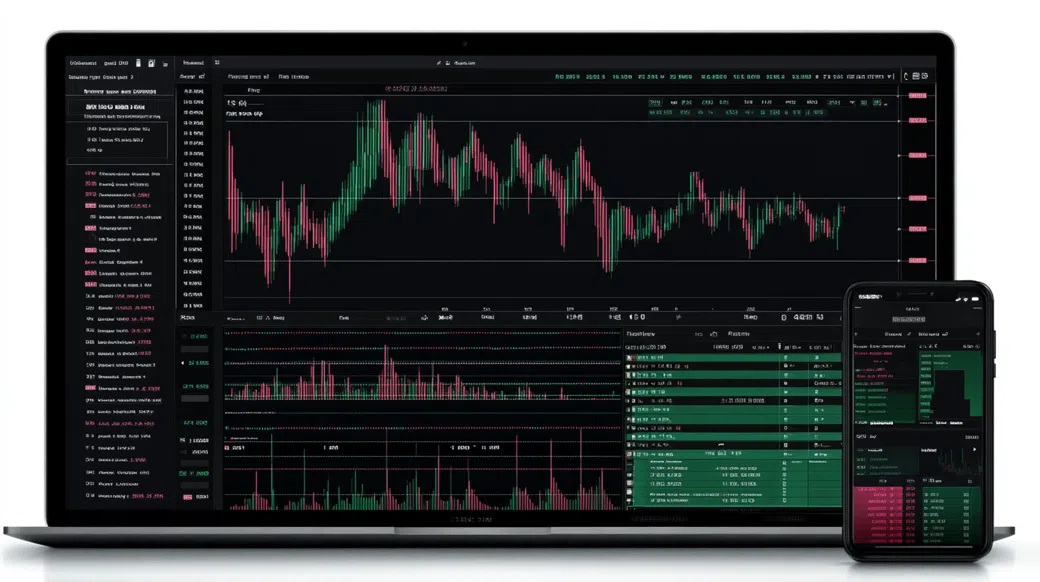
Spreads, slippage, and cash-out mechanics decide real-world performance long before a flashy interface does. That’s the lens I use when readers ask for Pura Custodièr alternatives in 2026—especially when the broker sits in the offshore end of the CFD market, where leverage is high and protections can be thinner. Based on what’s typically visible for this category of provider, Pura Custodièr is positioned as a forex/CFD-first venue with a proprietary WebTrader and mobile app, offering access to a moderate menu of pairs, indices, commodities, and often crypto CFDs. Conditions like a $250 minimum deposit, leverage advertised up to 1:500, and EUR/USD spreads around 2.0 pips are consistent with this segment.
For some traders that’s “good enough” for directional bets. For others, it’s friction: you may want audited best-execution policies, clearer segregation of client money, predictable margin-call rules, or the ability to own the underlying asset rather than trade a derivative. The US is typically restricted for offshore CFD platforms, which pushes US-based traders toward NFA/CFTC-supervised venues or multi-asset brokers with local licensing. This article maps alternatives to the Pura Custodièr trading platform across US/EU priorities—cost transparency, execution model (market maker vs STP/ECN/DMA), and investor-protection regimes—so you can compare like-for-like rather than chase headline leverage. You can review the current offering directly on Pura Custodièr, but the focus here is building a safer shortlist.
Disclaimer: This article is for informational purposes only and does not constitute investment advice. CFDs and other leveraged products carry a high risk of loss; only trade with money you can afford to lose.
From a market-structure perspective, Pura Custodièr fits the profile of an offshore CFD broker—commonly set up under a jurisdiction such as the Seychelles FSA—designed for clients who want fast onboarding, a single-margin account, and access to leveraged forex and CFDs. That setup is typically marketed to active retail traders, including those attracted by higher leverage (often up to 1:500) and a simplified product catalogue. The trade-off is that investor-protection layers you’d expect under FCA, ASIC, CySEC, or NFA oversight may not apply in the same way, and dispute resolution can be less straightforward. In practice, brokers similar to Pura Custodièr often run a market-maker or hybrid execution model, where the venue is the counterparty for many trades and risk is internally managed rather than routed to a lit market.
The platform stack is usually centred on a proprietary WebTrader with a companion iOS/Android app. Functionality tends to land in the “basic-to-mid” band: responsive charts, a standard set of indicators, drawing tools for trend and level work, and quick order tickets for market and pending orders. Where the differences show up is depth and workflow—fewer advanced order types, limited custom scripting compared with MT4/MT5/cTrader ecosystems, and less transparency on execution statistics (fill ratios, requotes, or median slippage). Mobile parity is commonly decent for monitoring positions and adjusting stops, but portfolio-level reporting and margin analytics are often thinner than what DMA-oriented venues provide.
Cost disclosure for offshore CFD platforms is often simplified to “spread from…” headlines. A reasonable working expectation in this segment is a Standard-style EUR/USD spread around 2.0 pips, with higher spreads during illiquid hours or major macro events. Some brokers also present a Raw/ECN-like tier (typically 0.0–0.4 pips plus a round-turn commission in the ~$5–$8 range), though the details vary by account and liquidity setup. Beyond spreads, traders should watch swap/overnight financing on leveraged CFDs, potential withdrawal charges (especially for non-card rails), and inactivity fees that can accumulate when an account is idle. If you’re comparing platforms like Pura Custodièr, insist on a full fee schedule in writing, not just a landing-page number.
Cost is the obvious catalyst, but in my experience the trigger is more often “process risk”: a trader wants tighter control over execution, clearer recourse, or more predictable funding/withdrawal operations. That’s why Pura Custodièr alternatives get shortlisted not only by scalpers hunting lower spreads, but also by swing traders who care about swap rates and by investors who want real asset ownership rather than perpetual CFD exposure. Offshore leverage can amplify outcomes quickly; it can also magnify small pricing differences into meaningful P&L drag. A measured approach is to treat switching as a change in infrastructure, not a cosmetic app swap.
Selection works best as a strategy-fit exercise: define what you trade, how often you trade, and what can break your process (execution, funding, platform tooling). From there, rank options by safety rails first, then by cost-of-trade, and only then by UI polish. This prevents a common mistake—optimizing for a narrow spread quote while ignoring the legal entity, compensation scheme coverage, or margin policy details that matter when markets gap.
Start with the regulator and the exact legal entity you would onboard with. FCA supervision in the UK can pair with the FSCS investor compensation scheme (coverage up to £85,000, eligibility rules apply), while CySEC oversight can connect to the ICF (up to €20,000, eligibility rules apply). ASIC and NFA/CFTC frameworks bring their own conduct and reporting expectations. Look for segregated client funds language, negative balance protection where applicable, and clear risk disclosures—then verify the license on the regulator’s public register before funding.
Match instruments to goals. FX and index CFDs cover many short-term strategies, but long-horizon investors often want cash equities/ETFs (with shareholder rights) rather than CFD price exposure. Options and futures matter for hedging and for defined-risk structures. Crypto is its own branch: “crypto CFDs” are leveraged derivatives, not on-chain ownership. Alternatives to the Pura Custodièr trading platform differ sharply here; multi-asset brokers typically win on breadth, while FX specialists win on execution and pricing in spot FX and CFDs.
Compare round-turn costs, not marketing snippets. For example, a 2.0-pip EUR/USD spread can be expensive for a trader doing frequent entries; a raw spread near zero plus commission may be cheaper at volume, even after fees. Add swap/overnight financing for multi-day holds, plus non-trading charges such as inactivity or withdrawal fees. If you currently trade on Pura Custodièr, export a month of statements and estimate your effective cost per million traded—then benchmark alternatives using the same yardstick.
Platform choice is workflow choice. MT4/MT5 ecosystems support EAs and a deep marketplace of tools; cTrader is popular with discretionary traders who want clean order handling and depth-of-market visuals; proprietary platforms vary widely. Execution model matters: market maker internalization can mean stable fills in calm markets, while STP/ECN/DMA setups may offer more transparent routing but still produce slippage in fast tape. Ask what order types exist, how stop orders are triggered, and whether the broker publishes execution-quality reporting.
Support is not cosmetic when money is moving. Check local language coverage (especially across EU time zones), typical response time, and whether live chat can actually resolve funding or platform issues without escalation. Education quality also differs: some brokers provide microstructure-aware webinars and margin explainers; others stop at basic platform tours. Finally, validate mobile parity: can you manage margin, view swaps, and edit orders reliably on the app, or is the phone experience “view-only” in practice?
Forex and CFDs are the centre of gravity for Pura Custodièr-style venues: think ~30–50 FX pairs, 8–15 indices, and a small commodities slate. The strategic question is not access—it’s the cost/execution mix. With EUR/USD typically around 2.0 pips on a standard configuration and leverage promoted up to 1:500, outcomes can hinge on micro-frictions: spread widening at rollovers, stop execution during volatility, and swap charges on holds. Regulated FX/CFD specialists such as Pepperstone and IC Markets tend to compete on raw pricing and platform choice (MT4/MT5/cTrader) while operating under clearer regulatory umbrellas (entity-dependent). For traders who scalp or run systematic strategies, the combination of tighter spreads, known commission schedules, and better tooling can be more material than an extra turn of leverage.
If your plan includes building a portfolio—cash equities, ETFs, or hedging with listed options—offshore CFD brokers are often the wrong plumbing. Equity “exposure” may arrive as CFDs, which typically carry overnight financing and do not confer shareholder rights. That structure can make long holds mechanically expensive and operationally different from owning the asset. Interactive Brokers (IBKR) is the reference point for broad, exchange-listed access (stocks, ETFs, options, futures, bonds) with a professional-grade routing stack; Saxo Bank is a strong European alternative with a polished multi-asset workflow and research tooling. In other words, competitors to Pura Custodièr that are multi-asset can close the ownership gap—especially for EU traders balancing CFDs for tactical trades with cash instruments for longer horizons.
Crypto on offshore CFD platforms is usually delivered as crypto CFDs—price exposure with leverage, not on-chain custody. That can suit short-term views, but it’s a different risk bundle: counterparty risk to the broker, financing costs, and potential trading halts during extreme volatility. For regulated options, IG and Plus500 commonly offer crypto CFDs in jurisdictions where permitted (product availability varies by country and entity), with clearer disclosures and conduct rules than offshore setups. If you want to own crypto outright (withdraw to a wallet), that’s typically outside the CFD broker model and points to specialist exchanges—outside the scope of this broker-only comparison. As a practical rule, treat crypto CFDs as high-volatility leveraged instruments and size positions accordingly; gaps can bypass stops, and margin calls can cascade fast.
Regulation: SEC/FINRA (US), FCA (UK), IIROC (Canada) (entity-dependent).
Markets: Stocks, ETFs, options, futures, bonds, FX (spot), funds (availability varies by region).
Fees: FX pricing is typically commission-based with tight spreads; equity/derivatives pricing varies by venue and plan—best assessed via your expected monthly volume.
Platform: Trader Workstation (TWS), IBKR Desktop/Mobile, Client Portal, APIs.
Best For: Multi-asset traders needing exchange access and advanced routing.
Regulation: FCA, ASIC, CySEC, DFSA (entity-dependent).
Markets: FX and CFDs (indices, commodities; crypto CFDs where permitted).
Fees: EUR/USD often ~0.0–0.3 pips on Razor/Raw-style pricing plus commission; Standard-style spreads commonly around ~1.0–1.2 pips (varies by entity and market conditions).
Platform: MT4, MT5, cTrader, TradingView integration (availability varies).
Best For: Systematic FX traders optimizing spread + commission.
Regulation: FCA, MAS, DFSA (entity-dependent).
Markets: Stocks, ETFs, bonds, options, futures, FX, and CFDs (product set varies by jurisdiction).
Fees: FX spreads and commissions depend on tier; costs are generally competitive for active clients, with transparent schedules rather than “from” headlines.
Platform: SaxoTraderGO, SaxoTraderPRO.
Best For: EU investors blending portfolio holdings with tactical FX/CFDs.
Regulation: FCA, ASIC, MAS (entity-dependent).
Markets: CFDs across FX, indices, commodities, shares (often as CFDs); spread betting in the UK; limited stock dealing in some regions.
Fees: Spreads vary by instrument; FX majors can be competitively priced, while share CFDs add financing/other charges—check the full cost stack per market.
Platform: IG web platform, mobile apps; MT4 available in some regions.
Best For: Active CFD traders prioritizing strong risk controls and tooling.
Regulation: ASIC, CySEC, FSA Seychelles (entity-dependent).
Markets: FX and CFDs (indices, commodities; crypto CFDs where permitted).
Fees: Raw-style accounts often show ~0.0–0.3 pip spreads on EUR/USD plus commission (commonly in the ~$6–$7 round-turn range); Standard-style spreads usually higher.
Platform: MT4, MT5, cTrader.
Best For: High-frequency execution on MT4/MT5/cTrader.
Regulation: FCA, CySEC, FSC Bulgaria (entity-dependent).
Markets: Stocks and ETFs (investing), CFDs (availability varies by country).
Fees: Investing accounts may be commission-free with other charges possible (FX conversion, spreads); CFD pricing is spread-based and varies by instrument.
Platform: Proprietary web and mobile platforms.
Best For: Mobile-first investors adding occasional CFD exposure.
| Platform | Regulation | Main Markets | Typical Costs | Best For |
|---|---|---|---|---|
| Interactive Brokers (IBKR) | SEC/FINRA, FCA, IIROC | Stocks/ETFs, options, futures, bonds, FX | Commission-based; tight FX pricing; tiered by venue/plan | Multi-asset traders needing exchange access and advanced routing |
| Pepperstone | FCA, ASIC, CySEC, DFSA | FX, CFDs (indices/commodities; crypto CFDs where permitted) | Raw ~0.0–0.3 pips + commission; Standard ~1.0–1.2 pips (typical) | Systematic FX traders optimizing spread + commission |
| Saxo Bank | FCA, MAS, DFSA | Stocks/ETFs, options/futures, FX, CFDs | Tiered spreads/commissions; transparent schedules by product | EU investors blending portfolio holdings with tactical FX/CFDs |
| IG | FCA, ASIC, MAS | CFDs (FX/indices/commodities/shares); UK spread betting | Spread-based; additional financing/charges on leveraged products | Active CFD traders prioritizing strong risk controls and tooling |
| IC Markets | ASIC, CySEC, FSA Seychelles | FX, CFDs (indices/commodities; crypto CFDs where permitted) | Raw ~0.0–0.3 pips + ~$6–$7 round-turn commission (typical) | High-frequency execution on MT4/MT5/cTrader |
| Trading 212 | FCA, CySEC, FSC Bulgaria | Stocks/ETFs (investing), CFDs (region-dependent) | Investing: low explicit fees but FX/spread costs; CFDs: spread-based | Mobile-first investors adding occasional CFD exposure |
Migration is a risk-control exercise: you’re changing counterparties, margin rules, and often the execution model. Treat it like a deployment—document, test, and only then scale. If you’re leaving an offshore CFD venue, keep in mind that leverage cuts both ways; a rushed transfer can add avoidable losses via forced closes, swap surprises, or funding delays.
If you’re benchmarking regulated options vs Pura Custodièr, start by checking eligibility in your country, then compare the platform stack (MT4/MT5/cTrader vs proprietary) and the full fee schedule—spreads, commissions, swaps, and withdrawal rules. A few minutes on the onboarding and disclosure pages often tells you more than any advertisement.
Visit Pura CustodièrThe best alternative depends on whether you need exchange-traded assets or mainly FX/CFDs. For multi-asset access (stocks, ETFs, options, futures) Interactive Brokers and Saxo Bank are strong reference points; for FX/CFD cost and tooling, Pepperstone and IC Markets are common picks under tier-1 regulatory entities. Use your own trade frequency to compare round-turn cost and expected slippage, not just headline spreads.
Pura Custodièr appears to operate under an offshore framework (often associated with jurisdictions such as the Seychelles FSA), which generally offers fewer investor-protection mechanisms than FCA/ASIC/CySEC/NFA regimes. That doesn’t automatically mean a trader will have problems, but it changes the safety envelope: compensation schemes like FSCS or ICF may not apply, and enforcement standards can differ. If safety is your priority, focus your shortlist on regulated brokers and verify the exact onboarding entity.
With Pura Custodièr-style platforms, stocks and ETFs—if offered—are commonly delivered as CFDs rather than real exchange ownership, and listed futures are often not part of the core product set. Crypto exposure is frequently via crypto CFDs (price exposure with leverage), not on-chain holdings. For cash equities/ETFs and exchange-listed futures, brokers such as IBKR or Saxo typically provide broader access; for crypto CFDs, regulated CFD providers like IG or Plus500 may be available depending on your region.
Before switching, verify regulation on the public register, confirm segregated client funds language, and read the margin-call/stop-out policy in the legal documents. Next, compare round-turn trading costs (spread + commission), plus swap/overnight rates if you hold positions for days. Finally, export your statements from Pura Custodièr and test the new broker with small trades to validate execution, order types, and withdrawals.
About the Author: Elena Marchetti is a Milan-based fintech analyst covering trading platforms, broker ecosystems, and market microstructure across Europe. Her work focuses on measurable frictions—execution quality, fee stacks, and operational risk—so readers can make decisions grounded in data rather than marketing narratives.