Pluris AI Review 2026: Is It Safe & Worth Your Money?
In-depth Pluris AI review updated for 2026. We tested spreads, key features, supported countries, and safety. Read our full verdict.

In-depth Pluris AI review updated for 2026. We tested spreads, key features, supported countries, and safety. Read our full verdict.
| Min Deposit | $200 |
| Max Leverage | 1:500 |
| Assets | Forex CFDs, Indices CFDs, Commodities CFDs, Crypto CFDs, Share CFDs |
| Platforms | Proprietary WebTrader + iOS/Android mobile apps |
Built as a multi-asset CFD venue with an automation-leaning interface, Pluris AI fits traders who want a single dashboard for forex, indices, commodities and crypto—while accepting the compromises that come with an offshore registration model. I found two clear tiers (spread-only vs. tighter spreads with commission), which makes the pricing logic easier to model before sizing positions. Coverage is broad enough for cross-market hedging (FX against US500, gold against USD moves), and the WebTrader/mobile stack is coherent. The standout is the “all-in-one” workflow (watchlists → ticket → funding → withdrawal) rather than deep third‑party platform support. The main drawback: investor protections and dispute escalation are thinner than under EU onshore regimes.
Pluris AI looked operational and tradeable in my 2026 test, not a “vanishing” site, but it’s not the same safety profile as a Tier‑1 regulated broker. The offshore framework changes what “legit” means: you can place orders and withdraw, yet recourse is typically weaker if a dispute escalates.
Seychelles FSA registration is the core legal wrapper I could identify from the account/legal pages and onboarding disclosures. In practice, that structure often comes with higher leverage (useful for margin efficiency, risky for drawdowns) and fewer formal compensation mechanisms than you’d expect under a strict EU regulator. On the red-flag side, I scanned for pressure tactics and “badge-heavy” marketing—what I saw was more performance/feature language than aggressive sales scripts, and the withdrawal path was visible from the client area without needing an agent. On the safety signals, KYC wasn’t optional: the system prompted for ID plus proof of address before I could submit a withdrawal, and the terms referenced segregated client funds (wording, not a bank audit). Remember: CFDs are leveraged products; many retail accounts lose money, and you can hit margin calls fast when volatility spikes.
This broker is primarily accessible across many non‑EU European, MENA, and parts of Asia/Africa jurisdictions, with onboarding controlled by KYC checks. The USA and sanctioned territories are blocked.
| Region | Status | Leverage Cap |
|---|---|---|
| UK (non‑EU) | Accepted | Up to 1:500 |
| Switzerland | Accepted | Up to 1:500 |
| MENA (selected countries) | Accepted | Up to 1:500 |
| Southeast Asia (selected countries) | Accepted | Up to 1:500 |
| Sub‑Saharan Africa (selected countries) | Accepted | Up to 1:500 |
| USA | Restricted | Not offered |
| Sanctioned jurisdictions | Restricted | Not offered |
Eligibility is enforced via a mix of IP/location screening and document checks at the AML stage, so “accepted” can still turn into “not offered” once residency is verified. Country coverage also shifts with compliance policy, so it’s worth re-checking before funding.
Rather than being crypto-first, the lineup feels FX-and-index led, with commodities and crypto CFDs added for tactical positioning. For a Milan-based workflow, that’s practical: you can express macro views across USD, rates proxies (indices), and gold without switching venues.
All instruments I accessed were CFDs, meaning you’re trading price exposure with leverage rather than taking delivery. That also means no shareholder voting rights, and crypto positions are not on-chain assets held in a personal wallet.
Costs on Pluris AI are driven by account tier: Standard is spread-only, while the Raw/ECN-style option compresses spreads and adds a per-lot commission. On EUR/USD, the Standard tier I saw starts around 1.6 pips, whereas the Raw/ECN model runs near 0.2 pips plus a $7 round-turn—broadly in line with offshore CFD peers.
| Asset | Spread/Fee | Market Average Comparison |
|---|---|---|
| EUR/USD (Standard) | From 1.6 pips | In line |
| EUR/USD (Raw/ECN) | From 0.2 pips + $7 round-turn | Competitive for ECN-style |
| Bitcoin (BTC/USD) | From $45 (variable) | Slightly better than average |
| Gold (XAU/USD) | From $0.30 | In line |
| US500 Index | From 0.9 points | In line |
Non-spread costs that moved the “true” bill: overnight swap/financing on FX and indices (and triple-swap timing), plus weekend financing on crypto CFDs. I also noted a $10 monthly inactivity fee once an account sits unused for 90 days, which can quietly chip away at smaller balances. If you fund in one currency and your base account is another, conversion markups can matter as much as the headline spread—something I always quantify before scaling a strategy.
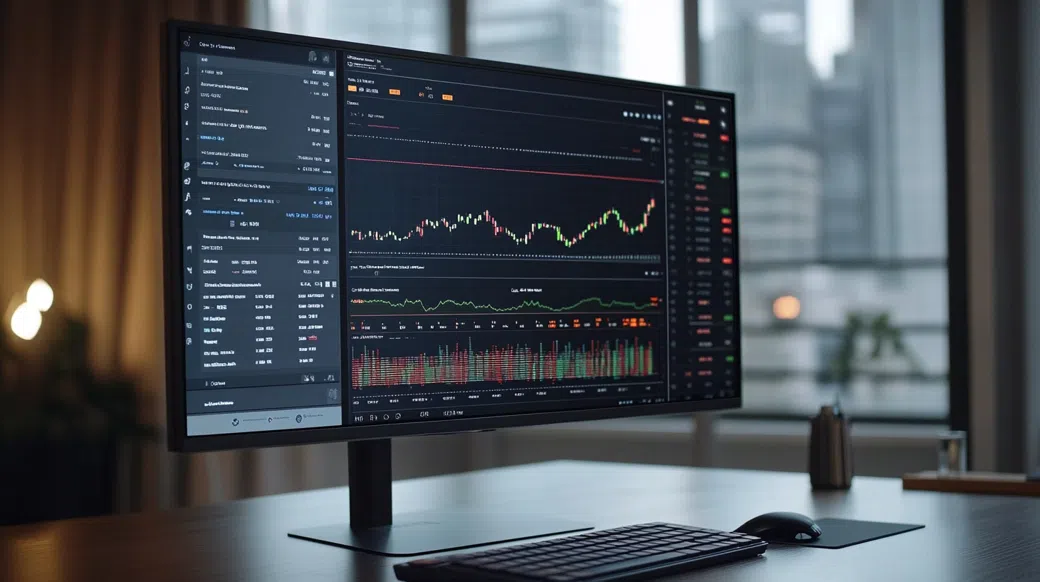
From a microstructure angle, the WebTrader felt designed for fast decision loops: watchlist → ticket → position management, without burying basic risk controls. I stress-checked execution during the London/NY overlap using a small EUR/USD market order and a pending stop on US500; fills were clean, with minor slippage when liquidity thinned around a data headline. There’s no verified MT4/MT5 bridge in the client area, so if your edge relies on third‑party algos, you’ll feel that boundary.
The Pluris AI app tracks the web layout closely: real-time quotes, one-tap position close, and deposits/withdrawals accessible from the same navigation layer. For Pluris AI login, I used biometric unlock after initial credentials, which reduced friction when monitoring margin. Push notifications for price alerts worked reliably, though chart space is naturally tighter and indicator stacking is less flexible than desktop.
Charting covers the essentials—multiple timeframes, common indicators (MA, RSI, MACD, Bollinger), and drawing tools for structure mapping. Research is functional rather than deep: an economic calendar and a news feed are integrated, plus customizable watchlists and basic alerts. Compared with MT5/cTrader ecosystems, the ceiling is lower for advanced scripting and plug-ins, but the built-in set is enough for discretionary CFD trading.
My onboarding started with a short form (email, password, residence), then an AML/KYC checkpoint triggered inside the dashboard before withdrawals. The upload flow asked for a government photo ID and a proof of address document dated within the last three months; verification cleared within the same business day. The overall feel is geared toward compliance gating at the moment you try to move money out, not just at signup.
Depositing by card posted to my balance quickly, with a clear confirmation screen and an immediate update to free margin. Account currency choice matters more than most traders think—if you’re EUR-based and fund in USD (or the reverse), small conversion frictions add up over months.
I used live chat to clarify swap/overnight fee timing (including triple-swap day) and how it would display on open positions; an agent responded in roughly three minutes and pointed me to the instrument-spec panel inside the platform. For a second pass, I opened an email ticket about Pluris AI withdrawal processing steps after KYC; the written reply landed in about eight hours with a method-by-method timeline and a reminder to match beneficiary details.
Coverage is what you’d expect in this segment: 24/5 availability aligned with market hours, with language depth depending on the agent roster. Phone support wasn’t prominent in my account area, so I treated chat/email as the primary routes. Over weekends, the interface remains accessible, but human responses tend to slow because staffing follows CFD market cadence.
If you’re considering this provider, start by checking the demo environment and replicating your typical trade sizes to see how spreads, swaps, and margin calls behave. It’s also smart to confirm your country eligibility and funding method before committing real capital.
Visit Pluris AIIt can be, provided you treat it as a CFD platform first and keep leverage conservative. The WebTrader is navigable and the $10,000 demo helps you learn margin mechanics without paying swap. Beginners should still be cautious: offshore setups typically offer fewer formal protections than EU-regulated brokers.
Yes, crypto is available as CFDs, including BTC/USD and ETH/USD in my test. That means you’re trading price movement with leverage and financing, not holding coins on-chain. Pay special attention to weekend financing, which can be material for multi-day positions.
No, my 2026 check didn’t resemble a classic “Pluris AI scam” pattern: trading functions worked, KYC was enforced, and withdrawals could be initiated from the dashboard. The more precise question is “is Pluris AI legit under an offshore model?”—and the answer is yes operationally, with the caveat that investor recourse is typically more limited than under Tier‑1 regulation.
No, it’s not offered to US residents. During signup and compliance checks, the platform blocks restricted jurisdictions, and the USA is on that list. If you travel frequently, expect residency/KYC documents to drive the final eligibility decision.
A Pluris AI withdrawal typically needs 24–48 hours for internal processing once KYC is cleared. After that, card withdrawals commonly arrive in 2–5 business days, wires in 3–7 business days, and crypto transfers are often the same day. Your bank and payment rail do the rest of the timing.
The Pluris AI minimum deposit is $200. That’s the threshold I saw on the deposit screen before funding by card. Keep in mind you may need additional buffer above the minimum if you plan to trade higher-volatility CFDs or use higher leverage.
Yes, there are iOS and Android apps, and I used them for monitoring margin and placing small test orders. The app includes deposits and withdrawals, plus biometric sign-in after the initial setup. Charting is solid for mobile, though it’s not as extensible as a full MT5-style ecosystem.
Overall Score: 4.0/5
Pricing logic and platform cohesion are the two areas where Pluris AI feels most “finished” for 2026: the Standard vs. Raw/ECN-style split makes costs easier to forecast, and the WebTrader/mobile pairing supports quick risk decisions. My withdrawal request followed the expected path after KYC, which is a basic but meaningful operational check. Still, the offshore framework is the non-negotiable caveat—treat leverage with respect, and remember CFDs can magnify losses as fast as they magnify gains.
Best for: active CFD traders who want a unified web/mobile workflow and can quantify spreads + swaps. Avoid if: you require Tier‑1 regulation, MT4/MT5 confirmation, or strong formal dispute protections.