Pleno Caudenza Trading Platform Alternatives 2026
Compare Pleno Caudenza alternatives for 2026 across regulation, costs, platforms, and markets. Practical safety checks for US/EU-focused traders.

Compare Pleno Caudenza alternatives for 2026 across regulation, costs, platforms, and markets. Practical safety checks for US/EU-focused traders.
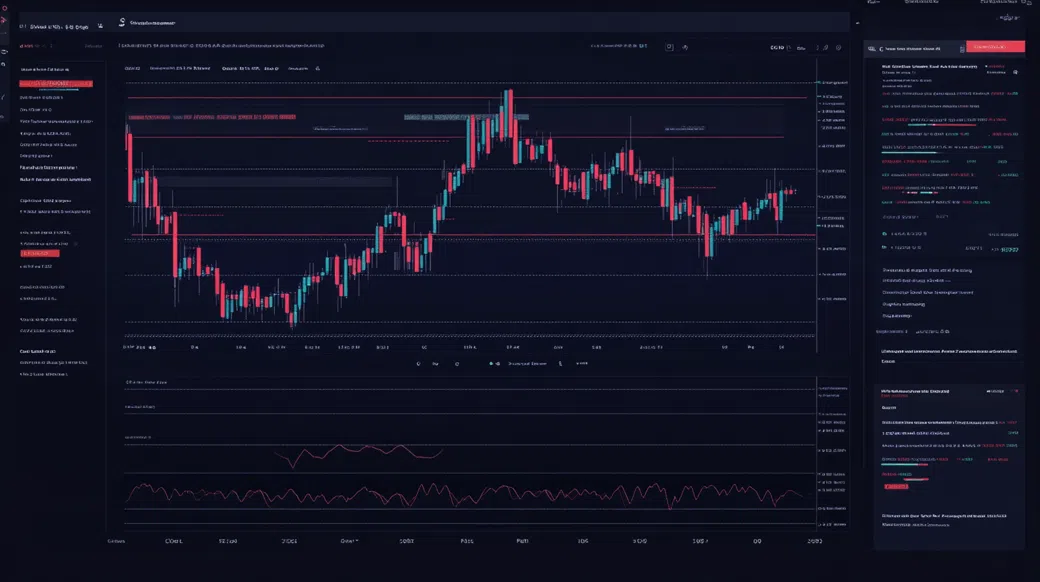
Spreads, execution, and custody rules are the quiet variables that decide whether a trading idea becomes a trade or a lesson. Pleno Caudenza sits in the familiar offshore CFD-only lane: a proprietary WebTrader, a mobile app, and a product menu centered on FX and CFDs (often including crypto CFDs). In that category, the headline numbers can look tempting—leverage advertised up to 1:500, entry-level funding around $250, and an EUR/USD spread commonly observed around 2.0 pips on a standard-style account. The trade-off is usually transparency: fewer venue disclosures, less clarity on execution model, and weaker investor-protection scaffolding than what FCA/ASIC/CySEC-style regimes require.
That’s the context behind the 2026 search for Pleno Caudenza substitutes: not a beauty contest, but a decision about how your orders route, how your margin is handled, and how disputes get resolved. For EU traders, the difference between “segregated client funds + compensation scheme” versus “best-efforts offshore governance” is not theoretical. For US-based readers, access is often restricted anyway, which turns the exercise into finding regulated, region-eligible platforms like Pleno Caudenza—without inheriting the same operational fragility.
This guide lays out Pleno Caudenza alternatives with a microstructure lens: costs per round-turn, slippage risk under volatility, platform stack constraints, and what you realistically gain by moving to a more supervised brokerage ecosystem.
Disclaimer: This article is for informational purposes only and does not constitute investment advice. CFDs and other leveraged products carry a high risk of loss and may not be suitable for all investors.
From what is typically observable in offshore CFD venues, Pleno Caudenza presents as a CFD-first brokerage operating under a Seychelles FSA-style framework rather than a top-tier onshore license. The product design is tuned for retail traders who want quick onboarding, web-first access, and higher leverage than EU regulators generally allow. That also implies a different protections envelope: dispute resolution, reporting standards, and enforcement intensity tend to be lighter than under FCA, ASIC, CySEC, or NFA oversight. In practice, brokers similar to Pleno Caudenza often monetize via spreads, financing charges, and trading-volume incentives more than via transparent exchange-style pricing.
The core experience is a proprietary WebTrader with basic-to-mid charting and a mobile companion app for iOS/Android. Expect the essentials—candlestick charts, a standard indicator set, drawing tools, and one-click trading—rather than the deep ecosystem you get with MT4/MT5 or cTrader (plugins, EA marketplaces, advanced order-routing analytics). Order types are usually limited to market/limit/stop with simple stop-loss and take-profit handling. The account dashboard typically focuses on margin, open P&L, and deposit/withdraw workflows; the gap is often in execution diagnostics—latency, slippage distribution, and fill quality are rarely presented with the granularity active traders want.
Cost-wise, the standard benchmark most traders feel immediately is EUR/USD hovering around 2.0 pips on a standard-style tier, with higher volatility widening that spread. Some offshore platforms advertise a “raw” lane—often 0.0–0.4 pips plus a commission in the rough range of $6–$8 per round-turn—but the real question is consistency and execution quality under load. Beyond spreads, watch swap/overnight financing on leveraged CFD positions, plus any withdrawal and inactivity charges that can become material if you trade episodically rather than daily.
Platform choice becomes urgent when operational risk starts dominating market risk. With offshore CFD venues, the trigger is rarely a single bad fill; it’s the accumulation—unclear execution model, widening spreads at the wrong moments, or support that can’t explain margin-call mechanics in plain language. For 2026, the practical hunt for Pleno Caudenza alternatives is often a hunt for better plumbing: clearer custody rules, stricter conduct oversight, and platforms that expose the data you need to evaluate slippage and spread behavior. Even if you’re comfortable trading CFDs, leverage cuts both ways, and the broker’s controls (negative balance protection, margin closeout rules) decide how ugly a fast move can get.
Selection works best as “fit-to-strategy” rather than brand-chasing. Start by writing down what your trading process actually needs—assets, leverage limits, platform stack, and how much you care about DMA-style execution metrics. Then filter for supervision quality and operational safeguards. Regulated options vs Pleno Caudenza are not automatically cheaper or better for every style, but they tend to be easier to audit: public registers, standardized disclosures, and clearer client-money rules.
In the US/EU context, FCA, ASIC, CySEC, and NFA/CFTC oversight changes the incentives. You can verify authorization on public registers (FCA Register, ASIC Connect, CySEC listings, NFA BASIC), and client money is typically held in segregated accounts. Compensation schemes matter at the margin: the UK’s FSCS can cover up to £85,000 for eligible clients, while Cyprus’ ICF can cover up to €20,000—limits, eligibility, and product scope vary, so read the fine print rather than relying on headlines.
Ask whether you need CFDs only, or whether you want real market access. Multi-asset brokers can offer cash equities/ETFs, options, futures, and bonds alongside FX—useful if you hedge with listed instruments or build longer-horizon portfolios. By contrast, platforms like Pleno Caudenza often keep the menu concentrated in FX/indices/commodities and a slice of crypto CFDs. The distinction matters: owning a stock is not the same as holding a stock CFD (no voting rights, different tax handling, and different overnight financing dynamics).
Compare costs as a round-turn number, not as marketing. For example, a raw-spread account with 0.1–0.3 pips plus commission can be cheaper than a 1.0–1.5 pip spread-only account, but only if execution is stable and commissions are transparent. Don’t ignore swap/overnight fees on leveraged positions; they quietly dominate P&L for swing traders. Also look for inactivity, data, and withdrawal charges—small line items that become meaningful when your volume is modest.
Platform stack is a proxy for ecosystem maturity. MT4/MT5 and cTrader bring automation, deeper charting extensions, and a broader third-party tool chain; proprietary platforms can still be excellent, but you need evidence. Execution model matters: market maker setups can be fine for many retail flows, while STP/ECN/DMA-style routing is typically preferred when you care about fill consistency around news. If you’re migrating from Pleno Caudenza, test for slippage patterns with small-size orders during liquid and illiquid windows.
Support quality is measurable: response time, escalation path, and whether answers include specifics (margin closeout %, swap calculation, order rejection reasons). For EU traders, multilingual coverage and local payment rails reduce friction. Education is not just videos; look for clear contract specs, margin examples, and risk disclosures that match the product. Finally, mobile parity matters in 2026: alerts, position management, and order modification should work cleanly away from the desktop.
FX and index/commodity CFDs are where Pleno Caudenza is likely most functional: think 30–50 FX pairs, roughly 8–15 indices, and a small commodity list. The leverage ceiling (often promoted around 1:500) looks powerful, but the cost structure is what bites: an EUR/USD spread around 2.0 pips is a meaningful headwind for high-turnover styles. Regulated FX/CFD specialists such as Pepperstone or OANDA generally provide tighter pricing options, more execution tooling, and clearer disclosures around slippage and order handling. The deeper advantage is not just spread—it’s the ability to align platform choice (MT4/MT5/cTrader vs proprietary) with your method, and to operate within a framework that enforces client-money segregation and standardized risk controls.
Traders coming from offshore CFD venues often discover that “stocks” means equity CFDs, not exchange ownership. If your goal is real equities/ETFs with DMA-style routing, corporate actions handling, and the ability to hold long-term without CFD financing, the upgrade path usually runs through multi-asset brokers. Interactive Brokers and Saxo Bank are strong here because they combine listed-market access (stocks, ETFs, options, futures) with institutional-grade reporting and order types. That matters for more than investing: even an active FX trader may want listed US Treasury futures for macro hedges, or options for defined-risk structures—capabilities that CFD-only stacks rarely replicate cleanly.
Where crypto is offered on offshore platforms, it’s typically via CFDs: you’re trading price exposure, not taking delivery of coins on-chain. That can be acceptable for short-term directional trades, but it’s not a substitute for custody or transfers, and financing/spreads can be steep during volatility. Regulated brokers vary widely: some provide crypto CFDs in certain jurisdictions, while others restrict crypto to protect retail clients. If crypto exposure is central, compare contract specs (overnight charges, weekend pricing behavior, gap risk) and the broker’s risk controls. For many EU traders, the more practical “crypto-adjacent” alternative is to use regulated listed products (ETNs/ETPs where available) through a multi-asset broker, keeping execution and custody inside a supervised perimeter.
Regulation: SEC/FINRA (US), FCA (UK), IIROC (Canada) via group entities
Markets: Stocks, ETFs, options, futures, bonds, FX; CFDs in some regions
Fees: FX pricing is typically tight with commission-based schedules; equities pricing varies by venue and plan
Platform: Trader Workstation (TWS), IBKR Desktop, WebTrader, mobile
Best For: Multi-asset traders who want DMA-style depth and reporting
Regulation: FCA, ASIC, CySEC, DFSA
Markets: FX and CFDs (indices, commodities, metals; crypto CFDs where permitted)
Fees: Typical EUR/USD from ~0.0–0.3 pips + commission on Razor/Raw; ~1.0+ pip on Standard-style pricing
Platform: MT4, MT5, cTrader, TradingView integration (where available)
Best For: Cost-sensitive FX traders running MT4/MT5 or cTrader
Regulation: FCA, MAS, DFSA (by entity)
Markets: Stocks, ETFs, options, futures, bonds, FX, CFDs
Fees: FX spreads are generally competitive on higher-tier pricing; equities/options priced per venue and ticket size
Platform: SaxoTraderGO, SaxoTraderPRO
Best For: Portfolio-oriented traders who still want active tools
Regulation: FCA, ASIC, MAS
Markets: CFDs across FX, indices, commodities, shares; spread betting in the UK; limited crypto CFDs depending on region
Fees: Spread-based pricing on many markets; EUR/USD often around ~0.6–1.0+ pips depending on account and hours
Platform: IG web platform, mobile apps; MT4 support in certain regions
Best For: Broad-market CFD access with strong risk controls
Regulation: CFTC/NFA (US), FCA (UK), ASIC (Australia), IIROC (Canada)
Markets: FX-focused; CFDs available outside the US (indices/commodities depending on region)
Fees: Typically spread-based; EUR/USD often around ~0.8–1.4 pips in normal conditions (varies by entity)
Platform: OANDA web and mobile; MT4 support in some regions
Best For: FX-first traders prioritizing oversight and transparency
Regulation: FCA, ASIC, BaFin
Markets: CFDs on FX, indices, commodities, treasuries/rates, shares; cash equities in some regions
Fees: Competitive spreads on majors; EUR/USD often from ~0.7+ pips with spreads varying by market and session
Platform: Next Generation web platform, mobile; MT4 offered in certain regions
Best For: Active discretionary CFD traders who want rich charting
| Platform | Regulation | Main Markets | Typical Costs | Best For |
|---|---|---|---|---|
| Interactive Brokers (IBKR) | SEC/FINRA, FCA, IIROC (by entity) | Stocks/ETFs, options, futures, bonds, FX | Commission-based schedules; generally tight FX pricing | Multi-asset traders who want DMA-style depth and reporting |
| Pepperstone | FCA, ASIC, CySEC, DFSA | FX + CFDs (indices, commodities; crypto CFDs where allowed) | ~0.0–0.3 pips + commission (Raw); ~1.0+ pip (Standard) | Cost-sensitive FX traders running MT4/MT5 or cTrader |
| Saxo Bank | FCA, MAS, DFSA (by entity) | Multi-asset incl. stocks, ETFs, options, futures, FX | Tiered pricing; competitive FX on higher tiers; venue-based investing fees | Portfolio-oriented traders who still want active tools |
| IG | FCA, ASIC, MAS | CFDs across major asset classes; spread betting (UK) | Spread-based; EUR/USD often ~0.6–1.0+ pips depending on conditions | Broad-market CFD access with strong risk controls |
| OANDA | CFTC/NFA, FCA, ASIC, IIROC (by entity) | FX-focused; CFDs outside US (region-dependent) | Spread-based; EUR/USD often ~0.8–1.4 pips (varies by entity) | FX-first traders prioritizing oversight and transparency |
| CMC Markets | FCA, ASIC, BaFin | CFDs on FX, indices, commodities, shares | Spreads often from ~0.7+ pips on EUR/USD; varies by session | Active discretionary CFD traders who want rich charting |
A broker switch is an operational project, not a “click and forget” change. Treat it like risk management: reduce exposure first, control the cash rails, and document everything for tax and audit. If you’re moving from an offshore CFD venue, assume timelines can stretch—especially around withdrawals—and avoid leaving large balances idle while you test a new execution environment. The cleanest migrations are the boring ones: planned, staged, and verified.
If you’re comparing platforms, check current onboarding requirements, product availability in your jurisdiction, and the platform stack you’ll actually trade on (web, mobile, MT4/MT5, cTrader). Small tests beat assumptions—especially around spreads and slippage during volatile sessions.
Visit Pleno CaudenzaThe best alternative depends on whether you need multi-asset access or FX/CFD specialization. For listed stocks/ETFs/options/futures with institutional-grade tooling, Interactive Brokers or Saxo Bank are hard to beat; for lean FX execution with MT4/MT5 or cTrader, Pepperstone is often a better fit. If your priority is a broad CFD catalog with strong platform tooling, IG or CMC Markets tend to align well with the “best Pleno Caudenza alternatives 2026” shortlist.
Pleno Caudenza appears to operate in an offshore framework (commonly associated with Seychelles FSA-style oversight), which generally provides fewer investor protections than FCA/ASIC/CySEC/NFA regimes. That doesn’t automatically mean fraud, but it does mean you should be stricter about withdrawal testing, client-money handling, and documentation. If safety is your main constraint, prioritize regulated Pleno Caudenza alternatives where segregation of client funds and formal complaint channels are enforceable.
With platforms in this offshore CFD segment, stocks and crypto are usually offered as CFDs (price exposure) rather than as owned assets, and exchange-listed futures are often not part of the core retail package. Pleno Caudenza is typically positioned around FX and CFDs, with crypto CFDs commonly present; real stocks/ETFs and futures access is more consistently found at multi-asset brokers like Interactive Brokers or Saxo Bank. If you need “owning” rather than “tracking,” that’s a key reason traders move to alternatives to the Pleno Caudenza trading platform.
Before switching, verify the new broker’s legal entity on the relevant regulator register, then confirm product availability and leverage limits for your country. Next, compare total trading cost (spread + commission + swap) and validate platform fit (MT4/MT5/cTrader vs proprietary) with small live tests to observe slippage. Finally, download statements and trade history and plan withdrawals so your payment rails and AML checks don’t create delays during the transition from Pleno Caudenza.
About the Author: Elena Marchetti is a Milan-based fintech analyst covering European brokerage platforms, market microstructure, and trading-product distribution. Her work focuses on execution quality, incentives, and the operational details that determine real-world outcomes for retail and active traders.