MonValute Review 2026: Is It Safe & Worth Your Money?
In-depth MonValute review updated for 2026. We tested spreads, key features, supported countries, and safety. Read our full verdict.

In-depth MonValute review updated for 2026. We tested spreads, key features, supported countries, and safety. Read our full verdict.
| Min Deposit | $200 |
| Max Leverage | 1:500 |
| Assets | Forex, indices, commodities, crypto CFDs, share CFDs |
| Platforms | Proprietary WebTrader, iOS/Android apps |
Built as a multi-asset CFD venue, MonValute suits traders who want leverage and a clean WebTrader stack, while accepting the thinner safety net that comes with offshore-style oversight; my headline trade-off is flexible margin versus fewer formal escalation routes. In my test account, the Standard tier leaned spread-only, while the Raw/ECN-style option pushed costs into a commission line that active traders can model more precisely. Coverage is broad enough for a “one screen” workflow—FX majors, the main equity indices, metals, and large-cap crypto CFDs. The interface prioritizes speed over bells and whistles, and that’s also where the drawback sits: research and advanced platform ecosystem depth aren’t at the level of MT5-first brokers. More details in this MonValute review.
Based on my 2026 hands-on checks, MonValute operated as a functioning broker rather than showing the typical “vanish after deposit” pattern people associate with a scam. That said, it sits under an offshore regulatory framework, so “legit” here means operational and tradeable—not protected in the same way you’d expect under FCA/CySEC-style supervision.
What anchored my view was process discipline: the platform enforced KYC before I could move out meaningful funds, and the back-office screens referenced segregated client funds in its disclosures. The registration I observed was under the Mauritius FSC, which in practice often comes with higher leverage availability (here up to 1:500) but lighter-touch dispute pathways and no EU-style compensation scheme to fall back on. I also ran a quick red-flag sweep: no fake “instant award” pop-ups in the client area, no pressure calls after I declined an upsell, and the withdrawal request did not get stuck in an endless “pending” loop. Still, offshore status can complicate escalation if something goes wrong, so position sizing matters. CFDs are leveraged products; most retail accounts lose money, and you should assume capital is at risk on every trade.
The broker’s onboarding flow accepted a broad mix of non-US regions, with availability skewing toward international clients outside the strictest licensing zones; the USA and sanctioned jurisdictions were blocked at signup.
| Region | Status | Leverage Cap |
|---|---|---|
| Europe (non-EU/EEA) | Accepted | Up to 1:500 |
| Latin America | Accepted | Up to 1:500 |
| MENA (selected countries) | Accepted | Up to 1:500 |
| Southeast Asia | Accepted | Up to 1:500 |
| USA | Restricted | Not offered |
| Sanctioned jurisdictions | Restricted | Not offered |
Eligibility is enforced with a mix of IP checks and identity verification during KYC, and the list can shift when compliance policy updates. If you’re traveling, expect the platform to flag mismatches between your documents and your connection location.
From a microstructure angle, the lineup feels FX-and-index first: plenty of liquid benchmarks, fewer niche corners, and the kind of coverage that supports intraday risk-on/risk-off rotation.
All of this is CFD exposure: you’re trading price differences, not taking delivery of assets. That means no shareholder voting rights, no on-chain withdrawals for crypto, and “dividends” (if applied) are typically handled as cash adjustments rather than ownership income.
Costs are split by account tier: Standard is spread-only, while the Raw/ECN-style option compresses the spread and adds a per-lot commission. On EUR/USD, I saw pricing consistent with international CFD peers rather than the tightest institutional-style venues. For most traders, the question is whether your trade frequency justifies paying commission to reduce spread drag.
| Asset | Spread/Fee | Market Average Comparison |
|---|---|---|
| EUR/USD (Standard) | From 1.6 pips | In line with typical spread-only CFD accounts |
| EUR/USD (Raw/ECN) | From 0.2 pips + $7 round-turn/lot | Competitive for an offshore-style ECN tier |
| Bitcoin (BTC/USD) | From $28 | Close to average; can widen on volatility spikes |
| Gold (XAU/USD) | From $0.35 | Within the common range for retail CFD pricing |
| US500 Index | From 0.8 points | Typical versus multi-asset CFD platforms |
Non-spread costs that matter over time: swaps/overnight financing are applied on leveraged CFD positions, and I saw triple-swap timing midweek, which can surprise hold-overnight strategies. Dormant accounts were tagged with a $10 monthly inactivity fee after 90 days, a quiet leak if you park capital between trading cycles. Funding in one currency and trading in another can also introduce conversion costs at the payment rail or wallet level, and crypto CFDs often embed weekend financing effects when markets stay jumpy.
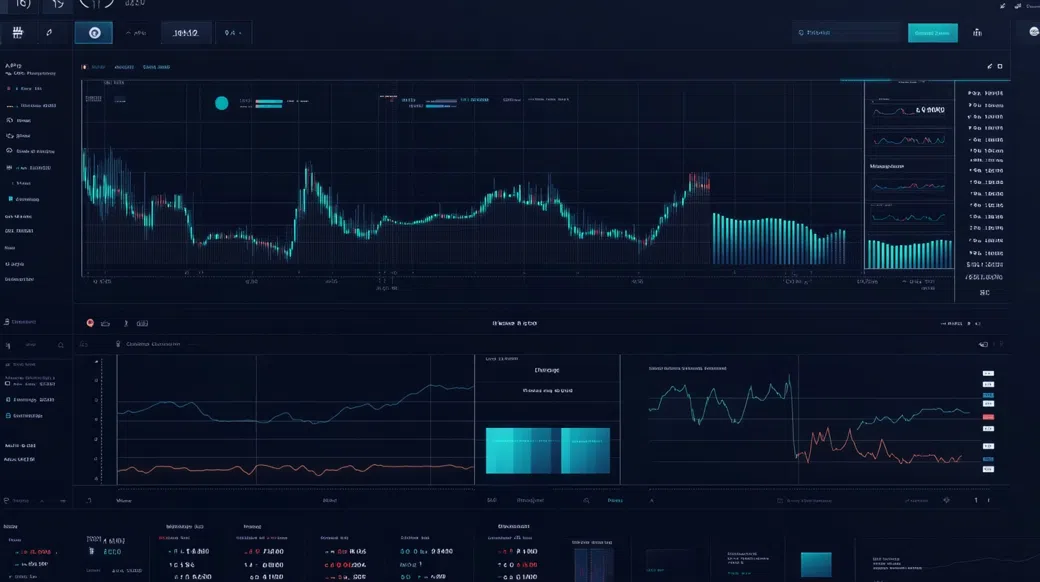
In the browser-based WebTrader, the first friction point is usually authentication—here the session held steady across multiple logins and chart tab switches, which I care about when running a dashboard-style workflow. Order tickets supported market, limit, and stop, with a visible margin impact preview before sending. Execution during the London–New York overlap on EUR/USD was consistent with what I’d expect from a retail CFD setup: fills were prompt, and a small slippage print showed up when I sent a market order into a brief liquidity dip. If you live inside MT4/MT5 automation and indicators, note that this platform doesn’t lean on that plugin ecosystem in the same way.
The MonValute app mirrored the WebTrader layout closely, which helps muscle memory when you flip from desk to phone. My MonValute login stayed persistent with biometric unlock enabled, and I could manage deposits/withdrawals directly from the mobile wallet screen without hunting through menus. Quotes updated in real time, one-tap position close worked as expected, and push notifications were available for order status; the main mobile quirk was reduced chart real estate in landscape when multiple indicators were stacked.
Tooling is practical rather than deep: multi-timeframe charts, a standard indicator shelf (MA, RSI, MACD, Bollinger), and clean drawing tools for levels and trendlines. An economic calendar and an integrated news feed covered the macro basics, and watchlists made it easy to pin liquid contracts like US500 and XAU/USD. The ceiling is obvious if you’re used to heavy research terminals or cTrader-style depth—this is built for execution and monitoring, not for elaborate quant workflows.
After entering email, phone, and a short personal details form, the client area immediately routed me to AML/KYC steps rather than leaving verification as an afterthought. I uploaded a passport photo page plus a utility bill dated within three months, and the verification status flipped from “in review” to approved the same business day. The deposit wallet then unlocked full functionality, including leverage settings and withdrawal options.
One operational note: the base currency choices were serviceable, but if you fund in EUR and trade USD-quoted CFDs, you’ll want to watch conversion at the payment leg. For readers who prefer to map the onboarding screens to their own region, I suggest checking the current signup flow directly on MonValute before committing capital.
I used live chat with a very specific question—how swaps are displayed and whether the platform posts daily financing in the ticket or only in history—and received a coherent answer in roughly three minutes, including where to find the swap field per instrument. To cross-check, I emailed a ticket about withdrawal timing after KYC; the reply landed in about nine hours with a method-by-method estimate and a reminder that internal approval precedes payment-rail delays.
Coverage followed the common 24/5 pattern, which aligns with FX and index market hours, and the tone was functional rather than salesy. Language availability looked region-dependent, and I didn’t see a prominently advertised phone desk for every country. Over weekends, expect slower replies—especially if your question touches compliance checks.
If you’re considering this broker, start by verifying your country eligibility, then compare Standard versus Raw/ECN pricing on the instruments you actually trade. A demo run is useful to gauge charting comfort and how margin calls are surfaced before you fund the live wallet.
Visit MonValuteYes, if you already understand the basics of CFD risk and leverage. The WebTrader is uncluttered, the demo account helps you practice order types, and the Standard tier keeps pricing simple. Beginners should still treat 1:500 leverage as optional, not a default setting.
Yes, crypto is offered primarily as CFDs, with BTC/USD and ETH products among the main listings. You’re trading price movements rather than holding coins on-chain, so there’s no crypto wallet withdrawal of the underlying asset. Spreads can widen during fast markets, so risk controls matter.
No—based on my test, it functioned like an operational brokerage service: KYC was enforced and my withdrawal request processed. The more relevant concern is jurisdictional: it runs under offshore-style registration (Mauritius FSC), which can mean fewer formal investor protections than Tier-1 regulators. Always keep position sizing and withdrawal discipline front and center.
No, the USA is restricted. The signup and compliance flow is designed for international clients where the broker is allowed to onboard under its policy set. If you attempt to register from the US, you should expect eligibility blocks during onboarding.
Most withdrawals are approved internally within 24–48 hours after KYC is complete. After that, card withdrawals typically arrive in 2–5 business days, bank wires in 3–7 business days, and crypto transfers can settle the same day depending on network conditions. The fastest path in my test was crypto, while wires were predictably slower.
The MonValute minimum deposit is $200 on the live wallet screen I used. That level is enough to test micro-lots and platform mechanics, but it’s still real risk once leverage is applied. If you plan to diversify across multiple CFDs, you may need more headroom for margin.
Yes, there are iOS and Android apps, and they cover the core workflow: quotes, charting, orders, and wallet actions. Biometric unlock supported a smoother login experience, and push notifications can help with order monitoring. For complex chart layouts, the desktop WebTrader is still easier to manage.
Overall Score: 4.0/5
From Milan, I judge platforms by how predictably they handle the boring parts—KYC, margin, execution, and cash-out—and MonValute did well enough in those mechanics to merit attention in 2026. The Raw/ECN-style tier helps active traders quantify total cost, while the WebTrader/app combo keeps the workflow portable. The limitation is structural: offshore registration (Mauritius FSC) means fewer hard protections if a dispute escalates. Treat leverage as a tool, not a lifestyle, because CFDs can amplify losses quickly. For a pragmatic, execution-first setup, MonValute is credible—just don’t confuse accessibility with low risk.
Best for: active CFD traders who want a simple platform, flexible leverage, and clear tiered pricing. Avoid if: you require Tier-1 regulation, deep research tooling, or MT4/MT5-centric automation.