Merel Winstiek Review 2026: Is It Safe & Worth Your Money?
In-depth Merel Winstiek review updated for 2026. We tested spreads, key features, supported countries, and safety. Read our full verdict.

In-depth Merel Winstiek review updated for 2026. We tested spreads, key features, supported countries, and safety. Read our full verdict.
| Min Deposit | $200 |
| Max Leverage | 1:500 |
| Assets | Forex CFDs, Index CFDs, Commodity CFDs, Crypto CFDs, Share CFDs |
| Platforms | Proprietary WebTrader + iOS/Android mobile apps |
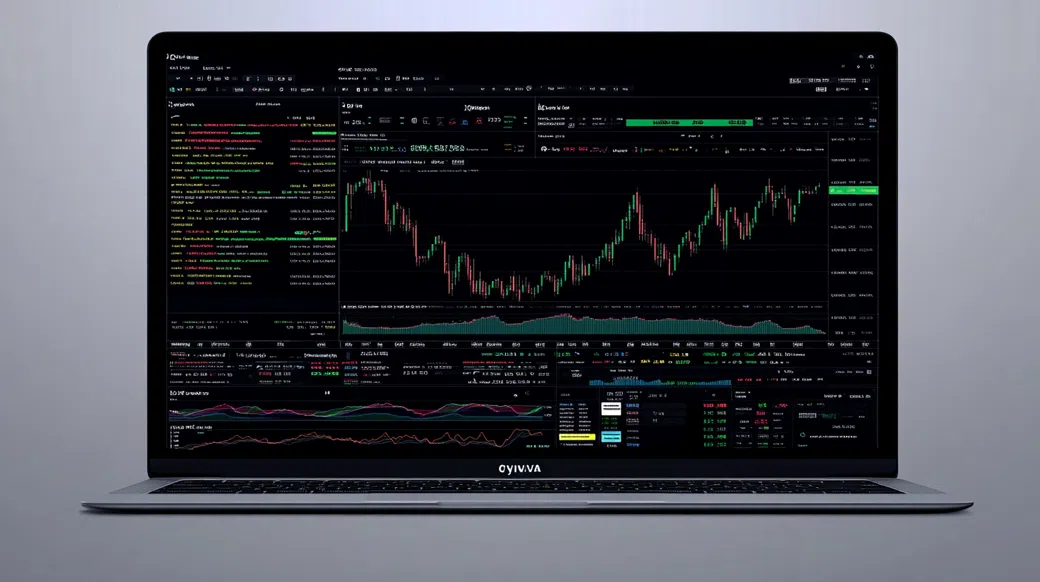
Built as a multi-asset CFD venue with a retail tilt, Merel Winstiek suits traders who want broad market access and flexible leverage, but can live with an offshore regulatory setup as the price of that flexibility. In my 2026 check, the account stack is basically two-lane: a spread-only Standard profile for “set-and-check” traders and a tighter Raw/ECN-style option aimed at frequent execution. The instrument list leans macro—FX, indices, metals, and crypto CFDs—rather than long-tail single names. The platform is its own WebTrader plus mobile apps; no MT4/MT5 presence was confirmed from inside the client area. For a quick orientation, start at Merel Winstiek.
Merel Winstiek looked operational rather than fraudulent in my hands-on run: KYC was enforced and a test withdrawal cleared. That said, it operates under an offshore registration framework, so “safe” here means process discipline—not Tier‑1 investor protection.
The onboarding flow and legal footer pointed to a Mauritius FSC registration, which is a common jurisdiction for international CFD brokers serving non‑US clients. In practice, offshore regulation often comes with two sides of the same coin: higher leverage options and faster product rollout, but thinner compensation schemes and fewer formal levers if a dispute escalates beyond support. I did a quick red-flag sweep while funding and trading—no aggressive “account manager” pressure, no hard-sell bonuses shown to my EU IP, and no suspicious trophy-cabinet of unverifiable awards inside the portal. Safeguards were present, at least on-paper and in workflow: identity checks were required (ID plus proof of address) and the terms referenced segregated client funds, though that is not the same as a statutory guarantee. Remember the product risk: CFDs are leveraged instruments, margin calls happen fast, and most retail accounts lose money when risk controls are loose.
The broker is primarily geared toward international clients across parts of Europe (outside strict EU/UK retail limits), MENA, and selected emerging markets; the USA and sanctioned jurisdictions are blocked.
| Region | Status | Leverage Cap |
|---|---|---|
| Europe (non-EU/EEA) | Accepted | Up to 1:500 |
| MENA (selected countries) | Accepted | Up to 1:500 |
| Southeast Asia (selected countries) | Accepted | Up to 1:500 |
| Latin America (selected countries) | Accepted | Up to 1:500 |
| USA | Restricted | Not offered |
| Sanctioned jurisdictions | Restricted | Not offered |
Access is enforced via a mix of IP checks and residency declarations, and the final gate is KYC—your documents decide eligibility, not just the signup form. Policies can shift with compliance updates, so it’s worth re-checking your country status before depositing.
Rather than chasing every niche market, the lineup focuses on the high-liquidity contracts most retail flows concentrate on: FX majors, headline indices, and the usual macro hedges.
All exposure is via CFDs: you’re trading price movement with leverage, not taking delivery of oil, holding coins on-chain, or receiving shareholder voting rights. Even where an instrument has a dividend component (e.g., equity indices), adjustments are handled through CFD pricing mechanics.
Costs are split by account tier: Standard bakes the charge into the spread, while the Raw/ECN-style profile tightens the spread and adds a per-lot commission. On EUR/USD, my pricing snapshots put it in the middle of the offshore CFD pack—good enough for active trading, not the absolute floor.
| Asset | Spread/Fee | Market Average Comparison |
|---|---|---|
| EUR/USD (Standard) | From 1.6 pips | Around average for offshore CFD brokers |
| EUR/USD (Raw/ECN) | From 0.2 pips + $7 round-turn/lot | Competitive if you trade size and frequency |
| Bitcoin (BTC/USD) | From $35 | Typical; widens materially in fast markets |
| Gold (XAU/USD) | From $0.30 | Slightly better than many spread-only accounts |
| US500 Index | From 0.8 points | In line with the segment median |
Non-spread costs matter more than most onboarding pages admit: overnight swap/financing is the silent P&L line for swing positions, and crypto weekend financing is where “holding” becomes expensive. I also noted an inactivity fee of $10 per month once an account sits dormant for 90 days, which is easy to overlook if you treat the account as a backup venue. Finally, keep an eye on conversion costs if you fund in EUR but keep the account in USD, and verify whether your withdrawal rail carries intermediary bank fees—those can dwarf a tight spread on small balances.
On desktop, the proprietary WebTrader loaded consistently across sessions and kept me signed in without repeated authentication loops, which is a small but real microstructure edge when you’re managing multiple tickets. Order tickets supported market and pending orders with configurable stop-loss/take-profit, and fills on liquid FX during the London open were clean enough for retail sizing; I did see mild slippage when I hit the button around a US data release, which is normal in CFD dealing environments. If you rely on the MT4/MT5 indicator/plugin universe, note the gap: I couldn’t verify an MT4/MT5 bridge from inside the platform’s downloads area, so plan around the native toolset.
The Merel Winstiek app mirrors the web layout closely, with real-time quotes, a compact positions blotter, and one-tap closing that’s useful when volatility spikes. Biometric unlock worked on my device, and deposit/withdrawal actions are accessible from the same menu as trading—no need to hunt through a separate portal. One practical note for the Merel Winstiek login flow: if you enable 2FA, the app prompts reliably, but switching between Wi‑Fi and mobile data occasionally forced a fresh token challenge.
Charting is serviceable: multiple timeframes, the core indicators (MA, RSI, MACD, Bollinger), and basic drawing tools covered my usual pre-trade routine. An economic calendar and an integrated news feed are built in, plus watchlists for quick scanning. The ceiling is visible, though—advanced strategy testing and deep automation are still better handled in dedicated MT5/cTrader ecosystems.
After entering email, phone, and a basic suitability set, I was pushed directly into identity checks—no “trade first, verify later” detour. KYC required a government-issued photo ID plus a proof of address dated within three months; my verification cleared within the same business day. From an AML perspective, the flow felt aligned with what you’d expect from an offshore CFD provider trying to keep payment rails stable.
Base currency choices leaned USD-first; if your P&L is naturally EUR, factor in FX conversion when funding and withdrawing. For readers who want to replicate my checklist—signup, KYC, then a small live deposit—the quickest entry point is Merel Winstiek.
I used live chat to ask a very specific question: whether swap rates are displayed per symbol before placing the trade, and where to find the financing schedule for crypto over weekends. The first human reply landed in about three minutes, and the agent pointed me to the symbol-spec panel plus a short explanation of triple-swap timing on FX. For a second channel check, I sent an email ticket about card withdrawals versus USDT withdrawals; the written response arrived roughly nine hours later with method-by-method timing and a reminder that KYC must be approved first.
Coverage is broadly 24/5, which matches the broker’s focus on FX and indices rather than 24/7 exchange trading. Language availability looks region-driven (English is safe; other languages depend on staffing), and phone support wasn’t clearly promoted in my dashboard. On weekends, you can still place crypto CFD trades, but don’t expect the same support cadence as midweek.
If you’re comparing offshore CFD venues, use a demo first to map spreads, swap, and the execution feel on your preferred instruments. Once you’re comfortable, a small live deposit is a sensible way to validate funding and withdrawal rails before scaling risk.
Visit Merel WinstiekYes, for beginners who keep position sizes small and use the demo first. The interface is not overloaded, and the Standard account avoids commission math. The offshore setup and 1:500 leverage mean risk management matters more than usual—new traders should treat leverage as optional, not as a feature to “use up.”
Yes, crypto is available as CFDs, with majors like BTC and ETH on the menu. You can trade price movement and use leverage, but you won’t be withdrawing coins to a blockchain wallet. Pay attention to weekend financing and spread expansion during sharp moves.
No, I didn’t see scam-like behavior in my test: KYC was required and a small withdrawal processed. That doesn’t make it “risk-free”—it’s an offshore CFD broker, so protections and dispute mechanisms are not the same as with FCA/CySEC regulated firms. Treat it as a higher-risk venue and size positions accordingly.
No, Merel Winstiek is not available in the USA. US residents are typically blocked at signup and again at verification. If you travel frequently, expect eligibility checks to follow your residency documents, not just your IP address.
A Merel Winstiek withdrawal typically leaves the broker within 24–48 hours after KYC is approved. After that, delivery depends on the rail: cards usually land in 2–5 business days, bank wires can take 3–7 business days, and crypto is often same-day. Delays most often come from incomplete documents or third-party payment controls.
The Merel Winstiek minimum deposit is $200 in the live cashier I reviewed. That threshold is workable for testing execution and fees, but it’s still enough to get into trouble if you combine it with high leverage. If you’re new to CFDs, start smaller in risk terms—even if the deposit is $200, your position size can be far less.
Yes, there are iOS and Android apps, and they’re functional for monitoring, trading, and cash management. Watchlists and open positions sync with the WebTrader, and biometric unlock is supported on compatible devices. For safety, I’d still recommend enabling 2FA and using push alerts for margin levels.
Overall Score: 3.9/5
The cleanest way to think about Merel Winstiek in 2026 is as a functional offshore CFD stack: decent coverage of the instruments that actually drive retail flow, a usable WebTrader/mobile pairing, and a pricing model that gives active traders a Raw/ECN-style lane. The constraint is structural—offshore registration (Mauritius FSC) means fewer formal protections than EU/UK frameworks, so you should treat capital allocation and leverage (up to 1:500) as the primary risk variables. If that trade-off fits your profile, Merel Winstiek is worth a cautious, small-scale evaluation. CFDs are leveraged products; you can lose more quickly than you expect.
Best for: self-directed traders who want FX/indices/gold and can manage leverage and financing costs. Avoid if: you require Tier‑1 regulation, guaranteed investor compensation schemes, or MT4/MT5-dependent workflows.