Majorfunds pro Trading Platform Alternatives 2026
Compare Majorfunds pro alternatives for 2026: regulated brokers, platforms, fees, execution quality, and a safer migration checklist for US/EU traders.

Compare Majorfunds pro alternatives for 2026: regulated brokers, platforms, fees, execution quality, and a safer migration checklist for US/EU traders.
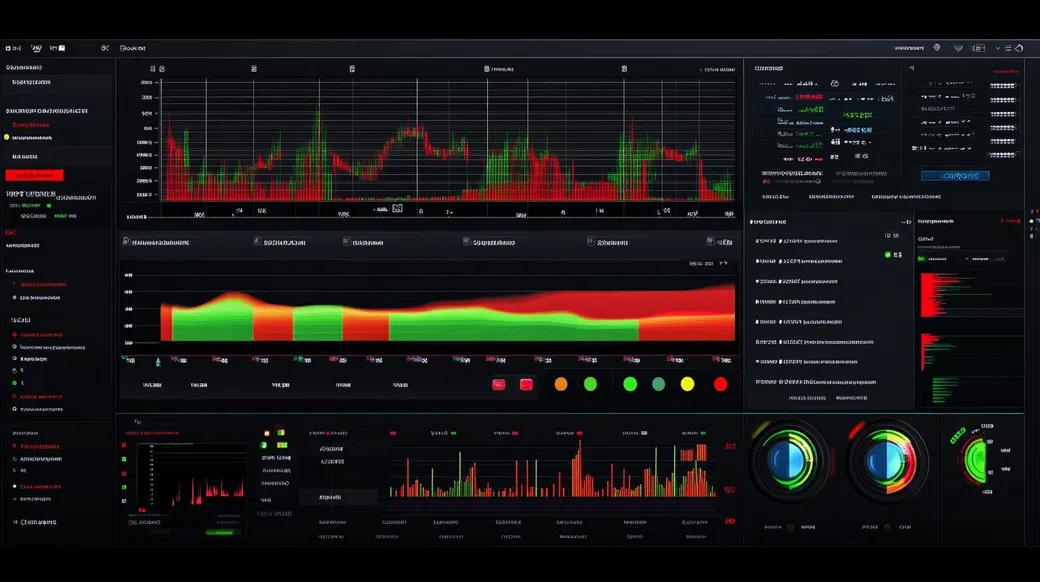
Execution is where marketing claims meet reality. If your fills feel “sticky” during volatility, or your costs look fine until you add swap and slippage, the platform choice stops being a UI preference and becomes a risk-control decision. In that context, Majorfunds pro sits in a familiar offshore/CFD-first segment: a proprietary WebTrader with a mobile app, headline leverage that can reach around 1:500, and pricing that—based on what’s commonly observed in this category—often starts near ~2.0 pips on EUR/USD on a standard-style setup. The typical entry ticket is around $250, which is low enough to attract newer traders, but also high enough to matter if withdrawals or support become friction points.
For a US/EU audience, the conversation quickly turns to safeguards: regulator oversight, segregated client funds, negative balance protection, and clear dispute channels. Those are the practical reasons Majorfunds pro alternatives get researched alongside platform features such as MT4/MT5/cTrader availability, execution model (market maker vs STP/ECN/DMA), and the true all-in round-turn cost of a trade. This guide focuses on regulated options that can better match specific strategies—scalping, hedging, longer-horizon CFD portfolios, or multi-asset investing—without leaning on unverified claims.
Disclaimer: This article is for informational purposes only and does not constitute investment advice. CFDs and other leveraged products carry a high risk of loss and may not be suitable for all investors.
Across European fintech forums, Majorfunds pro typically shows up as an offshore-style CFD broker rather than a full multi-asset investment venue. The operating footprint is most consistent with a Seychelles FSA framework (offshore), and the product mix leans toward FX and CFDs—indices and commodities included—with crypto CFDs often present as a satellite offering. For traders, that usually implies a broker-led pricing environment where the execution model can resemble a market maker setup, with fills and requotes (or slippage) becoming more noticeable when liquidity thins. This is the ecosystem where platforms like Majorfunds pro tend to compete: fast onboarding, high leverage, and a simplified interface that appeals to short-horizon speculation.
On the tooling side, the stack is commonly a proprietary WebTrader supported by iOS/Android apps. Charting is usually serviceable—multiple timeframes, a standard indicator set, and the expected drawing tools—but less flexible than professional terminals for layout management, custom indicators, or automation. Order functionality tends to cover basics (market/limit/stop, plus stop-loss and take-profit), while depth-of-market, advanced order routing, and granular execution reports can be thinner. The account dashboard is often where these platforms feel strongest: quick deposit/withdrawal menus, margin snapshots, and position views optimized for mobile parity.
Cost-wise, offshore CFD brokers frequently advertise low entry barriers while monetizing through spread, financing, and operational fees. A realistic reference point in this segment is EUR/USD around ~2.0 pips on a standard-style account, with “raw/ECN-like” tiers sometimes positioned at ~0.0–0.4 pips plus a commission in the $5–$8 round-turn range. Add swap/overnight financing for held positions, and the economics change quickly for swing traders. Watch for non-trading charges too: inactivity schedules, withdrawal handling fees, and currency conversion markups can matter more than a 0.2-pip spread difference if you trade infrequently.
A platform switch rarely starts with aesthetics; it starts with constraints. The most common trigger I see in execution data discussions is the mismatch between strategy and venue: high leverage and a simple WebTrader can look attractive, but the moment you need transparent reporting, robust risk controls, or stable liquidity during news releases, the trade-offs become expensive. That’s where Majorfunds pro alternatives enter the picture—often because traders want clearer regulatory coverage, a broader product set, or a platform stack that supports automation and tighter cost measurement.
Think of broker selection as fitting a venue to a risk budget. The question is not “which logo is trusted,” but which setup gives you acceptable failure modes: how your funds are held, how orders are executed, and how costs behave when markets gap. For alternatives to the Majorfunds pro trading platform, I’d build a short list, then stress-test it with regulator checks, a cost model, and a small live execution trial.
Start with oversight that has teeth. FCA (UK), ASIC (Australia), CySEC (EU), and NFA/CFTC (US) each impose capital rules, reporting standards, and conduct obligations—plus mechanisms for escalation when things go wrong. In the UK, FSCS coverage can reach up to £85,000 for eligible claims; in Cyprus, the ICF framework references coverage up to €20,000. Also confirm segregated client funds language and negative balance protection for retail clients where applicable; these clauses change how broker failure or extreme volatility is handled.
Asset access is a structural difference, not a feature checkbox. If you only trade major FX pairs and index CFDs, a specialist venue can be efficient. If you hedge an options book, roll futures, or allocate into ETFs, you need a multi-asset broker with the right market access. Brokers similar to Majorfunds pro usually concentrate on CFDs, while multi-asset firms offer real equities/ETFs (and sometimes bonds, options, futures) with clearer ownership and corporate action handling.
Model the cost of a round turn. Spread-only pricing is simple, but commission + tight spreads can be cheaper for active traders—provided execution is stable. Add swap/overnight fees if you hold positions, and check inactivity and withdrawal schedules if you don’t. For a scalper, a 0.5–1.0 pip difference on EUR/USD compounds fast; for a swing trader, financing and weekend gaps can dominate. Use your own monthly volume and average holding time to compare competitors to Majorfunds pro on a like-for-like basis.
Platform choice is often a proxy for execution plumbing. MT4/MT5 and cTrader ecosystems enable automation, custom indicators, and a wider tooling community; proprietary WebTraders can be responsive but narrower in depth. Execution model matters: market maker setups can be fine for many retail flows, while STP/ECN/DMA routing is often preferred when you care about transparency and consistent fills. If your current experience on Majorfunds pro includes unpredictable slippage, treat “execution quality” as a primary selection variable, not an afterthought.
Support is part of risk management. Test response time on funding, margin policy, and order disputes before depositing meaningful capital. For EU traders, multilingual coverage (including Italian/German/French) can matter during urgent account events. Education is secondary to execution, but still useful: solid brokers publish margin call rules, swap methodologies, and product specs in plain language. Mobile parity is also practical—if you manage risk on a phone, the app must let you adjust stops and monitor margin reliably.
FX and CFDs are the natural habitat for offshore brokers: majors and minors (often 30–50 pairs), a modest set of indices (roughly 8–15), and a handful of commodities. The trade-off is the price you pay for leverage and convenience. A EUR/USD spread around ~2.0 pips is workable for occasional trading, but it’s punitive for high-frequency approaches, and it can mask execution frictions when markets move quickly. In regulated alternatives, Pepperstone and IC Markets are frequently used by systematic and short-term traders because they offer MT4/MT5/cTrader stacks and pricing structures that can be modeled more cleanly (tight spreads on Razor/Raw-style accounts plus transparent commissions). For broader CFD coverage with strong governance, IG is often chosen in Europe because the platform suite is mature and the regulatory perimeter is clearer—an important difference when your risk is not just market risk, but counterparty risk.
Here the gap is usually conceptual: “stock trading” can mean equity CFDs (price exposure) or real shares (ownership). Offshore CFD venues commonly focus on the former, which means no shareholder rights, and corporate actions are handled through broker adjustments rather than market settlement. Traders who actually want to build a portfolio—US stocks, European equities, UCITS ETFs—tend to migrate to multi-asset brokers with exchange connectivity. Interactive Brokers (IBKR) is the reference point for breadth (equities, ETFs, options, futures, bonds, and FX), and it’s widely used by experienced traders who care about routing, reporting, and multi-currency funding. Saxo Bank is another strong option for EU clients who value an integrated platform for listed assets alongside derivatives, with a user experience that’s geared toward research and portfolio tooling rather than single-instrument CFD speculation.
Crypto exposure on CFD platforms is typically synthetic: you trade price movements via CFDs, not on-chain coins. That distinction matters for custody, transfers, and the ability to use crypto in external wallets—none of which apply to CFD exposure. In the offshore segment, it’s common to see 10–30 crypto CFD instruments, often with wider spreads and higher overnight costs than FX. Regulated alternatives vary by jurisdiction: IG offers crypto CFDs in certain regions under its regulated entities, while Plus500 also provides crypto CFDs in eligible markets with a simplified interface. For traders, the practical decision is whether you want short-term directional exposure (where CFDs can be sufficient but leveraged risk is high) or actual crypto ownership and transfers (which usually requires a dedicated exchange and a different risk framework). For Majorfunds pro trading platform alternatives 2026, be explicit about that goal before you compare fees.
Regulation: SEC/FINRA (US), FCA (UK), IIROC (Canada)
Markets: Stocks, ETFs, options, futures, bonds, FX (and related margin products where permitted)
Fees: FX spreads can be very competitive on larger sizes; commissions vary by product and venue (compare per-market schedules)
Platform: Trader Workstation (TWS), IBKR Desktop/Mobile, Client Portal, APIs
Best For: Multi-asset, execution- and reporting-driven traders
Regulation: FCA, ASIC, CySEC, DFSA
Markets: FX, CFDs (indices, commodities; crypto CFDs in eligible regions)
Fees: EUR/USD from ~0.0–0.3 pips on Razor-style + commission; ~1.0–1.3 pips typical on Standard-style (varies by entity)
Platform: MT4, MT5, cTrader, TradingView (integration in supported regions)
Best For: Algorithmic and short-term FX/CFD strategies
Regulation: FCA, MAS, DFSA
Markets: Stocks, ETFs, bonds, options, futures, FX, CFDs
Fees: Pricing depends on tier and product; FX spreads commonly start around ~0.6–1.2 pips on major pairs (plus potential tier benefits)
Platform: SaxoTraderGO, SaxoTraderPRO
Best For: Portfolio traders who want listed markets plus derivatives
Regulation: FCA, ASIC, MAS
Markets: CFDs (FX, indices, commodities, shares), spread betting (UK/IE), limited listed access depending on region
Fees: FX spreads often around ~0.6–1.0+ pips on majors (varies by product and volatility); financing applies on leveraged positions
Platform: IG Web Platform, Mobile apps, MT4 (supported regions)
Best For: Risk-aware CFD traders who value mature governance
Regulation: ASIC, CySEC (group also includes FSA Seychelles entity)
Markets: FX, CFDs (indices, commodities; crypto CFDs in eligible regions)
Fees: Raw-style spreads often ~0.0–0.3 pips on EUR/USD + commission; Standard-style commonly ~0.8–1.2 pips (conditions vary)
Platform: MT4, MT5, cTrader
Best For: Cost-focused scalpers and high-volume traders
Regulation: FCA, CySEC, ASIC, MAS
Markets: CFDs (FX, indices, commodities, shares, crypto CFDs in eligible regions)
Fees: Spread-only pricing; majors often around ~0.6–1.5+ pips depending on conditions; overnight funding applies
Platform: Plus500 proprietary WebTrader and mobile app
Best For: Simplicity-first mobile CFD users
| Platform | Regulation | Main Markets | Typical Costs | Best For |
|---|---|---|---|---|
| Interactive Brokers (IBKR) | SEC/FINRA, FCA, IIROC | Real stocks/ETFs, options, futures, bonds, FX | Product-based commissions; competitive FX pricing at scale | Multi-asset, execution- and reporting-driven traders |
| Pepperstone | FCA, ASIC, CySEC, DFSA | FX + CFDs | Raw: ~0.0–0.3 pips + commission; Standard: ~1.0–1.3 pips | Algorithmic and short-term FX/CFD strategies |
| Saxo Bank | FCA, MAS, DFSA | Stocks/ETFs plus derivatives (options/futures/FX/CFDs) | Tiered pricing; majors often ~0.6–1.2 pips (varies) | Portfolio traders who want listed markets plus derivatives |
| IG | FCA, ASIC, MAS | CFDs + (UK/IE) spread betting | Majors often ~0.6–1.0+ pips; financing on leverage | Risk-aware CFD traders who value mature governance |
| IC Markets | ASIC, CySEC | FX + CFDs | Raw: ~0.0–0.3 pips + commission; Standard: ~0.8–1.2 pips | Cost-focused scalpers and high-volume traders |
| Plus500 | FCA, CySEC, ASIC, MAS | CFDs (including shares/crypto CFDs where eligible) | Spread-only; often ~0.6–1.5+ pips on majors; overnight funding | Simplicity-first mobile CFD users |
Switching brokers is less about clicking “open account” and more about controlling operational risk while your capital is in transit. Treat the move like a small project: verify oversight, line up KYC/AML requirements, and plan the unwind of open exposure. Remember that leverage amplifies mistakes—an account migration during volatility can turn a logistics hiccup into a forced close-out if margin isn’t managed tightly.
If you’re benchmarking platforms, check regional eligibility, product disclosures, and current trading conditions directly—especially leverage caps, swap schedules, and withdrawal rails. A five-minute register check and a small execution test can tell you more than a long feature list.
Visit Majorfunds proThe best alternative depends on what you trade and how you execute. For real stocks/ETFs and broad market access, Interactive Brokers (IBKR) is hard to beat; for FX/CFDs with MT4/MT5/cTrader and cost transparency, Pepperstone or IC Markets are common shortlists. If you want a regulated CFD-first venue with a mature platform and governance, IG is often the cleaner comparison.
Majorfunds pro appears to operate under an offshore framework (commonly associated with Seychelles FSA-style oversight), which is not the same protection set many EU/UK/US traders expect under FCA, CySEC, ASIC, or NFA regimes. That difference can affect complaint pathways, compensation schemes, and how client-money rules are enforced. If safety is your priority, compare segregated-funds policies, negative balance protection terms, and verified regulator registration before you fund an account.
With Majorfunds pro, the core offering is typically FX and CFDs; stocks/ETFs are often provided as CFDs rather than real share ownership, and futures access is usually not a full listed-futures setup. Crypto exposure, when offered, is generally via crypto CFDs—price speculation without on-chain coin custody. If you need listed stocks/ETFs or futures, IBKR or Saxo Bank are more aligned with that requirement.
Before switching, verify the new broker’s legal entity on the relevant regulator register (FCA/ASIC/CySEC/NFA) and read the client-money and negative balance protection terms. Then map your strategy to the platform stack (MT4/MT5/cTrader vs proprietary), and compare round-turn costs including swap and likely slippage. Finally, complete KYC at the new broker first and test execution with small size before migrating full capital.
About the Author: Elena Marchetti is a Milan-based fintech analyst focused on European trading venues, broker platform ecosystems, and market microstructure. Her work prioritizes verifiable data—execution quality, fee leakage, and regulatory perimeter—over brand narratives, with a trader’s emphasis on risk controls and operational details.