Luna Rendisto Trading Platform Alternatives 2026
Compare Luna Rendisto alternatives for 2026 with a US/EU lens: regulated brokers, platforms, execution quality, fees, and a safer migration checklist.

Compare Luna Rendisto alternatives for 2026 with a US/EU lens: regulated brokers, platforms, execution quality, fees, and a safer migration checklist.
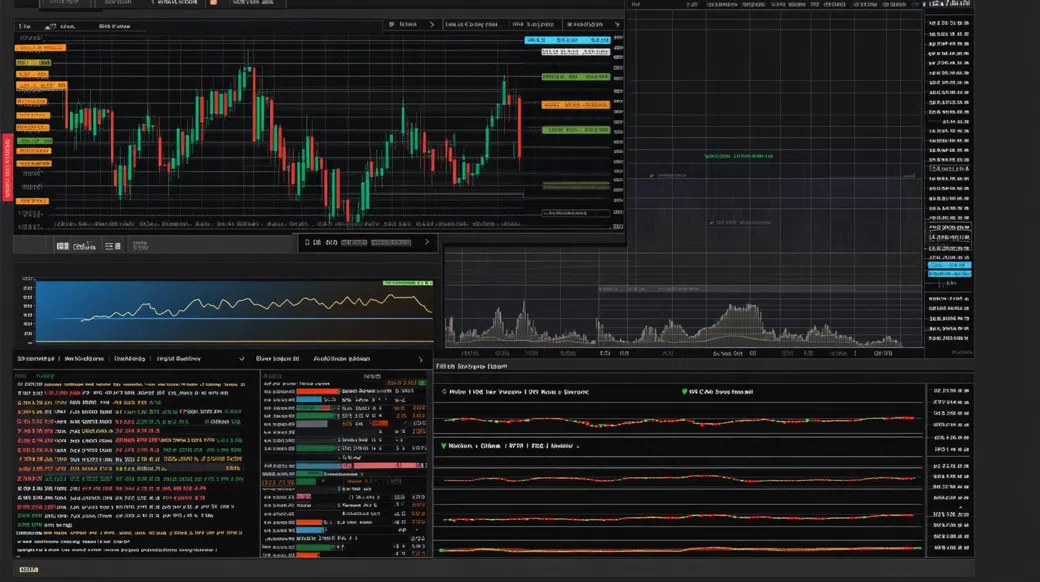
Spreads, slippage, and the custody chain are where “cheap trading” either becomes real—or quietly expensive. That’s the lens I use when readers ask about offshore CFD venues such as Luna Rendisto. Public-facing information for this segment typically points to a CFD-first offering (forex and indices at the center, commodities as add-ons, crypto CFDs often present), delivered through a proprietary WebTrader plus mobile apps. Minimum deposits around $250 and leverage up to 1:500 are also common in this cohort, with EUR/USD pricing frequently starting near 2.0 pips on a standard-style account.
Those headline numbers can look attractive until you map them to real trading behavior: frequent entries, overnight holds, or news-driven fills. Under an offshore framework (often Seychelles FSA in this category), client protection, dispute resolution, and transparency around execution model can differ materially from what EU/UK/US traders expect under FCA, CySEC, ASIC, or NFA oversight. That gap—not marketing—drives most searches for Luna Rendisto alternatives.
This guide to Luna Rendisto trading platform alternatives 2026 focuses on regulated brokers with clearer rulebooks, more robust platform stacks (MT4/MT5/cTrader or institutional-grade proprietary), and a tighter link between published costs and realized outcomes. The goal is simple: help you shortlist safer venues without pretending one platform fits every strategy.
Disclaimer: This article is for informational purposes only and does not constitute investment advice. CFDs and other leveraged products carry a high risk of loss and may not be suitable for all investors.
From a microstructure perspective, Luna Rendisto sits in the offshore CFD broker category: a venue designed around leveraged derivatives rather than ownership of underlying assets. In practice that usually means a market-maker style environment, where pricing is streamed to a proprietary platform and the broker is the direct counterparty on many trades. The product mix tends to concentrate on major and minor FX pairs, index CFDs, a small menu of commodities, and a selection of crypto CFDs—appealing to short-term traders who prioritize access and leverage over broad market depth. Compared with brokers similar to Luna Rendisto that operate under top-tier supervision, disclosures around execution model, order handling, and client protections often read thinner.
The core experience is typically a browser-based WebTrader with a companion iOS/Android app. Expect functional charting (timeframes, basic indicators, drawing tools) rather than a workstation built for systematic workflows. Order tickets generally cover market and pending orders, with stop-loss/take-profit attached; advanced conditional logic, depth-of-market, and robust trade analytics are less common in this stack. Mobile parity is usually adequate for monitoring and closing risk, but active execution during high-volatility releases can expose platform limits—especially if you rely on rapid order modification or precise entry placement. Account dashboards often emphasize margin level, open P/L, and deposit/withdraw flows rather than granular execution reporting.
Pricing for this category frequently revolves around a spread-only standard account, with EUR/USD often around 2.0 pips in typical conditions. Some offshore CFD brokers advertise “raw” style tiers—where spreads can compress toward 0.0–0.4 pips—but the true comparison is spread plus commission, commonly in the $5–$8 round-turn range. Beyond entry costs, traders should model overnight financing (swap) for positions held across sessions, and check for non-trading fees such as inactivity charges or withdrawal fees that can quietly raise the all-in cost. For traders assessing platforms like Luna Rendisto, these frictions matter more than the leverage headline.
Switching rarely begins with a single complaint; it’s usually a pattern in the data: fills that drift during fast markets, financing that surprises after a week of holding, or a platform stack that can’t support the strategy you actually run. Many readers arrive here after stress-testing their results and realizing that a “simple” setup becomes complex when you scale volume. That’s the pragmatic case for Luna Rendisto alternatives—especially for traders who want a tighter alignment between published terms, regulatory oversight, and real execution behavior.
Think of platform selection as a fit-to-strategy exercise, not a brand contest. Your “best” broker depends on what you trade, how often you trade, and what happens when markets gap against you. A regulated option can still be expensive for your style, and a low-spread offer can still disappoint if execution quality is inconsistent. The checklist below is how I screen competitors to Luna Rendisto before I even look at marketing claims.
Start with the supervisor and the legal entity you will actually onboard with: FCA (UK), ASIC (Australia), CySEC (Cyprus/EU), and NFA/CFTC (US) are the names that change the rulebook in concrete ways. Under FCA oversight, the FSCS can cover eligible clients up to £85,000; under CySEC, the ICF can cover eligible clients up to €20,000. Segregated client funds, negative balance protection (common in EU/UK retail CFDs), and transparent complaints processes aren’t “nice to have” when leverage is in the product.
Map instruments to intent. FX and index CFDs can be enough for many traders, but investors building long-term allocations typically need real stocks and ETFs (with shareholder rights) rather than a CFD wrapper. Options and futures matter for hedging and defined-risk structures—especially for US-based traders. If you’re comparing alternatives to the Luna Rendisto trading platform, be explicit about whether you want spot FX, CFDs, exchange-traded assets, or a mix; the account type and reporting will follow from that choice.
Costs are best compared as a round-turn number: spread paid on entry/exit plus any commission. A 0.2-pip raw spread with a $7 round-turn commission can be cheaper—or pricier—than a 1.0–1.2 pip spread-only account depending on trade size and frequency. Then add swap/overnight fees if you hold positions, and scan for inactivity or withdrawal charges. This is also where I cross-check claims against real fills; in my experience, “good pricing” without stable execution is just a different fee line.
Platform determines what you can measure. MT4/MT5 and cTrader ecosystems support automation, VPS hosting, and a deep library of tools; proprietary platforms can be clean and fast but sometimes limit auditability. Ask how orders are executed: market maker, STP, ECN, or DMA, and what that implies for slippage and latency. If you’re moving from Luna Rendisto, pay attention to whether the new broker provides execution statistics, detailed trade reports, and clear margin-call policy—those are operational, not cosmetic.
Support quality shows up during edge cases: platform outages, corporate actions on CFDs, or urgent margin queries. Look for multilingual coverage, response time expectations, and clear escalation channels. Education matters less for seasoned traders, but platform documentation, margin calculators, and product disclosures reduce operational errors. Finally, check mobile parity: monitoring risk on the go is normal in 2026, but placing complex orders from a phone should feel optional, not mandatory.
Forex and CFDs are the natural home turf for Luna Rendisto-style venues: roughly 30–50 FX pairs, 8–15 indices, and a compact list of commodities is a typical footprint, paired with leverage that can reach 1:500. The analytical question is cost-to-execution, not instrument count. A 2.0-pip EUR/USD spread may be workable for swing trades, but it becomes heavy for high-frequency intraday strategies. Regulated FX/CFD specialists such as Pepperstone and IC Markets tend to offer tighter raw-style pricing (with explicit commissions) and more mature platform choices (MT4/MT5/cTrader), which helps systematic traders control variables like order routing and VPS latency. If your edge is measured in pips, execution model and slippage distribution can matter as much as headline spreads.
This is where many offshore CFD brokers diverge from what investors expect. Equity exposure is often delivered as stock CFDs—price tracking without ownership, voting rights, or the same dividend mechanics you’d see in a cash equity account. For traders who want real stocks and ETFs (and sometimes options and futures), multi-asset brokers such as Interactive Brokers and Saxo Bank are structurally different: they provide access to exchanges with broader product depth and more granular order types. That matters if you care about routing, liquidity venues, or building a portfolio with long holding periods. For a US/EU audience weighing regulated options vs Luna Rendisto, the key is deciding whether you’re trading equity price movements (CFDs) or investing in the underlying instruments.
Crypto exposure at offshore CFD venues is typically via crypto CFDs—no on-chain transfer, no wallet withdrawal, and no direct ownership of the coins. That can be fine for short-term directional trading, but it changes the risk profile: you’re taking counterparty risk to the broker plus crypto volatility, often under leverage. Among regulated platforms, IG and Plus500 are common choices for crypto CFDs in jurisdictions where offered, with clearer disclosures and retail protections aligned to their regulators. If your goal is to hold crypto assets rather than trade price swings, that is a different category of platform entirely (exchange/wallet infrastructure), and it should be evaluated with custody and security criteria that CFD brokers are not designed to meet.
Regulation: SEC/FINRA (US), FCA (UK), IIROC (Canada)
Markets: Stocks, ETFs, options, futures, bonds, FX (spot), funds (varies by region)
Fees: FX pricing typically commission-based with tight spreads; stock/ETF commissions vary by market and plan
Platform: Trader Workstation (TWS), IBKR Desktop, web platform, mobile app, APIs
Best For: Multi-asset traders who want exchange access and APIs
Regulation: FCA (UK), ASIC (Australia), CySEC (Cyprus), DFSA (Dubai)
Markets: FX, index CFDs, commodity CFDs, (product availability varies by entity)
Fees: EUR/USD often ~0.0–0.3 pips on Razor-style accounts + commission; ~1.0–1.2 pips on standard spread-only (typical ranges)
Platform: MT4, MT5, cTrader, TradingView integration (availability varies)
Best For: Cost-sensitive FX traders running MT4/MT5 or cTrader
Regulation: FCA (UK), MAS (Singapore), DFSA (Dubai)
Markets: Stocks, ETFs, bonds, options, futures, FX, CFDs (availability varies by region)
Fees: FX spreads and commissions depend on tier; equities priced via commissions/market-specific fees
Platform: SaxoTraderGO, SaxoTraderPRO
Best For: Portfolio builders who still want active trading tools
Regulation: FCA (UK), ASIC (Australia), MAS (Singapore)
Markets: CFDs (FX, indices, commodities, shares), spread betting (UK/IE), some regions offer share dealing
Fees: Spread-based CFDs; FX spreads often competitive on major pairs (varies by instrument and time)
Platform: IG proprietary web platform, mobile app; MT4 available in many regions
Best For: Broad CFD coverage with strong risk controls
Regulation: ASIC (Australia), CySEC (Cyprus), FSA Seychelles (group-level)
Markets: FX, index CFDs, commodity CFDs, crypto CFDs (availability varies by entity)
Fees: Raw accounts often ~0.0–0.3 pips on EUR/USD + commission (typical); standard accounts generally wider spread-only
Platform: MT4, MT5, cTrader
Best For: High-frequency execution and VPS-style setups
Regulation: FCA (UK), CySEC (Cyprus), ASIC (Australia), MAS (Singapore)
Markets: CFDs on FX, indices, commodities, shares, crypto (where permitted)
Fees: Primarily spread-based pricing; additional costs can include overnight funding and currency conversion (product-dependent)
Platform: Plus500 proprietary WebTrader and mobile app
Best For: Simplified CFD trading with a clean interface
| Platform | Regulation | Main Markets | Typical Costs | Best For |
|---|---|---|---|---|
| Interactive Brokers (IBKR) | SEC/FINRA, FCA, IIROC | Stocks/ETFs, options, futures, bonds, FX | Commission-led; tight FX pricing; equity commissions vary | Multi-asset traders who want exchange access and APIs |
| Pepperstone | FCA, ASIC, CySEC, DFSA | FX + CFDs (indices/commodities) | Raw ~0.0–0.3 pips + commission; Standard ~1.0–1.2 pips (typical) | Cost-sensitive FX traders running MT4/MT5 or cTrader |
| Saxo Bank | FCA, MAS, DFSA | Stocks/ETFs, options, futures, FX, CFDs | Tiered pricing; FX spreads/commissions vary; equities commission-based | Portfolio builders who still want active trading tools |
| IG | FCA, ASIC, MAS | CFDs across FX/indices/commodities/shares; spread betting (UK/IE) | Spread-based; costs vary by market and trading hours | Broad CFD coverage with strong risk controls |
| IC Markets | ASIC, CySEC (plus group-level FSA Seychelles) | FX + CFDs (indices/commodities/crypto where available) | Raw ~0.0–0.3 pips + commission (typical); Standard spread-only wider | High-frequency execution and VPS-style setups |
| Plus500 | FCA, CySEC, ASIC, MAS | CFDs (FX, indices, commodities, shares, crypto where permitted) | Spread-based + overnight funding (instrument-dependent) | Simplified CFD trading with a clean interface |
Migration is less about clicking “close account” and more about controlling operational risk. The two biggest mistakes I see are withdrawing before the new account is verified, and assuming positions can be transferred broker-to-broker. Treat the move as a staged rollout: verify the new venue, test execution with small size, then scale. And remember: leverage magnifies losses as efficiently as it magnifies gains.
If you’re still evaluating, review the current onboarding flow, product list, and fee schedule in your region, then compare it line-by-line with the regulated options above. Small details—swap rates, margin policy, and execution disclosures—often decide which platform fits your strategy.
Visit Luna RendistoThe best alternative depends on whether you need exchange-traded assets or primarily trade FX/CFDs. Interactive Brokers is hard to beat for true multi-asset access (stocks, ETFs, options, futures), while Pepperstone or IC Markets are often better fits for MT4/MT5/cTrader-based FX workflows. For a simpler CFD-only experience with strong regulation coverage, IG or Plus500 are common shortlists in the UK/EU.
Luna Rendisto appears to operate under an offshore framework commonly associated with the Seychelles FSA segment, which generally offers fewer retail protections than FCA/CySEC/ASIC/NFA regimes. That doesn’t automatically mean a platform is unusable, but it does change the risk surface: investor-compensation schemes, dispute resolution, and enforcement tend to be stronger under top-tier regulators. If safety is your priority, prioritize regulated alternatives and verify the exact entity on the regulator’s public register.
With offshore CFD brokers in this category, stocks and ETFs are often offered as CFDs rather than as real share ownership, and futures access is typically limited compared with exchange brokers. Crypto exposure is usually via crypto CFDs—price exposure without on-chain ownership or coin withdrawals. If you want real stocks/ETFs or listed futures, Interactive Brokers or Saxo Bank are more aligned with that requirement; if you want crypto CFDs within a regulated CFD framework, IG or Plus500 may fit where permitted.
Before switching, verify regulation (FCA/ASIC/CySEC/NFA) for the exact entity you will sign with, then compare round-turn trading costs and swap/overnight fees for your main instruments. Test the new platform’s execution with small size—especially around volatile sessions—to observe slippage and order handling. Finally, download your full statement history and funding records and ensure your withdrawal method aligns with AML requirements.
About the Author: Elena Marchetti is a Milan-based fintech analyst focused on European trading platforms, market microstructure, and broker ecosystems. She writes with a data-first approach, translating execution quality, fee design, and regulatory structure into practical decision criteria for active traders.