Libre Profitance Trading Platform Alternatives 2026
Compare Libre Profitance alternatives for 2026 with a US/EU lens: regulated brokers, costs, platforms, execution, and a safer migration checklist.

Compare Libre Profitance alternatives for 2026 with a US/EU lens: regulated brokers, costs, platforms, execution, and a safer migration checklist.
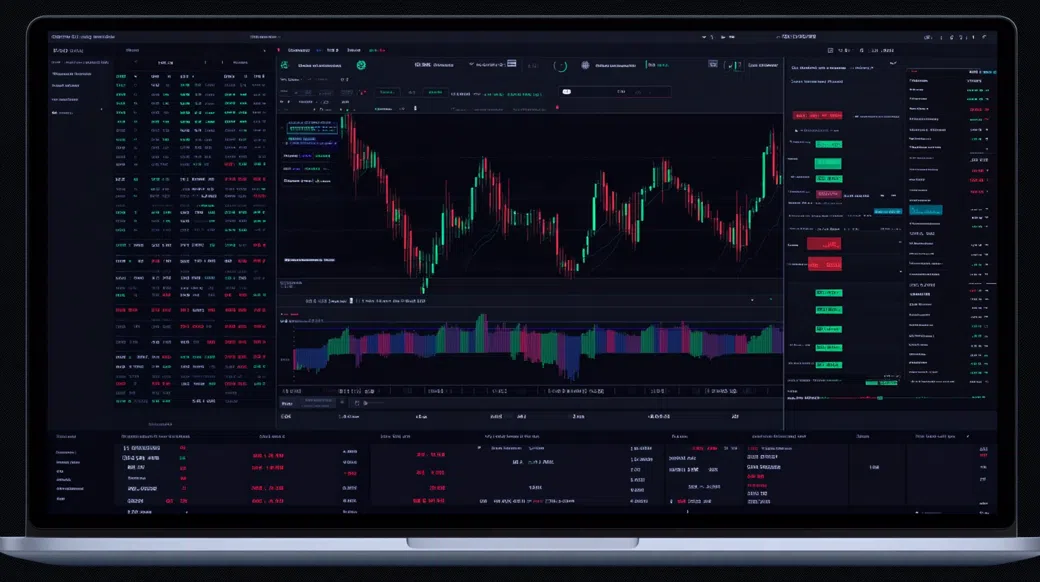
Leverage sells. Execution and investor protection are what you live with after the click. Libre Profitance sits in a familiar corner of the online trading ecosystem: an offshore-style CFD venue built around a proprietary WebTrader and mobile app, typically offering forex and index/commodity CFDs, plus crypto CFDs, with headline leverage that can reach around 1:500. The package can look straightforward—deposit, pick an instrument, trade from the browser—but the risk profile changes materially once regulation, segregation standards, and dispute resolution are put under a microscope.
From a market microstructure angle, the first question is rarely “How many indicators?” It’s “What is my execution model, and what happens when markets gap?” Offshore venues often operate with wider effective spreads, less transparent routing, and fewer guardrails (for example around negative balance protection and complaint handling). Cost is another silent drag: if EUR/USD is effectively around 2.0 pips on a standard-style setup, that’s a meaningful tax on frequent trading.
This is where Libre Profitance alternatives matter. Regulated competitors can offer clearer supervision (FCA, ASIC, CySEC, NFA), stronger client-money rules, and—depending on your strategy—better tooling (MT4/MT5/cTrader, deeper order controls, and more robust reporting). This guide focuses on the “2026” question: which substitutes fit different trader types in the US/EU corridor, and how to switch without creating avoidable operational risk.
Disclaimer: This article is for informational purposes only and does not constitute investment advice. CFDs and other leveraged products carry a high risk of loss, and you can lose more than your initial margin in fast markets.
Across Europe, Libre Profitance looks and behaves like a CFD-first broker aimed at retail traders who want fast onboarding and a single, browser-based terminal. Publicly, it is most consistent with an offshore framework (often marketed from jurisdictions such as the Seychelles FSA), which generally means lighter-touch supervision compared with FCA, ASIC, CySEC, or NFA regimes. The product mix typically centers on forex (roughly a few dozen pairs), major indices, some commodities, and a menu of crypto CFDs—built for short-term trading rather than long-term investing or exchange-listed access.
The platform stack is usually a proprietary WebTrader with a companion iOS/Android app—functional, but not designed as a workstation-grade environment. Expect the essentials: multi-timeframe charts, a standard set of indicators and drawing tools, and a simple order ticket for market/limit/stop entries. Where platforms like Libre Profitance often feel “mid-tier” is in workflow depth: fewer advanced order types, lighter customization, and limited transparency around execution quality (for example, how re-quotes are handled, or how slippage is reported in volatile prints). The mobile experience typically mirrors the web version closely, which is convenient, but it can compress risk controls when you’re managing margin under stress.
On costs, the common pattern for this category is a spread-led model on a Standard-style account, with EUR/USD frequently around 2.0 pips in normal conditions. Some offshore CFD brokers also advertise a “Raw/ECN” tier: tighter spreads (often near 0.0–0.4 pips) but paired with a commission in the neighborhood of $6 per round turn. Add the fees traders forget: swaps/overnight financing on held positions, potential withdrawal charges depending on payment rails, and occasional inactivity policies. For active strategies, the key is not the advertised minimum spread—it’s the average all-in cost during your trading hours, including widened spreads around data releases.
Spreads and execution friction are usually the first “felt” reasons traders start mapping out Libre Profitance alternatives—especially if the strategy relies on frequent entries where each pip matters. Regulation is the second, and it’s more structural: once you compare complaint handling, client-fund segregation standards, and the quality of public disclosures, offshore venues can look thin. Finally, many traders outgrow proprietary terminals and want the broader ecosystem: MT4/MT5 for EAs, cTrader for order control, or multi-asset access that goes beyond CFDs.
Think of selection as “strategy fit under constraints,” not a beauty contest. Your constraint set includes jurisdiction (US vs EU/UK), leverage limits, product scope, and the operational plumbing—KYC, funding rails, reporting, and customer support responsiveness. A shortlist becomes credible only after you confirm regulation on the primary register and estimate your all-in trading cost under realistic conditions (including swaps and slippage).
Start with the regulator’s public register: FCA, ASIC, CySEC, or NFA are not interchangeable labels—they map to different enforcement patterns and client-money rules. In the UK, eligible FCA-regulated firms can fall under the FSCS (up to £85,000) in certain failure scenarios; in Cyprus, the ICF can cover up to €20,000 for eligible clients. Also look for segregated client funds, negative balance protection (where applicable), and clear legal entity disclosure—details that offshore competitors to Libre Profitance often present less transparently.
Ask a blunt question: do you need CFDs, or do you need the underlying asset? Multi-asset brokers can offer real stocks/ETFs (with corporate actions and ownership rights) alongside derivatives; CFD-only setups cannot. If your plan involves listed options, futures, or bonds, the universe of regulated substitutes for Libre Profitance narrows fast—and that’s useful. A platform that matches your instrument needs reduces “workarounds,” which is where many retail accounts accumulate hidden risk.
Use a round-turn framework: (spread in pips × pip value) + commissions + expected slippage + platform/financing costs. A tight headline spread can be offset by commission, while a wider spread can still be competitive for low-frequency traders who avoid swaps. Track swap/overnight fees if you hold positions beyond the session; on leveraged CFDs, financing often dominates total cost over weeks. Inactivity and withdrawal fees are less glamorous, but they are pure leakage.
Platform choice is a capability decision. MT4/MT5 support a large EA and indicator ecosystem; cTrader tends to appeal to traders who care about order handling and depth-of-market style controls; proprietary platforms can be clean but less extensible. Execution model matters too—market maker vs STP/ECN/DMA affects how orders are filled, and how slippage shows up during volatility. If you’re comparing against Libre Profitance, insist on clarity: how are stops treated in gapping markets, and are execution statistics disclosed in a meaningful way?
Support quality shows up when something breaks: a margin call, a missing statement, a card chargeback inquiry. Look for multilingual coverage (relevant in the EU), clear ticketing, and response times that match your trading hours. Education is not a substitute for risk controls, but good brokers provide structured materials on margin, order types, and platform use. Mobile parity also matters—if you manage risk from a phone, the app must expose the same stop/limit controls and reporting you rely on.
Forex and index/commodity CFDs are the center of gravity for platforms like Libre Profitance, typically with leverage marketed up to about 1:500 and an instrument list that can cover ~30–50 FX pairs plus a handful of indices and commodities. The trade-off is usually cost transparency and execution detail: an around-2.0-pip EUR/USD spread on a standard setup is workable for occasional positioning, but it’s punishing for scalpers or intraday systems where a few tenths of a pip changes the outcome. Regulated alternatives that tend to win on execution tooling and cost structure include Pepperstone (MT4/MT5/cTrader; Razor-style pricing) and IG (broad CFD coverage, mature risk controls). The difference is not marketing—it’s the operational layer: clearer supervision, more robust reporting, and platforms built for active risk management when spreads widen and slippage becomes real.
Stock and ETF access is where many CFD-first venues show their limits. Even when “shares” are listed, the exposure is frequently via stock CFDs rather than ownership—no shareholder rights, no direct participation in corporate actions beyond synthetic adjustments, and financing charges if you hold long positions. Traders seeking to build a portfolio (or hedge a CFD book with cash equities) usually gravitate toward multi-asset infrastructure: Interactive Brokers (IBKR) for exchange-listed stocks/ETFs, options, and futures; Saxo Bank for a curated but deep multi-asset offering with strong reporting. If your 2026 plan includes moving from tactical CFDs into longer-horizon allocations, this single decision—real assets vs CFDs—often determines the best substitutes for Libre Profitance more than any UI preference.
Crypto at offshore CFD brokers is commonly delivered as crypto CFDs: you gain price exposure without on-chain ownership, wallets, or transferability. That can be fine for short-duration directional trades, but it changes the risk stack: financing/roll costs, platform pricing, and the broker’s own risk management sit between you and the market. For traders who want crypto exposure inside a regulated CFD wrapper, IG and Plus500 are typical regulated options for crypto CFDs (jurisdiction-dependent), with clearer retail safeguards than offshore providers. If you want actual crypto ownership, that’s usually a different ecosystem entirely (and not the same as a CFD account). For most readers comparing alternatives to the Libre Profitance trading platform, the key is to label the product correctly: CFD exposure behaves differently from holding the underlying coin.
Regulation: SEC/FINRA (US), FCA (UK), IIROC (Canada)
Markets: Stocks, ETFs, options, futures, bonds, FX
Fees: FX priced via tight spreads plus commissions (varies by venue/size); equities/derivatives on tiered or fixed schedules depending on region
Platform: Trader Workstation (TWS), IBKR Desktop, web platform, mobile; API access
Best For: Multi-asset professionals who need exchange access and robust reporting
Regulation: FCA (UK), ASIC (Australia), CySEC (Cyprus), DFSA (Dubai)
Markets: FX and CFDs (indices, commodities, some crypto CFDs depending on region)
Fees: EUR/USD often ~0.0–0.3 pips on Razor-style accounts + commission; ~1.0+ pip typical on Standard-style pricing
Platform: MT4, MT5, cTrader, TradingView integration (where available)
Best For: Execution-focused FX traders using EAs or cTrader
Regulation: FCA (UK), ASIC (Australia), MAS (Singapore)
Markets: CFDs across FX, indices, commodities, shares (often as CFDs); spread betting in the UK (where permitted)
Fees: Spread-led CFD pricing; major FX pairs commonly from ~0.6+ pips (varies by market and time)
Platform: IG web platform, mobile apps; MT4 support in select regions
Best For: Broad-market CFD traders who value strong risk controls
Regulation: FCA (UK), MAS (Singapore), DFSA (Dubai)
Markets: Stocks, ETFs, bonds, options, futures, FX, CFDs
Fees: FX spreads typically competitive (often ~0.6+ pips on majors depending on tier); multi-asset commissions vary by exchange and account level
Platform: SaxoTraderGO, SaxoTraderPRO
Best For: Portfolio-minded traders mixing cash assets with derivatives
Regulation: CFTC/NFA (US), FCA (UK), ASIC (Australia), IIROC (Canada)
Markets: Primarily FX; CFDs in certain regions (jurisdiction-dependent)
Fees: Spread-based pricing on core accounts; majors can be around ~0.6–1.2+ pips in normal conditions (varies with volatility)
Platform: OANDA web/mobile, MT4 (availability varies)
Best For: US-eligible FX traders prioritizing regulatory clarity
Regulation: FCA (UK), CySEC (Cyprus)
Markets: Stocks and ETFs (investing accounts), CFDs (where permitted)
Fees: Investing side typically commission-free pricing model (other charges may apply); CFD costs are spread-based and vary by instrument
Platform: Proprietary web and mobile platform
Best For: Mobile-first investors who want simple stocks/ETFs alongside CFDs
| Platform | Regulation | Main Markets | Typical Costs | Best For |
|---|---|---|---|---|
| Interactive Brokers (IBKR) | SEC/FINRA, FCA, IIROC | Stocks/ETFs, options, futures, bonds, FX | FX: tight spreads + commission (venue/size dependent); exchange fees/commissions for listed products | Multi-asset professionals who need exchange access and robust reporting |
| Pepperstone | FCA, ASIC, CySEC, DFSA | FX and CFDs | EUR/USD ~0.0–0.3 pips + commission (Razor); ~1.0+ pip (Standard) | Execution-focused FX traders using EAs or cTrader |
| IG | FCA, ASIC, MAS | CFDs across FX/indices/commodities/shares (often CFDs) | Major FX often from ~0.6+ pips; spread-led on most CFDs | Broad-market CFD traders who value strong risk controls |
| Saxo Bank | FCA, MAS, DFSA | Multi-asset: cash + derivatives | FX often ~0.6+ pips (tier dependent); commissions vary by exchange/product | Portfolio-minded traders mixing cash assets with derivatives |
| OANDA | CFTC/NFA, FCA, ASIC, IIROC | FX (plus CFDs in some regions) | Majors commonly ~0.6–1.2+ pips (conditions dependent) | US-eligible FX traders prioritizing regulatory clarity |
| Trading 212 | FCA, CySEC | Stocks/ETFs (investing), CFDs (where permitted) | Investing: typically commission-free model; CFDs: variable spreads by market | Mobile-first investors who want simple stocks/ETFs alongside CFDs |
Switching brokers is an operational project, not a single withdrawal button. Sequence matters because KYC/AML rules, margin timing, and market volatility can interact in unpleasant ways. Treat the move as a risk-reduction exercise: reduce exposure first, secure a compliant funding path, then re-establish positions on the new venue with fresh risk limits. If you keep leverage high during the transition, a sudden gap can force decisions at the worst moment.
If you’re still evaluating your options, review current onboarding steps, eligible regions, and the live trading conditions side by side with the regulated platforms above. The right choice depends on what you trade, how often you trade, and what protections you require in your jurisdiction.
Visit Libre ProfitanceThe best choice depends on whether you need multi-asset investing or mainly FX/CFDs. Interactive Brokers (IBKR) is a strong fit if you want exchange-listed stocks/ETFs plus options and futures, while Pepperstone is typically a better match for MT4/MT5/cTrader-driven FX execution. In practice, the “best Libre Profitance alternatives 2026” shortlist comes from aligning regulation, instruments, and all-in trading costs with your strategy.
Libre Profitance is most consistent with an offshore/unregulated-style setup (often presented under jurisdictions such as the Seychelles FSA), which generally provides fewer protections than FCA, ASIC, CySEC, or NFA frameworks. That doesn’t automatically mean you will have a bad experience, but it does change the safety net around client-money handling, dispute resolution, and oversight. If safety is your priority, regulated options vs Libre Profitance are usually the more defensible route—especially for larger balances.
With brokers similar to Libre Profitance, stocks are often offered as CFDs (synthetic exposure) rather than real shares, and exchange-listed futures are frequently not part of the core lineup. Crypto is commonly available as crypto CFDs, which gives price exposure but not coin ownership or wallet transfers. If you need real stocks/ETFs or listed futures, Interactive Brokers (IBKR) or Saxo Bank are usually better-aligned platforms than CFD-first competitors to Libre Profitance.
Before switching, verify the new broker on the regulator’s register and confirm which legal entity will hold your account (this matters for protections like FSCS or ICF eligibility). Next, map your true trading costs—spread, commission, swap/overnight fees, and expected slippage—so you’re not surprised after migrating. Finally, complete KYC at the new broker first and plan your withdrawal and position closure sequence so you’re not forced into rushed, leveraged decisions during volatility.
Elena Marchetti is a Milan-based fintech analyst covering trading platforms, execution quality, and broker ecosystem dynamics across Europe. Her work focuses on the mechanics behind trading costs—spreads, slippage, and financing—and on how regulation and platform design shape real-world outcomes for retail traders.
Primary keyword note: This article covers Libre Profitance trading platform alternatives 2026 and evaluates Libre Profitance alternatives across regulation, costs, and platform ecosystems.