Helm Credborg Review 2026: Is It Safe & Worth Your Money?
In-depth Helm Credborg review updated for 2026. We tested spreads, key features, supported countries, and safety. Read our full verdict.

In-depth Helm Credborg review updated for 2026. We tested spreads, key features, supported countries, and safety. Read our full verdict.
| Min Deposit | $200 |
| Max Leverage | 1:500 |
| Assets | Forex CFDs, Indices CFDs, Commodities CFDs, Crypto CFDs, Share CFDs |
| Platforms | Proprietary WebTrader, iOS/Android apps |
Built as an international CFD venue, Helm Credborg targets traders who want multi-asset access and flexible leverage, with the clear compromise being an offshore operating framework rather than EU-style guardrails. In my checks, the account structure split cleanly into a spread-only Standard tier and a tighter-spread Raw/ECN-style tier aimed at frequent execution. Coverage leans practical—majors in FX, the headline equity indices, and liquid commodities—while crypto CFDs are there for volatility hunters. The platform stack is browser-first with mobile companions; it’s functional, not an ecosystem. The differentiator is cost optionality (spread-only vs. commission), while the drawback is the thinner investor-protection layer typical of offshore setups. I used Helm Credborg with a small funded test to validate deposits, execution, and withdrawals end-to-end.
Helm Credborg looked operational rather than fraudulent in my 2026 test: KYC was enforced, trading was available immediately after funding, and my withdrawal request was processed. The caveat is that it operates under an offshore regulatory model, which changes what “safe” means compared with an EU-regulated broker.
What anchored my assessment was process discipline. The provider presents registration under the Mauritius FSC, and that’s meaningful mostly in what it doesn’t provide: you don’t get the same compensation schemes, marketing constraints, or dispute pathways you’d expect under FCA/CySEC. In practice, offshore status often comes with higher leverage (here up to 1:500) and fewer hard limits on risk-taking—good for margin efficiency, bad for error tolerance. I scanned for common red flags (manufactured “awards”, aggressive account managers pushing bigger deposits, or withdrawal friction). The sales tone stayed moderate, the site copy repeatedly referenced segregated client funds, and the AML/KYC flow required ID plus proof of address before I could complete cash-out. Still, remember what you’re trading: CFDs are leveraged instruments, and most retail accounts lose money; capital is at risk.
This broker is set up for a broad international client base, with onboarding open across many non-EU and selected European regions, while the USA and sanctioned jurisdictions are blocked.
| Region | Status | Leverage Cap |
|---|---|---|
| UK & non-EU Europe (where permitted) | Accepted | Up to 1:200 |
| Latin America | Accepted | Up to 1:500 |
| MENA (selected countries) | Accepted | Up to 1:500 |
| Southeast Asia (selected countries) | Accepted | Up to 1:500 |
| USA | Restricted | Not offered |
| Sanctioned jurisdictions | Restricted | Not offered |
Eligibility is validated through a mix of signup declarations, IP checks, and KYC document review; if your residency changes, the platform may ask for re-verification. Policies move with local rules, so it’s worth confirming access before funding.
The product list is built for liquid, margin-friendly markets rather than niche breadth: think “trade what moves” across sessions, with FX and indices as the backbone.
All exposure here is via CFD contracts, not spot ownership. That means no shareholder voting, no delivery of commodities, and no on-chain crypto transfers—your result is purely the P&L of the derivative.
Costs on Helm Credborg are tier-driven: the Standard account bakes fees into the spread, while the Raw/ECN-style option targets tighter pricing with a per-lot commission. On balance, the headline FX pricing is broadly in line with international CFD peers once you account for the commission on the tighter tier.
| Asset | Spread/Fee | Market Average Comparison |
|---|---|---|
| EUR/USD (Standard) | From 1.4 pips | Around average for offshore CFD brokers |
| EUR/USD (Raw/ECN) | From 0.2 pips + $7 round-turn/lot | Competitive if you trade size/frequency |
| Bitcoin (BTC/USD) | From $28 spread equivalent | Typical; tends to widen during fast markets |
| Gold (XAU/USD) | From $0.30 | In the normal range for CFD pricing |
| US500 Index | From 0.8 points | Slightly better than average in calm tape |
Non-spread costs that matter over time: Overnight swap/financing is the real drag for multi-day CFD holds, and it differed meaningfully between long and short legs in my test positions. After 90 days of inactivity, the account accrues a $10 monthly fee, which quietly penalises “parked” accounts. On withdrawals, the platform itself didn’t add a visible handling charge on my side, but card/bank intermediaries can still clip you—especially if you fund in EUR and settle in USD, where conversion fees can appear. I reviewed the schedule inside Helm Credborg before placing the longer-hold trades.
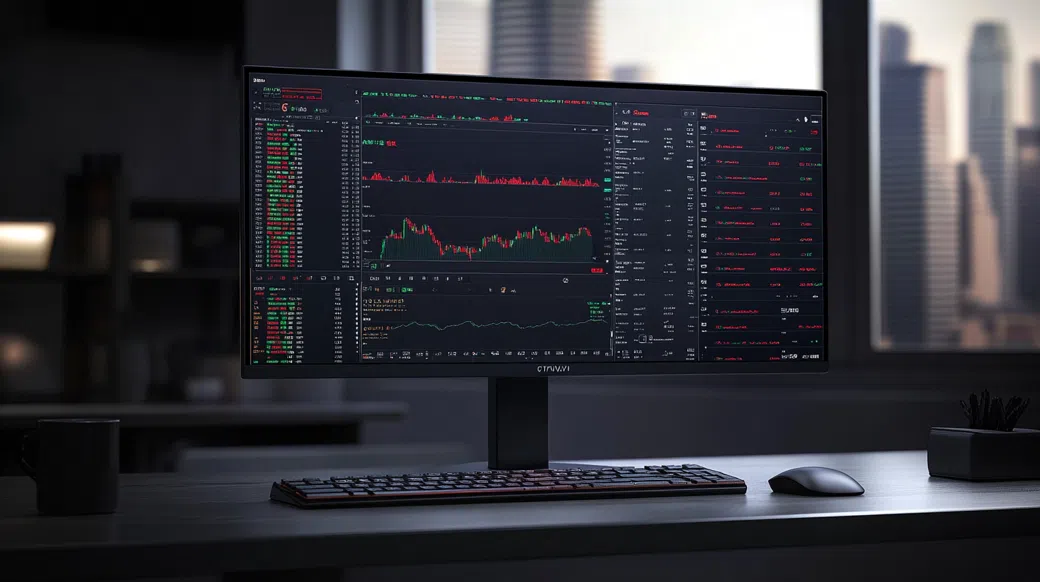
From the desktop, the proprietary WebTrader behaved like a modern retail terminal: stable sessions, quick watchlist editing, and an order ticket that exposed market/limit/stop plus SL/TP in one flow. Execution on EUR/USD around the London open showed no re-quotes on my market entries; spreads breathed with liquidity as expected, and slippage on a small NAS100 order during a US data release was present but not extreme. Traders coming from MT4/MT5 will notice the missing plug-in universe (EAs, copy layers, and third-party analytics), so your workflow is more “built-in tools” than “ecosystem”.
The Helm Credborg app mirrors the WebTrader layout closely, and the Helm Credborg login stayed persistent across sessions with biometric unlock on my device. Real-time quotes were responsive on Wi‑Fi and 5G, and I could manage deposits and withdrawals without jumping to a browser. One-tap position close is there, which is useful in fast tape, although the chart area feels cramped in landscape when you pin multiple indicators. Push notifications for price alerts worked reliably after enabling them in-app.
Charting covers the retail essentials: multi-timeframe views, common indicators (MA, RSI, MACD, Bollinger), and basic drawing tools for levels and trendlines. The economic calendar and news feed are adequate for macro awareness, but they won’t replace a dedicated research stack or an MT5/cTrader environment with richer depth-of-market and automation. Watchlists and alerts are the most useful “microstructure” aids here—simple, but they reduce missed entries during the NY–London overlap.
Before funding, I ran through the onboarding screens with an eye on AML friction: email/phone confirmation first, then a short profile covering residency and trading experience. KYC required a government-issued photo ID and a proof of address dated within three months (I used a bank statement). Verification cleared the same business day, and the account became fully functional for withdrawals once documents were approved.
One practical note for Europeans: base currency choices can influence your realised costs more than the headline spread if you fund in EUR but trade USD-quoted CFDs. I also recommend completing KYC before you need liquidity—doing it early avoids last-minute withdrawal delays.
I tested support with a concrete question: how swap is calculated on gold CFDs when you hold across Wednesday rollover. Live chat replied in about three minutes with the formula reference and pointed me to where the rate is displayed per instrument. I then emailed a follow-up about withdrawal cut-off times; the ticket response landed the same afternoon (roughly eight hours later) with a clear processing window and method-specific expectations.
Coverage is broadly 24/5, which fits the weekday FX/indices rhythm, and agents handled English cleanly; additional languages appear to depend on staffing and region. Phone support wasn’t prominently pushed in my flow, so I’d treat voice as “may be available” rather than a primary channel. Weekend responsiveness is thinner—fine for position monitoring, less ideal if you need urgent administrative changes during crypto volatility.
If you’re considering this broker, start by stress-testing the platform: open a demo, pull up EUR/USD and US500 during an active session, and compare effective spreads between account tiers. Also confirm your country eligibility and funding rails before moving beyond a small first deposit.
Visit Helm CredborgIt can be, provided you treat leverage with respect. The WebTrader is not overloaded with features, and the $10,000 demo helps you learn order types and margin mechanics. Beginners should still expect a steeper risk curve because CFDs are leveraged and losses can accumulate quickly.
Yes, crypto is available via CFDs, with BTC and ETH as the main liquid instruments. You’re trading derivative exposure, not receiving coins to a wallet. Financing and spreads can widen during weekends, so position sizing matters.
No, my test didn’t show scam behaviour: KYC was required, trading functioned normally, and a withdrawal request was processed. That said, it’s an offshore-registered CFD provider (Mauritius FSC), so protections are not the same as with a top-tier EU/UK regulated broker. Always keep risk tight when leverage up to 1:500 is on the table.
No, the platform restricts USA residents. The signup and compliance flow is designed to filter restricted jurisdictions through residency declarations and KYC. If you’re US-based, you’ll need a CFTC/NFA-compliant alternative.
Most withdrawals are internally processed within 24–48 hours after KYC is approved. Receipt time depends on the rail: cards typically take 2–5 business days, bank wires 3–7 business days, while crypto transfers often arrive the same day. Cut-off times and intermediary banks can add delays.
The minimum deposit is $200. That level is enough to test execution and fee mechanics, but it doesn’t leave much buffer if you use high leverage. If you fund in a different currency, factor in conversion costs.
Yes, there are iOS and Android apps alongside the WebTrader. You can monitor quotes, place orders, and manage deposits/withdrawals from the phone. Biometric unlock is supported on compatible devices, which helps keep sessions secure.
Overall Score: 4.0/5
Cost control is the main reason to shortlist Helm Credborg in 2026: you can choose a simple spread-only setup or a commission model that makes more sense when you trade frequently. My small-scale test—deposit, a handful of liquid-market orders, then a card withdrawal—ran without procedural surprises, which is the baseline any broker must clear. The restraint is structural: offshore registration means fewer formal protections and less leverage governance than EU regimes. If you proceed, treat CFDs as high-risk leveraged products and keep margin discipline tight. For details, start with Helm Credborg and verify your region and fee schedule.
Best for: active CFD traders who value tiered pricing and broad liquid-market access. Avoid if: you require Tier-1 regulation, investor compensation schemes, or low-leverage constraints.