GiustoWex Trading Platform Alternatives 2026
Compare GiustoWex alternatives for 2026: regulated brokers, platform stacks (MT4/MT5/cTrader), costs, execution, and a safer migration checklist.

Compare GiustoWex alternatives for 2026: regulated brokers, platform stacks (MT4/MT5/cTrader), costs, execution, and a safer migration checklist.
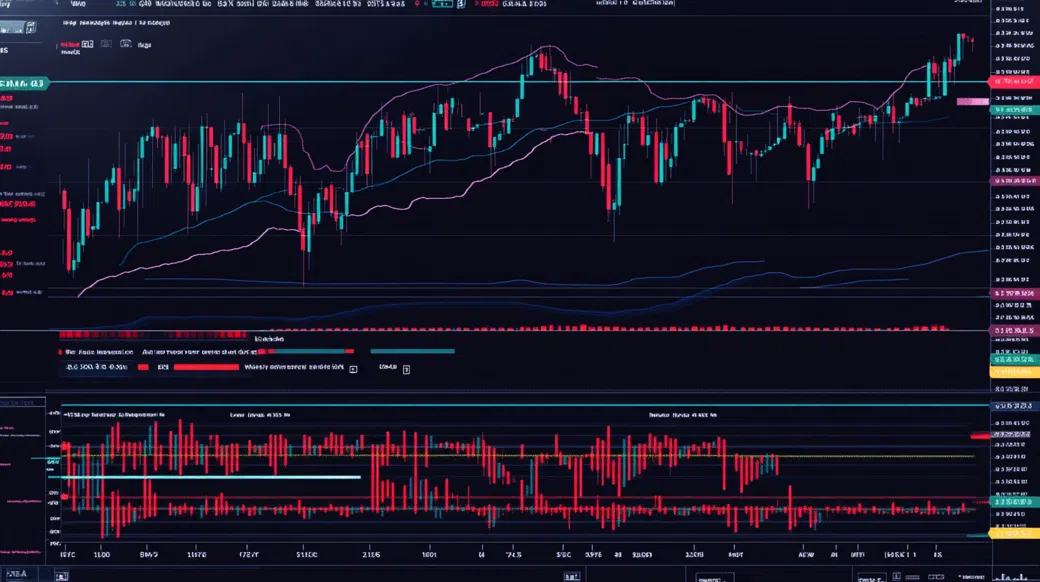
Leverage is a tempting shortcut—and it’s also where platform choice stops being cosmetic and becomes structural risk. GiustoWex sits in a familiar corner of the retail trading ecosystem: an offshore, CFD-first venue built around a proprietary WebTrader and a mobile app, typically offering forex and index/commodity CFDs, with crypto CFDs frequently in the mix. Public-facing details for brokers in this segment can be thin, and that opacity matters because the real-world experience is shaped by execution quality, funding/withdrawal flow, and the legal framework behind client-money handling.
Based on what’s commonly observable for offshore providers, GiustoWex is best thought of as a high-leverage CFD platform (up to 1:500), with a relatively low entry ticket (often around a $250 minimum deposit) and “standard” pricing that can land near 2.0 pips on EUR/USD on a basic account. That cost level can be workable for swing trading, yet it’s harsh for high-turnover strategies where the spread is the tax you pay on every round trip. This is the practical reason many readers end up researching GiustoWex alternatives: not as a moral judgment, but as a calibration exercise—risk budget, strategy fit, and jurisdictional protection. If you’re cross-checking what you have today, start by mapping your needs against regulated substitutes for GiustoWex that publish clearer rules on execution, client-fund segregation, and complaints handling.
Disclaimer: This article is for informational purposes only and does not constitute investment advice. CFDs and other leveraged products carry a high risk of loss and may not be suitable for all investors.
In practical terms, GiustoWex appears positioned as an offshore CFD broker (commonly seen under a Seychelles FSA-style framework in this category), aimed at retail traders who want quick onboarding, a browser-based platform, and access to leveraged forex/CFDs. The product mix typically prioritizes FX pairs, major indices, a short list of commodities, and crypto CFDs. That is a different proposition from a multi-asset investment broker: CFDs are derivatives, and your exposure is to the broker’s pricing and execution plus the underlying market, not to ownership of the asset itself.
The platform stack is usually a proprietary WebTrader with an accompanying iOS/Android app, optimized for accessibility rather than deep workstation-style tooling. Expect core charting with common timeframes, a workable indicator library, and basic drawing tools; it’s enough for discretionary trading but often light on advanced order types and strategy automation. Order entry is typically streamlined (market, limit, stop), with a dashboard that centralizes margin, open positions, and funding status. Mobile parity is generally decent for monitoring and closing risk, though power users may miss the ecosystem breadth that platforms like MT4/MT5 or cTrader bring in terms of plug-ins, EAs, and nuanced execution controls—one reason competitors to GiustoWex get attention among systematic traders.
Pricing in this offshore CFD bracket often clusters around a “Standard” account with EUR/USD spreads around 2.0 pips, and occasionally a lower-spread tier that pairs tighter pricing with a commission (commonly in the $5–$8 round-turn range). Overnight financing (swap) is a real cost driver if positions sit for days, and it can dominate the spread for carry-unfriendly instruments. Traders should also watch non-trading frictions: inactivity charges, payment-provider fees, and withdrawal handling times can be just as decisive as the headline spread when you’re trying to run a disciplined process across platforms like GiustoWex.
Spread is where microstructure meets your P&L: every entry and exit is a transaction cost, and at scale it behaves like a drag coefficient on performance. That’s why GiustoWex alternatives often enter the conversation after a trader reviews monthly turnover and realizes that “acceptable” costs are only acceptable at low frequency. Another common catalyst is jurisdictional protection—particularly when the broker sits offshore and the complaint/recourse pathway is less familiar to EU/UK users. The third trigger is tooling: strategy traders tend to migrate toward platforms that support MT4/MT5, cTrader, APIs, and more transparent execution reporting.
Think of selection as “fit-to-strategy” plus “fit-to-jurisdiction.” A regulated broker can still be the wrong tool if the platform stack, product set, or cost model doesn’t match how you trade. Conversely, a low spread is not a safety feature. The goal is to align legal protections, execution model, and fee structure with the way you size risk and hold positions.
Start with the regulator’s public register: FCA (UK), ASIC (Australia), CySEC (Cyprus/EU), and NFA/CFTC (US) are the names that matter most for a US/EU audience. Under the FCA, eligible clients may fall under FSCS protection up to £85,000; under CySEC, the ICF can cover up to €20,000 (eligibility and conditions apply in both cases). Beyond compensation schemes, look for segregated client funds, clear negative balance protection terms, and a complaints process that is actually spelled out—not implied.
Product breadth is not a vanity metric; it determines whether you can hedge and diversify without opening three separate accounts. Many alternatives to the GiustoWex trading platform cover FX and index CFDs, but only some provide real stocks/ETFs, options, or futures. If your plan includes long-term equity exposure, owning shares through a multi-asset broker can be structurally different from trading stock CFDs. Meanwhile, if you only need majors/minors in FX plus a handful of indices, a specialist FX/CFD broker may be the cleaner fit.
Compare round-turn cost, not slogans. A “raw” account with a 0.1–0.3 pip spread plus commission may beat a commission-free account showing 1.0–1.2 pips, depending on your average trade size and frequency. Then add the quiet fees: swap/overnight financing, conversion charges, and potential inactivity costs. If you are benchmarking against GiustoWex, translate everything into a per-trade cost in pips (or dollars) so the comparison is strategy-relevant.
Platform choice determines what you can measure and control. MT4/MT5 and cTrader support richer automation, a broader indicator ecosystem, and—depending on the broker—more granular reporting. Execution model matters too: market maker pricing can be perfectly legitimate but behaves differently from STP/ECN or DMA routing, especially around news where slippage widens and fills become less predictable. If you trade short horizons, even small latency differences can show up as adverse selection over time.
Practical support is about response time and clarity, not friendliness. Check whether service hours align with your trading session, whether local language coverage exists, and how disputes are handled in writing. Education should be more than glossaries: margin call mechanics, swap calculation, and order-type behavior under volatility are the topics that reduce avoidable errors. Finally, test mobile parity—many traders manage risk from a phone even if they open positions on desktop.
For FX and index CFD trading, the differentiator is usually cost plus execution transparency. A typical offshore CFD setup like GiustoWex often shows a standard EUR/USD spread around 2.0 pips and leverage that can reach 1:500—powerful, but unforgiving if volatility spikes into a margin call. Regulated alternatives can narrow the “friction layer” materially: Pepperstone and IC Markets, for example, are built for active FX/CFD flows and generally offer MT4/MT5/cTrader with raw-style pricing where the spread can sit near 0.0–0.3 pips plus a commission per round turn. That structure tends to be easier to model for strategy performance. Execution-wise, you want consistent fill behavior, clear trading-condition documents, and a broker that explains its routing (STP/ECN-style or market maker) so slippage is a known variable rather than a surprise.
This is where “platforms like GiustoWex” often diverge from investment-grade venues. Offshore CFD brokers typically provide stock exposure—if at all—through CFDs, which means no shareholder rights, no custody, and often limited universe depth. If your 2026 plan includes building a core portfolio in US/EU equities or ETFs, Interactive Brokers and Saxo Bank are the names that change the game: they are multi-asset frameworks with access to real stocks/ETFs (and, depending on jurisdiction, options and futures). The microstructure point is simple: direct market access and robust order types (limit, stop, conditional orders) can matter as much as the headline commission, especially when you trade less liquid European equities or manage partial fills. For many readers, that “real asset” capability is the decisive reason GiustoWex alternatives come up in the first place.
Crypto on offshore CFD platforms is usually crypto CFDs—price exposure without on-chain ownership. That can be appropriate for short-term directional trades, but it is not the same as holding coins in a wallet, and it introduces broker-credit and execution considerations on top of crypto volatility. If you want regulated crypto-CFD exposure in a more established framework, IG and Plus500 are common reference points in regions where they can offer crypto-related CFDs (availability varies by country and regulation). The risk-control angle is critical: crypto CFDs combine two amplifiers—crypto volatility and leverage—so position sizing and negative balance protection terms deserve more attention than the watchlist variety. If your goal is long-term crypto holding, a CFD broker is conceptually the wrong tool; the instrument doesn’t match the intent.
Regulation: SEC/FINRA (US), FCA (UK), IIROC (Canada)
Markets: Stocks, ETFs, options, futures, bonds, FX
Fees: FX spreads are typically tight with commission-based pricing; equity commissions vary by market and plan
Platform: Trader Workstation (TWS), IBKR Desktop/mobile, APIs
Best For: Portfolio builders who want real market access
Regulation: FCA (UK), ASIC (Australia), CySEC (Cyprus), DFSA (Dubai)
Markets: FX, CFDs (indices, commodities; availability varies), some crypto CFDs by region
Fees: Standard spreads often around ~1.0–1.3 pips on EUR/USD; Raw-style pricing can run ~0.0–0.3 pips + commission per round turn
Platform: MT4, MT5, cTrader
Best For: FX traders optimizing for execution and tooling
Regulation: FCA (UK), MAS (Singapore), DFSA (Dubai)
Markets: Stocks, ETFs, bonds, FX, options, futures, CFDs
Fees: Pricing varies by product; FX spreads commonly competitive with tiered plans; commissions apply for exchange-traded instruments
Platform: SaxoTraderGO, SaxoTraderPRO
Best For: Multi-asset traders managing FX alongside listed markets
Regulation: FCA (UK), ASIC (Australia), MAS (Singapore)
Markets: CFDs (FX, indices, commodities, shares), spread betting (UK/IE), crypto CFDs where permitted
Fees: CFD spreads typically variable; FX spreads often from ~0.6–1.0+ pips depending on market conditions and account type
Platform: IG web platform, mobile apps, MT4 (where available)
Best For: Risk-managed CFD access with strong regulatory footprint
Regulation: ASIC (Australia), CySEC (Cyprus), FSA (Seychelles) (group-level)
Markets: FX, CFDs (indices, commodities; availability varies), some crypto CFDs by region
Fees: Raw-style accounts often show ~0.0–0.3 pip spreads on EUR/USD + commission per round turn; Standard pricing generally wider
Platform: MT4, MT5, cTrader
Best For: High-frequency styles that need low all-in costs
Regulation: FCA (UK), CySEC (Cyprus), FSC (Bulgaria)
Markets: Stocks, ETFs (investment accounts), CFDs (region-dependent offering)
Fees: Investment accounts often emphasize low headline commissions; CFD costs are primarily spread-based with overnight financing
Platform: Proprietary web platform, mobile apps
Best For: App-first investors who want stocks/ETFs plus optional CFDs
| Platform | Regulation | Main Markets | Typical Costs | Best For |
|---|---|---|---|---|
| Interactive Brokers (IBKR) | SEC/FINRA, FCA, IIROC | Stocks/ETFs, options, futures, FX, bonds | Commission-based; tight FX pricing; exchange fees apply | Portfolio builders who want real market access |
| Pepperstone | FCA, ASIC, CySEC, DFSA | FX + CFDs | ~1.0–1.3 pips (Standard) or ~0.0–0.3 pips + commission (Raw) | FX traders optimizing for execution and tooling |
| Saxo Bank | FCA, MAS, DFSA | Multi-asset: listed + FX/CFDs | Tiered pricing; commissions on listed products; competitive FX spreads | Multi-asset traders managing FX alongside listed markets |
| IG | FCA, ASIC, MAS | CFDs (broad), spread betting (UK/IE) | Variable spreads; FX often from ~0.6–1.0+ pips depending on conditions | Risk-managed CFD access with strong regulatory footprint |
| IC Markets | ASIC, CySEC, FSA (Seychelles) (group-level) | FX + CFDs | ~0.0–0.3 pips + commission (Raw); wider on Standard | High-frequency styles that need low all-in costs |
| Trading 212 | FCA, CySEC, FSC Bulgaria | Stocks/ETFs + CFDs (where offered) | Low headline commissions on investing; CFDs are spread + swap driven | App-first investors who want stocks/ETFs plus optional CFDs |
Switching brokers is operational risk, not just admin. The safest sequencing reduces the chance you’re stuck between two platforms with capital in transit, open exposure, or incomplete verification. Because leveraged CFDs can move faster than funding rails, treat the migration as a controlled unwind and re-onboard—especially if your existing account uses high leverage like 1:500.
If you’re comparing GiustoWex trading platform alternatives 2026, it can still be useful to review the current onboarding flow and product menu side-by-side with regulated options. Check your region’s eligibility, confirm leverage limits, and read the withdrawal and fee terms before committing funds.
Visit GiustoWexThe best option depends on whether you need listed markets or primarily FX/CFDs. For real stocks/ETFs and broad market access, Interactive Brokers (IBKR) is a strong benchmark; for FX/CFD execution with MT4/MT5/cTrader, Pepperstone or IC Markets are often closer matches. If your priority is a regulated CFD venue with a large product shelf and established oversight, IG is frequently shortlisted as one of the best GiustoWex alternatives 2026.
GiustoWex appears to operate under an offshore framework typical of CFD platforms in this segment, rather than under FCA/NFA-style supervision. That doesn’t automatically predict your individual experience, but it does change the legal perimeter around complaints, client-money rules, and potential compensation mechanisms. If safety is your first filter, prioritize regulated options vs GiustoWex and confirm the exact legal entity on the regulator’s public register.
With brokers similar to GiustoWex, stocks are often offered as CFDs (if offered at all), and futures access is usually limited compared with multi-asset venues. Crypto exposure is commonly via crypto CFDs, which track price but do not provide on-chain ownership. If you need real stocks/ETFs or exchange-traded futures, Interactive Brokers or Saxo Bank are more direct matches for that requirement than a CFD-only setup.
Before moving, confirm regulation (entity name on the FCA/ASIC/CySEC/NFA register), client-fund segregation terms, and negative balance protection. Then compare round-turn trading costs (spread + commission) and read the swap/overnight schedule because it can dominate performance for multi-day holds. Finally, validate the platform stack (MT4/MT5/cTrader vs proprietary) and test execution with small size before scaling—this is the disciplined way to narrow down top substitutes for GiustoWex.
About the Author: Elena Marchetti is a Milan-based fintech analyst focused on market microstructure and how trading platforms compete through execution, pricing, and product design. She writes with a data-first lens, translating broker terms, regulatory perimeter, and cost models into trader-relevant comparisons for global audiences.