Erdem Analiz Sistemi Alternatives 2026: Safer Broker Options
Erdem Analiz Sistemi trading platform alternatives 2026: compare regulated brokers, costs, execution, and migration steps to switch with fewer surprises.

Erdem Analiz Sistemi trading platform alternatives 2026: compare regulated brokers, costs, execution, and migration steps to switch with fewer surprises.
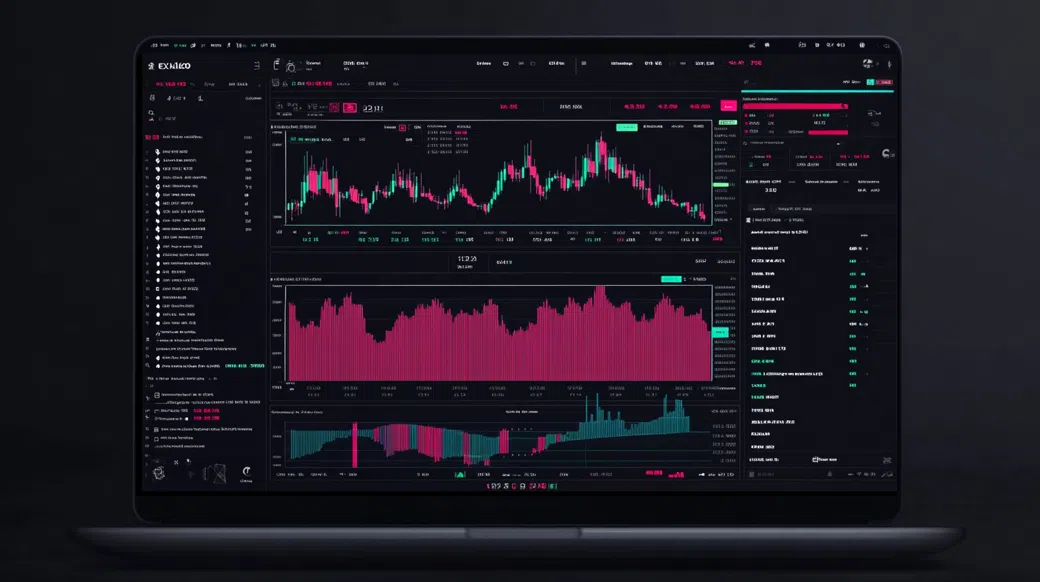
Across European retail flow, I see the same pattern: traders start with a simple WebTrader, then their strategy matures and the plumbing begins to matter—execution model, funding routes, and what happens when volatility hits. That is the lens for this guide to Erdem Analiz Sistemi trading platform alternatives 2026. Based on what is typically observable among offshore CFD-first providers, Erdem Analiz Sistemi tends to sit in the “proprietary platform + high leverage + broad CFDs” segment: forex and index/commodity CFDs as the core, crypto CFDs often present, and share investing (real stocks/ETFs with shareholder rights) usually not the main proposition. Typical entry points in this segment cluster around a $250 minimum deposit, leverage up to about 1:500, and EUR/USD spreads around 2.0 pips on a standard-style account.
None of those datapoints automatically makes a venue “good” or “bad”—but they do shape risk. Higher leverage compresses your margin-for-error, and proprietary platforms can be perfectly usable while still limiting order types, automation, or reporting depth. Add in the additional variable of offshore supervision (commonly seen under frameworks such as the Seychelles FSA), and it becomes rational to benchmark Erdem Analiz Sistemi against regulated brokers with clearer investor protections, stronger disclosures, and more robust execution choices. This article maps Erdem Analiz Sistemi alternatives to real needs: lower all-in trading costs, access to DMA equities, MT4/MT5/cTrader support, or simply a cleaner operational setup for deposits/withdrawals and compliance.
Disclaimer: This article is for informational purposes only and does not constitute investment advice. CFDs and other leveraged products carry a high risk of loss and are not suitable for every investor.
From a market-structure perspective, Erdem Analiz Sistemi reads like a CFD-first brokerage setup aimed at retail traders who prioritize quick onboarding and a single, browser-based interface. The product mix is typically concentrated in forex pairs (roughly a few dozen), major indices, a short menu of commodities, and a selection of crypto CFDs—an instrument list designed for frequent trading rather than long-horizon portfolio building. Supervision in this category is often offshore (here, commonly associated with the Seychelles FSA), which can mean different client-money rules and dispute pathways versus FCA, ASIC, CySEC, or NFA-regulated brokers. That regulatory perimeter is exactly why traders compare platforms like Erdem Analiz Sistemi with higher-transparency, onshore alternatives before scaling capital.
Functionally, a proprietary WebTrader usually aims for speed-to-trade: watchlists, basic charting, and a straightforward order ticket without the learning curve of a pro terminal. Expect standard chart types, a workable set of indicators and drawing tools, and a layout that translates decently to mobile (iOS/Android) for position monitoring. Where these stacks can feel “mid-tier” is depth: fewer conditional orders, limited multi-chart workflows, and less granular reporting for slippage, execution timestamps, or per-trade cost attribution. For discretionary traders, that can be fine; for systematic traders, the missing data trail becomes a real constraint.
Costs are usually delivered as spread-first pricing on a Standard-style account, with EUR/USD commonly around 2.0 pips in normal liquidity. Some brokers in this segment advertise tighter “raw” tiers; the typical pattern is 0.0–0.4 pips plus a round-turn commission in the $5–$8 range, but the practical question is the all-in cost on your trade size and holding period. Overnight financing (swap) matters if you hold CFDs beyond the session; it can quietly dominate your P&L even when the spread looks acceptable. Also watch for operational charges—withdrawal fees, currency conversion, and inactivity fees—because these are where competitors to Erdem Analiz Sistemi often differentiate with clearer fee schedules.
Cost pressure is often the first trigger. A 2.0-pip EUR/USD spread doesn’t sound dramatic until you run the math on monthly volume, then add slippage in fast markets and swap for overnight holds. The second trigger is governance: traders who move from experimenting to compounding tend to want a regulator with a tighter rulebook, segregated client funds, and a dispute process they can actually navigate. In practice, Erdem Analiz Sistemi alternatives become relevant when your workflow demands better execution analytics, broader market access, or simply fewer operational unknowns.
Think of broker selection as a strategy-fit exercise under a risk budget. A scalper cares about spread + commission + slippage; a swing trader cares about swap and weekend gaps; an investor cares about asset custody and corporate actions. Build your shortlist, then test it with small size before scaling. That approach produces better outcomes than chasing maximum leverage or the tightest headline spread.
Start with the regulator’s public register: FCA (UK), ASIC (Australia), CySEC (EU), and NFA/CFTC (US) each publish searchable records. Under FCA oversight, eligible clients may fall under FSCS protection up to £85,000; under CySEC, the ICF framework can apply up to €20,000 for eligible retail clients. These schemes aren’t a profit guarantee, but they do change the tail risk if a firm fails. Segregated client funds and negative balance protection (where required) are practical checkboxes, not marketing slogans.
Write down what you truly need: FX majors and indices are widely available almost everywhere, but real stocks/ETFs, listed options, and futures typically require a multi-asset broker with exchange access. If your plan includes hedging via options or rolling futures, a CFD-only menu will feel restrictive. Conversely, if your edge is short-horizon FX execution, a specialized FX/CFD broker may be the right tool—just ensure the instrument is appropriate for your jurisdiction and experience level.
Use “round-turn” cost as the comparison unit: open + close spread impact, plus commissions, plus any platform/market data fees. For example, a raw account with 0.1–0.3 pips plus a $6 round-turn commission can be cheaper than a 1.0–1.2 pip spread-only account once you trade meaningful size. Then layer in swap/overnight financing if you hold positions for days. This is where many regulated options vs Erdem Analiz Sistemi look materially different, even before you factor in slippage.
Platform choice is not aesthetics; it’s execution control. MT4/MT5 and cTrader support automation and a deep ecosystem of tools, while proprietary platforms vary widely in order types, reporting, and stability. Ask how orders are routed: market maker internalization can be fine for small sizes, but STP/ECN/DMA models may offer more transparent market interaction depending on the broker’s setup. In fast markets, slippage and latency decide outcomes more than a glossy interface—so test on demo and small live size.
Operational quality shows up in the unglamorous moments: KYC/AML checks, funding confirmations, corporate documentation, and support response during platform incidents. If you trade across time zones, verify service hours and language coverage. Education also matters, but judge it on specificity: margin-call mechanics, swap calculations, and execution policies beat generic webinars. Finally, insist on mobile parity for monitoring risk—especially if you use higher leverage products.
On FX and index CFDs, Erdem Analiz Sistemi’s typical proposition is accessibility: a proprietary WebTrader, leverage up to about 1:500, and a familiar spread-first model (EUR/USD often around 2.0 pips). The trade-off is that cost and execution transparency can lag regulated FX/CFD specialists. Pepperstone and IC Markets, for example, are commonly used by traders who want MT4/MT5 or cTrader, raw pricing structures, and tighter all-in costs (often a fraction of a pip plus commission on Razor/Raw-style accounts). For active strategies, the difference is not academic: over hundreds of round turns per month, a 1-pip gap in effective cost can shift a system from viable to marginal. If you’re comparing brokers similar to Erdem Analiz Sistemi, treat leverage as a risk amplifier, not an advantage in itself.
This is where the product architecture usually diverges. Offshore CFD venues frequently offer equity exposure mainly through stock CFDs—useful for short-term directional trades, but not the same as owning shares (no voting rights, no direct participation in corporate actions the way a custodied share position provides). If your 2026 plan includes building a long book of US and EU equities or ETF allocations, Interactive Brokers and Saxo Bank are the more natural substitutes: they provide broad exchange access, portfolio reporting, and (depending on jurisdiction and account settings) the ability to trade listed options and futures for hedging. Traders who start on platforms like Erdem Analiz Sistemi often underestimate how much better the data, statements, and tax reporting become once you move to a true multi-asset infrastructure.
Crypto on many CFD-first platforms is exposure, not ownership. A crypto CFD can track price, but you don’t withdraw coins to a wallet and you carry financing/spread costs that spot holders don’t. That can still be legitimate if your goal is tactical positioning or hedging, but it’s a different risk profile. Regulated CFD brokers such as IG and Plus500 are typical choices for traders who want crypto CFDs inside a clearer regulatory environment and with standardized client onboarding. If you trade crypto around weekends, pay special attention to gap risk, margin requirements, and how the broker handles extreme volatility—liquidation rules and negative balance protection can matter more than the instrument list. In that sense, top substitutes for Erdem Analiz Sistemi should be judged on risk controls as much as on what they let you trade.
Regulation: SEC/FINRA (US), FCA (UK), IIROC (Canada)
Markets: Stocks, ETFs, options, futures, bonds, FX
Fees: FX pricing is typically commission-based with tight spreads; equities use tiered/fixed commissions depending on venue and plan
Platform: Trader Workstation (TWS), IBKR Mobile, Client Portal APIs
Best For: Multi-asset traders who need exchange access and institutional-style tooling
Regulation: FCA (UK), ASIC (Australia), CySEC (EU), DFSA (Dubai)
Markets: FX, CFDs (indices, commodities; share CFDs in many regions)
Fees: Standard spreads often around ~1.0–1.2 pips on EUR/USD; Razor/Raw-style pricing commonly 0.0–0.3 pips + commission (~$6–$7 round-turn)
Platform: MT4, MT5, cTrader
Best For: Execution-sensitive FX traders running short-horizon strategies
Regulation: FCA (UK), MAS (Singapore), DFSA (Dubai)
Markets: Stocks, ETFs, bonds, options, futures, FX, CFDs
Fees: FX spreads generally competitive (often ~0.6–1.2 pips depending on tier); commissions apply on exchange-traded products
Platform: SaxoTraderGO, SaxoTraderPRO
Best For: Portfolio builders who still want active trading features
Regulation: FCA (UK), ASIC (Australia), MAS (Singapore)
Markets: CFDs (FX, indices, commodities, shares), spread betting (UK/IE)
Fees: Spread-based CFDs with EUR/USD commonly from ~0.6–1.0 pips in liquid hours; financing costs apply for overnight holds
Platform: IG web platform, mobile apps, MT4 (in supported regions)
Best For: Risk-managed CFD traders who want strong disclosure and research
Regulation: ASIC (Australia), CySEC (EU), FSA (Seychelles) (group-level)
Markets: FX, CFDs (indices, commodities, crypto CFDs in some regions)
Fees: Raw spreads often 0.0–0.3 pips on EUR/USD + commission (commonly ~$6–$7 round-turn); Standard accounts typically higher spread with no separate commission
Platform: MT4, MT5, cTrader
Best For: Algorithmic traders optimizing for low spreads and platform choice
Regulation: FCA (UK), CySEC (EU), FSC (Bulgaria)
Markets: Stocks and ETFs (investing); CFDs (in supported regions)
Fees: Investing accounts typically focus on low headline commissions; CFDs are spread-based with overnight financing for held positions
Platform: Proprietary web and mobile platforms
Best For: Mobile-first investors who want simple stocks/ETFs alongside CFDs
| Platform | Regulation | Main Markets | Typical Costs | Best For |
|---|---|---|---|---|
| Interactive Brokers (IBKR) | SEC/FINRA, FCA, IIROC | Stocks/ETFs, options, futures, bonds, FX | Commission-based; tight FX pricing; exchange fees/commissions on listed products | Multi-asset traders who need exchange access and institutional-style tooling |
| Pepperstone | FCA, ASIC, CySEC, DFSA | FX, CFDs (indices/commodities; share CFDs in many regions) | ~1.0–1.2 pips Standard; ~0.0–0.3 pips + ~$6–$7 RT on Razor/Raw | Execution-sensitive FX traders running short-horizon strategies |
| Saxo Bank | FCA, MAS, DFSA | Stocks/ETFs, options, futures, FX, CFDs, bonds | FX often ~0.6–1.2 pips by tier; commissions on exchange-traded instruments | Portfolio builders who still want active trading features |
| IG | FCA, ASIC, MAS | CFDs (FX/indices/commodities/shares), spread betting (UK/IE) | Spread-based; EUR/USD often from ~0.6–1.0 pips; swap for overnight | Risk-managed CFD traders who want strong disclosure and research |
| IC Markets | ASIC, CySEC, FSA (Seychelles) (group-level) | FX, CFDs (indices/commodities; crypto CFDs in some regions) | Raw ~0.0–0.3 pips + ~$6–$7 RT; Standard spread-only higher | Algorithmic traders optimizing for low spreads and platform choice |
| Trading 212 | FCA, CySEC, FSC (Bulgaria) | Stocks/ETFs (investing), CFDs (region-dependent) | Investing typically low headline commissions; CFDs: spreads + overnight financing | Mobile-first investors who want simple stocks/ETFs alongside CFDs |
A clean migration is a control problem: reduce operational risk while keeping market risk contained. Treat the switch as a sequence—verification, account setup, position management, then funding—rather than a single “close and reopen” event. If you are using leverage (Erdem Analiz Sistemi commonly advertises up to ~1:500 in this segment), avoid moving capital while you still have live exposure that could be liquidated by a sudden margin call.
If you’re still evaluating the current offering, review onboarding, fees, and regional eligibility directly, then compare those terms against the regulated platforms listed above. The goal is not to chase features; it’s to align instruments, execution, and protections with your trading plan and risk tolerance.
Visit Erdem Analiz SistemiThe best choice depends on whether you need multi-asset access or FX/CFD optimization. For real stocks/ETFs and broad exchange coverage, Interactive Brokers or Saxo Bank are usually stronger fits; for FX execution and platform ecosystem (MT4/MT5/cTrader), Pepperstone or IC Markets are common picks. If you want a simpler, mobile-first investing experience with stocks/ETFs plus CFDs (where supported), Trading 212 can sit on the shortlist of best Erdem Analiz Sistemi alternatives 2026.
Erdem Analiz Sistemi appears to operate in a framework typical of offshore CFD brokers (commonly associated with the Seychelles FSA), which is a different safety profile from FCA/ASIC/CySEC/NFA-supervised firms. That doesn’t automatically imply wrongdoing, but it does mean fewer standardized investor protections and potentially less predictable dispute resolution. If safety is your priority, compare Erdem Analiz Sistemi alternatives that offer segregated client funds, clearer disclosures, and—where applicable—compensation schemes such as FSCS (£85k) or ICF (€20k) for eligible clients.
With brokers in this segment, forex and CFDs are typically the core; stocks and ETFs are often offered as CFDs rather than as real share ownership, and listed futures access is usually not the primary offering. Crypto exposure, when available, is commonly via crypto CFDs—price tracking without coin withdrawal. If those gaps matter, look at multi-asset platforms (IBKR, Saxo) for listed products, or regulated CFD providers (IG, Plus500 in other comparisons) for crypto CFDs.
Before moving, verify the new broker on the regulator’s public register and confirm your exact entity (licence details can differ by country). Then compare round-turn costs (spread + commission) and non-trading fees like swap/overnight financing and withdrawal charges. Finally, export your statements from Erdem Analiz Sistemi, complete KYC at the new venue, and test execution with small size before redeploying full capital.
About the Author: Elena Marchetti is a Milan-based fintech analyst who tracks European broker infrastructure, market microstructure, and platform ecosystems. Her work focuses on execution quality, cost-of-trade, and the operational realities (KYC, funding, reporting) that shape real trading outcomes. Data first, opinions second.