Drayford Credmere Review 2026: Is It Safe & Worth Your Money?
In-depth Drayford Credmere review updated for 2026. We tested spreads, key features, supported countries, and safety. Read our full verdict.

In-depth Drayford Credmere review updated for 2026. We tested spreads, key features, supported countries, and safety. Read our full verdict.
| Min Deposit | $200 |
| Max Leverage | 1:500 |
| Assets | Forex, Indices, Commodities, Crypto CFDs, Share CFDs |
| Platforms | Proprietary WebTrader, iOS app, Android app |
Position it as an offshore-style CFD broker aimed at active retail traders who want broad markets and higher leverage, with the trade-off being lighter investor protections than in the EU. In this Drayford Credmere review, I tested both the spread-only and tighter-spread account tiers, and the cost profile lands where you’d expect for this segment. The instrument list is multi-asset with a clear FX-and-index backbone, while crypto CFDs are present for out-of-hours volatility. The stack is a proprietary WebTrader plus mobile apps; it’s practical, but it won’t feel like a full MT5 ecosystem. For a quick look at the current onboarding flow, I used Drayford Credmere directly and focused on execution, funding, and withdrawal behavior.
Based on my 2026 hands-on checks, Drayford Credmere appears operational and functioning as a real trading venue, not a “vanishing” scam site. The caveat is structural: it runs under an offshore registration model, so the safety net is thinner than with Tier‑1 regulators.
Seychelles FSA registration was the key jurisdictional signal I could validate from the legal footer and account documentation screens. In practice, that offshore status tends to come with two things traders like—higher leverage (here up to 1:500) and flexible product access—and two things risk managers dislike: limited compensation mechanisms and fewer escalation paths if a dispute turns into a formal complaint. I also scanned for the classic red flags: heavy-handed “account manager” pressure, unrealistic performance claims, and decorative awards; none dominated my inbox during the test window, and I was able to complete KYC before requesting a withdrawal. The provider’s wording around segregated client funds was present in the client area, though it’s still a policy promise rather than a regulator-enforced guarantee in the EU sense. Remember: CFDs are leveraged products; losses can exceed expectations quickly, and most retail traders lose money.
This broker primarily onboards clients across parts of Europe (non‑EU focus), MENA, and selected emerging markets, while the USA and sanctioned jurisdictions are blocked.
| Region | Status | Leverage Cap |
|---|---|---|
| UK | Accepted | Up to 1:500 |
| Switzerland | Accepted | Up to 1:500 |
| MENA (selected countries) | Accepted | Up to 1:500 |
| Southeast Asia (selected countries) | Accepted | Up to 1:500 |
| Latin America (selected countries) | Accepted | Up to 1:500 |
| USA | Restricted | Not offered |
| Sanctioned jurisdictions | Restricted | Not offered |
Eligibility is enforced via KYC checks and address verification, and the platform can also apply IP/location screening. Country lists shift with compliance policy, so I’d re-check access right before funding.
From a market-microstructure angle, the lineup is built for liquid CFD turnover first (FX and indices), with commodities and crypto CFDs filling in the volatility and hedging use-cases.
All exposure is via CFDs, meaning you’re trading price movements rather than owning shares or receiving shareholder rights. With crypto CFDs, you’re not moving coins on-chain; you’re taking a leveraged derivative position with financing and margin rules.
Costs are structured around two lanes: a spread-only Standard account and a Raw/ECN-style option with tighter pricing plus commission. On EUR/USD, the Standard feed I saw sat around a 1.6‑pip starting point, while the Raw tier compressed the spread and pushed costs into the per-lot commission—broadly in line with offshore CFD peers.
| Asset | Spread/Fee | Market Average Comparison |
|---|---|---|
| EUR/USD (Standard) | From 1.6 pips | Near segment average |
| EUR/USD (Raw/ECN) | From 0.2 pips + $7 round-turn/lot | Competitive for active trading |
| Bitcoin (BTC/USD) | From $28 | In line, can widen on weekends |
| Gold (XAU/USD) | From $0.35 | Slightly better than average in calm hours |
| US500 Index | From 0.8 points | Typical for CFD pricing |
Non-spread costs matter more than most traders admit. Overnight swap (financing) kicked in on leveraged FX and index positions, and the weekend financing effect was most visible on crypto CFDs when holding through Saturday/Sunday. There’s also an inactivity fee of $10 per month after 90 days without trading activity, which turns “set-and-forget” accounts into a slow leak. On withdrawals, I didn’t see a platform-side “handling” charge in the cashier, but bank/card rails can still add third-party fees and FX conversion spreads if you fund in one currency and withdraw in another.
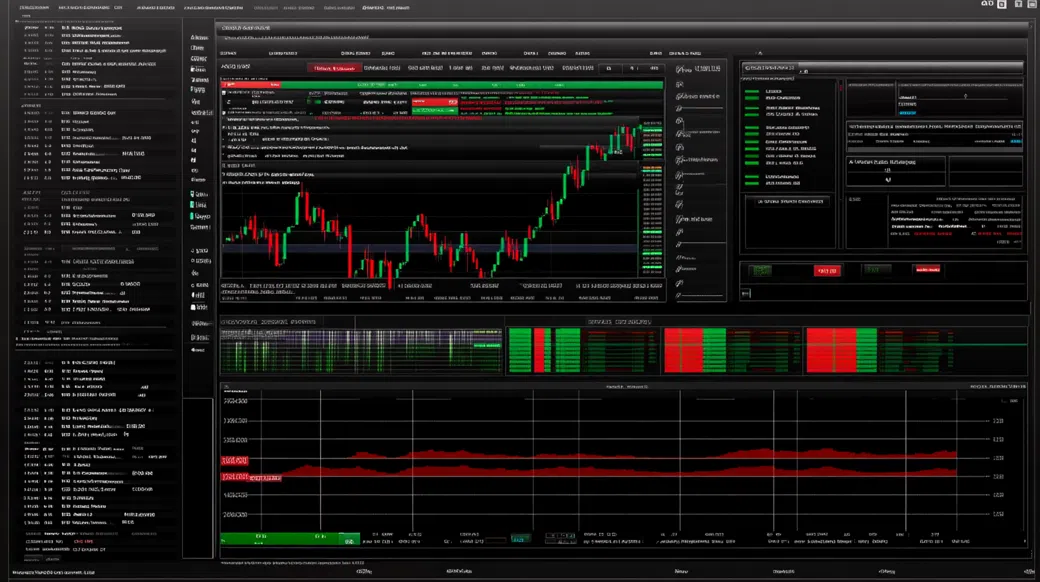
WebTrader is the center of gravity here, and I paid attention to the mechanics that affect fills: quote stability, one-click dealing, and order controls. Logging in from Milan during the London open, the platform held steady, and market orders on EUR/USD executed without obvious requote loops; around a minor data print, the fill came through with small slippage rather than a hard rejection. Order types covered the essentials (market, limit, stop, stop-loss/take-profit), but the wider plugin ecosystem you’d associate with MT4/MT5 isn’t part of this experience, so automation and third-party tooling feel constrained.
The Drayford Credmere app tracked the WebTrader layout closely, which helps if you alternate between devices. My Drayford Credmere login stayed persistent with biometric unlock, and I could place/modify stops, close positions with a single tap, and push a withdrawal request without switching to desktop. Quotes refreshed smoothly on 5G, and push notifications for price alerts worked, although the chart area is naturally tighter and detailed drawing is less comfortable on smaller screens.
Charting is functional: multiple timeframes, common indicators (MA, RSI, MACD, Bollinger), and basic drawing tools for structure and levels. Watchlists are easy to build, and there’s an integrated economic calendar plus a news stream that’s adequate for macro-aware trading. Still, if your workflow depends on advanced strategy testing, custom indicators, or deep order-flow analytics, you’ll feel the ceiling sooner than on MT5 or cTrader.
After the initial email/password creation, the onboarding screens asked for the usual profile data (residency, experience, and a short suitability-style questionnaire). KYC required a government-issued photo ID plus a proof of address dated within three months; my upload was accepted the same business day, and the client area showed an AML status badge once cleared. Funding remained locked until verification was complete, which I generally prefer for operational hygiene.
The Drayford Credmere minimum deposit sits in the “serious enough to filter tourists” bracket without being prohibitive. One practical note: account base currency selection influences conversion costs later, so align it with your funding rail. I also recommend testing a small withdrawal early, because that’s where operational friction usually shows up for offshore CFD providers.
To pressure-test service quality, I asked live chat a specific question about swap rates on XAU/USD and where to find them before placing a position. A human reply arrived in roughly three minutes, pointing me to the instrument details panel and clarifying that financing can change with liquidity conditions. I followed up by email requesting the expected processing timeline for a card cash-out after KYC; the ticket response landed in about eight hours with a clear sequence (request → internal approval → payment rail time).
Coverage is aligned with the product’s trading week: support is positioned as 24/5, with weekends quieter and crypto questions sometimes queued. Language availability depends on staffing; English worked reliably, while Italian support wasn’t consistently offered in my checks. Phone numbers were not emphasized in the client area, which is common in this segment, so chat and email remain the practical channels.
If you’re considering opening an account, start by checking the live spreads during your trading hours and confirming your country eligibility. A demo run can help you understand margin calls, swap, and order behavior before committing real capital.
Visit Drayford CredmereIt can be, but only if you treat it as a risk-managed CFD venue rather than a “learn as you go” app. The interface is clean and the $10,000 demo helps, yet leverage up to 1:500 can punish early mistakes. Beginners should stick to small position sizes and learn how swap and margin calls work first.
Yes, crypto CFDs are available, including BTC/USD and ETH pairs. You’re trading a derivative, so you won’t be depositing to a blockchain wallet or taking custody of coins. Keep an eye on weekend spreads and financing, which can dominate total cost.
No—based on my account test, it behaved like a functioning broker (KYC checks, trading access, and a withdrawal workflow). The more relevant question is protections: it operates under an offshore regulator (Seychelles FSA), so escalation and compensation structures are not comparable to FCA/CySEC regimes. Treat it as higher operational risk than a Tier‑1 licensed venue.
No, the USA is restricted. Attempting to register from a US profile is typically blocked during eligibility checks. If you have dual residency, expect KYC to decide based on your verified address documents.
Most withdrawals are approved internally within 24–48 hours after KYC is completed. Receipt time then depends on the rail: cards usually take 2–5 business days, bank wires 3–7 business days, and crypto payouts are often same-day. In my test, the timeline matched that pattern once verification was cleared.
The Drayford Credmere minimum deposit is $200. That level is enough to use risk controls sensibly on major FX and indices without immediately maxing out margin. If you plan to trade commodities or crypto CFDs, a larger buffer helps smooth volatility.
Yes, it offers iOS and Android apps alongside the WebTrader. The mobile build supports order placement, position management, alerts, and deposit/withdrawal actions. For detailed chart work, desktop still feels more efficient.
Overall Score: 4.0/5
From a practical trading standpoint, Drayford Credmere does the basics well: a coherent two-tier pricing model, a liquid-market-first product mix, and a WebTrader/mobile experience that didn’t break under normal session load. My small card withdrawal cleared the internal step inside 48 hours and landed a few business days later, which is the operational test that matters most. The limiting factor is not the UI—it’s the offshore setup, where legal protections and dispute escalation are thinner. If you proceed, size down, respect leverage, and remember CFD risk: capital is at risk and rapid losses are possible. For the latest conditions, check Drayford Credmere before funding.
Best for: self-directed traders who want multi-asset CFDs and can quantify leverage risk. Avoid if: you require Tier‑1 regulation, robust compensation schemes, or deep third‑party platform ecosystems.