Digna Fundância Alternatives 2026: Best Trading Platforms
Compare Digna Fundância alternatives for 2026 across regulation, fees, execution quality, and markets. A risk-aware guide for US/EU traders.

Compare Digna Fundância alternatives for 2026 across regulation, fees, execution quality, and markets. A risk-aware guide for US/EU traders.
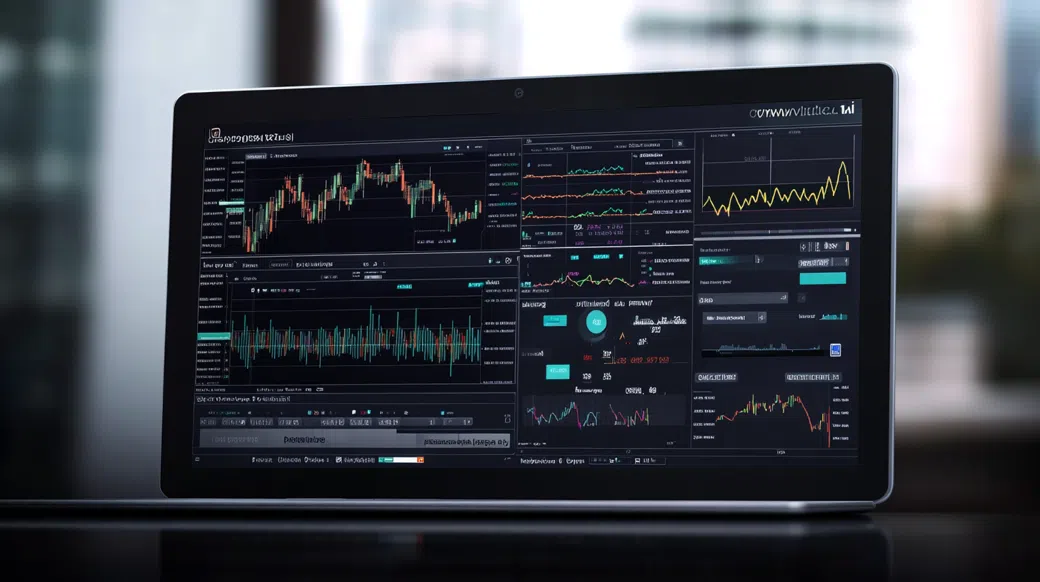
Liquidity is cheap; trading mistakes aren’t. That’s the lens I use when readers ask about platforms that sit in the offshore CFD segment—fast onboarding, high leverage, and a WebTrader that looks “good enough” until you start caring about execution details, funding friction, and what happens during a volatile session. Based on what is typically observed in this category, Digna Fundância appears positioned as a CFD-first venue focused on forex and indices, with crypto CFDs commonly part of the menu, a proprietary browser platform, and a mobile app for iOS/Android. The headline specs that usually show up around this segment—minimum deposit around $250, leverage up to 1:500, and EUR/USD spreads around 2.0 pips on a standard-style account—can be workable for casual positioning, but they are rarely optimal for systematic trading or cost-sensitive strategies.
Where the decision gets serious is governance: an offshore registration (here, commonly associated with the Seychelles FSA framework) does not give you the same investor-protection architecture as FCA, ASIC, CySEC, or NFA oversight. For many traders, that single difference is enough to start mapping Digna Fundância alternatives that offer clearer segregation practices, stronger complaint pathways, and more predictable execution policies.
Disclaimer: This article is for informational purposes only and does not constitute investment advice. CFDs and other leveraged products carry a high risk of loss and may not be suitable for all investors.
From a market-structure perspective, Digna Fundância fits the profile of an offshore CFD broker: product coverage centered on forex and CFDs, access via a proprietary WebTrader, and account conditions that lean on high maximum leverage. In practice, that usually means pricing and execution are routed through a broker-defined dealing setup (often a market maker model), rather than direct market access (DMA) into an exchange order book. For traders who only need basic spot-FX-style exposure via CFDs, the setup can feel straightforward; for those building repeatable execution workflows, the details—fills, re-quotes, stop behavior during news, and withdrawal processing—start to matter more than the interface.
The WebTrader experience in this segment is typically functional rather than deep: multi-timeframe charts, a standard indicator set, and enough drawing tools to mark levels and structure. Order entry usually covers market and pending orders, with stop-loss/take-profit controls, but advanced order logic (server-side trailing rules, complex conditional orders, or strategy automation) is often thin compared with MT4/MT5 or cTrader stacks. Mobile apps tend to mirror the basics—watchlists, simple charting, and position management—yet power users commonly notice gaps in workspace customization and alert sophistication. This is why platforms like Digna Fundância can serve discretionary chart traders, while systematic traders quickly ask for a broader tooling ecosystem.
Cost-wise, the offshore CFD template is fairly consistent: a “standard” account with EUR/USD around 2.0 pips typical, and sometimes a tighter-spread tier that shifts pricing into a raw-style model (often ~0.0–0.4 pips) paired with a round-turn commission in the neighborhood of $6–$8. Overnight financing (swap) is a real expense for multi-day holding and can dominate costs in high-rate differentials. Traders should also watch for non-trading fees—withdrawal charges, currency conversion, and inactivity policies—because small line items compound when you rebalance frequently.
A platform change is rarely emotional; it’s usually triggered by a measurable mismatch between what you trade and how the venue behaves under stress. The most common pattern I see is this: execution looks fine in quiet hours, then spreads widen, slippage increases, or risk controls feel opaque when volatility spikes. Add an offshore regulatory posture and you get a clear reason for scanning Digna Fundância alternatives that provide more transparent policies around best execution, segregated client funds, and dispute escalation.
Think of broker selection as matching plumbing to strategy. A day trader cares about slippage distribution and platform stability; a multi-asset investor cares about instrument breadth and custody structure. The right checklist is the one that reflects your risk budget and your time horizon—then you test claims against primary sources (regulator registers, legal docs, and real fills).
Start with the regulator because it defines the rulebook. FCA oversight (UK) comes with the FSCS framework (up to £85,000 in eligible cases), while CySEC oversight (EU) links to the ICF structure (up to €20,000). ASIC is strict on conduct and client money rules, and NFA/CFTC supervision is the hard gate for US-facing FX. Look for segregated client funds language, negative balance protection where applicable, and a clearly identifiable legal entity—not just a brand name.
Map the platform’s instrument list to what you actually trade. FX and index CFDs are fine for tactical exposure; they don’t replace real equity ownership when you want voting rights, corporate actions, or long-term holding without overnight financing. If you need options, futures, or bonds, you’re typically in multi-asset territory (IBKR, Saxo). If you only need FX/CFDs with strong tooling, specialist brokers can be the better fit.
Ignore the “from 0.0” headline and price the reality: round-turn cost is what matters. For active FX, a difference between ~2.0 pips and ~0.7 pips (or raw + commission) shows up quickly in monthly P&L. Add swap/overnight fees for held positions, then sanity-check inactivity, withdrawal, and conversion charges. A broker can look cheap per trade and still be expensive operationally.
Platform choice is a workflow decision. MT4/MT5 and cTrader support automation and a mature plugin ecosystem; proprietary platforms can be clean but limited. Execution model matters too: market maker vs STP/ECN/DMA changes how orders are internalized or routed, and that influences slippage during fast markets. If you’re comparing regulated options vs Digna Fundância, ask for documented execution policies, typical order handling, and whether price improvements are passed through.
Service quality is measurable: response time, ticket resolution, and whether support can answer funding and margin questions without scripts. EU traders should also watch language coverage and local payment rails (SEPA, cards, bank transfer). Education can be useful, but it is not a substitute for clear risk disclosures and stable platform behavior. Mobile parity matters if you manage risk on the move; desktop depth matters if you execute systematically.
On FX/CFDs, Digna Fundância likely sits around 30–50 forex pairs, 8–15 indices, and a small commodity slate—enough for broad directional trading but not necessarily for nuanced cross-market hedging. The bigger differentiator is cost and execution. A typical ~2.0 pip EUR/USD spread (standard-style) combined with 1:500 leverage can be a fragile mix in fast markets: your margin moves quickly, and your average fill price can drift via slippage. For tighter pricing and more mature execution tooling, Pepperstone and IC Markets are common picks among EU-based FX traders, particularly on raw-style accounts where spreads can be near-zero with a transparent commission. If your goal is to make costs predictable, these brokers’ platform stacks (MT4/MT5/cTrader) also help you log, test, and audit your execution.
Many offshore CFD-first venues either don’t offer real stocks/ETFs or provide them only as CFDs—useful for short-term exposure, but structurally different from owning the underlying. With equity CFDs, you’re paying financing for holds, you don’t have shareholder rights, and corporate actions are processed contractually. For traders who want genuine multi-asset access—cash equities, ETFs, options, futures—Interactive Brokers (IBKR) is hard to ignore because it is built around exchange connectivity and broad product depth. Saxo Bank is another strong alternative for investors who want a single account that spans equities and listed derivatives alongside FX. In other words, if your “alternatives to the Digna Fundância trading platform” search is really about moving from CFD-only to true multi-asset, those two tend to close the gap cleanly.
Crypto exposure in the CFD world is usually delivered as crypto CFDs (often 10–30 coins), which means you’re trading price movement without on-chain ownership. That may be acceptable for short-term trading, but it’s not the same as holding tokens in a wallet, and it introduces spread/financing considerations that can be meaningful outside of intraday horizons. If your goal is regulated crypto-price exposure inside a broker account, IG and Plus500 are examples of large, regulated CFD providers that typically include crypto CFDs (availability depends on jurisdiction and local rules). The practical advice is to decide what you want: speculative trading via derivatives, or ownership and custody. The best Digna Fundância alternatives 2026 for crypto depend on that choice more than on the number of coins on a list.
Regulation: SEC/FINRA (US), FCA (UK), IIROC (Canada)
Markets: Stocks, ETFs, options, futures, bonds, FX
Fees: FX pricing is volume/model-dependent; equities pricing varies by venue; focus on transparent commissions rather than spread-only marketing
Platform: Trader Workstation (TWS), IBKR Desktop, web and mobile
Best For: Multi-asset investors who need exchange access
Regulation: FCA (UK), ASIC (Australia), CySEC (EU), DFSA (Dubai)
Markets: FX, CFDs (indices, commodities, metals; crypto CFDs where permitted)
Fees: EUR/USD typically ~0.0–0.3 pips + commission on Razor/Raw; ~1.0–1.3 pips on Standard (varies by conditions)
Platform: MT4, MT5, cTrader, TradingView integration (where available)
Best For: Algorithmic FX traders focused on low all-in cost
Regulation: FCA (UK), DFSA (Dubai), MAS (Singapore)
Markets: Stocks, ETFs, bonds, options, futures, FX, CFDs
Fees: Pricing varies by account tier and venue; FX spreads often competitive on major pairs with commissions embedded or explicit depending on setup
Platform: SaxoTraderGO, SaxoTraderPRO
Best For: Portfolio builders who want one platform for FX and listed assets
Regulation: ASIC (Australia), CySEC (EU), FSA Seychelles (group-level)
Markets: FX, CFDs (indices, commodities, metals; crypto CFDs where permitted)
Fees: EUR/USD often ~0.0–0.3 pips + commission on Raw; ~1.0–1.4 pips on Standard (varies by conditions)
Platform: MT4, MT5, cTrader
Best For: High-frequency discretionary traders managing slippage risk
Regulation: FCA (UK), ASIC (Australia), MAS (Singapore)
Markets: CFDs (FX, indices, commodities, shares), spread betting (UK), limited crypto CFDs where permitted
Fees: Spread-led pricing on many CFD markets; majors commonly tighter than offshore-style ~2.0 pip pricing, but varies by instrument and session
Platform: IG web platform, mobile app, MT4 (in supported regions)
Best For: Risk-controlled CFD traders who value strong oversight
Regulation: FCA (UK), CySEC (EU), ASIC (Australia), MAS (Singapore)
Markets: CFDs (FX, indices, commodities, shares), crypto CFDs where permitted
Fees: Spread-only model; costs vary by market and volatility rather than fixed commissions
Platform: Plus500 proprietary web and mobile platform
Best For: Interface-first traders who prefer simplified execution
| Platform | Regulation | Main Markets | Typical Costs | Best For |
|---|---|---|---|---|
| Interactive Brokers (IBKR) | SEC/FINRA, FCA, IIROC | Stocks/ETFs, options, futures, bonds, FX | Commission-based; pricing varies by product and venue | Multi-asset investors who need exchange access |
| Pepperstone | FCA, ASIC, CySEC, DFSA | FX + CFDs | Raw: ~0.0–0.3 pips + commission; Standard: ~1.0–1.3 pips | Algorithmic FX traders focused on low all-in cost |
| Saxo Bank | FCA, DFSA, MAS | Multi-asset incl. listed derivatives + FX/CFDs | Tiered pricing; generally transparent, varies by market | Portfolio builders who want one platform for FX and listed assets |
| IC Markets | ASIC, CySEC, FSA Seychelles (group-level) | FX + CFDs | Raw: ~0.0–0.3 pips + commission; Standard: ~1.0–1.4 pips | High-frequency discretionary traders managing slippage risk |
| IG | FCA, ASIC, MAS | CFDs (plus spread betting in UK) | Mostly spread-led; majors often competitive but session-dependent | Risk-controlled CFD traders who value strong oversight |
| Plus500 | FCA, CySEC, ASIC, MAS | CFDs | Spread-only; wider in volatility-sensitive products | Interface-first traders who prefer simplified execution |
Switching brokers is operational risk in disguise: you’re moving cash, credentials, and margin exposure while markets keep moving. Before you touch withdrawals, line up the destination account, confirm the legal entity you’re onboarding with, and plan for a short window where you may be underinvested. If you are coming from Digna Fundância, assume positions won’t transfer across venues and treat the move as a controlled close-and-reopen exercise.
If you’re benchmarking brokers, seeing the current onboarding flow and platform conditions can be useful—just keep your comparison grounded in regulation, execution policies, and all-in trading costs. Regional eligibility and product availability change, so verify what applies to your country before funding an account.
Visit Digna FundânciaThe best choice depends on whether you need multi-asset access or just FX/CFDs with sharper execution. For exchange-traded breadth (stocks, ETFs, options, futures), Interactive Brokers (IBKR) is typically the cleanest step up; for FX/CFD pricing and MT4/MT5/cTrader workflows, Pepperstone or IC Markets often rank highly. In “best Digna Fundância alternatives 2026” lists, I also include IG and Plus500 for traders who prioritize large, regulated CFD environments.
Digna Fundância appears to operate under an offshore framework commonly associated with the Seychelles FSA segment rather than top-tier US/EU supervision. That doesn’t automatically imply wrongdoing, but it does change the investor-protection toolkit (compensation schemes, escalation pathways, and enforcement reach). If safety is the priority, compare regulated options vs Digna Fundância under FCA/ASIC/CySEC/NFA rules and read the client-money and execution-policy documents end to end.
Digna Fundância is typically positioned around forex and CFDs; stocks/ETFs are often not available as real assets and, if offered, are usually CFDs. Futures access is generally a multi-asset broker feature rather than an offshore CFD-WebTrader feature; that’s where IBKR or Saxo fit better. Crypto exposure, when offered, is commonly via crypto CFDs—price exposure without on-chain ownership.
Before switching, verify the new broker’s exact legal entity on the regulator register, then complete KYC so you’re not blocked mid-transfer. Next, download statements and trade logs from Digna Fundância, close or reduce open CFD exposure, and plan the withdrawal using the original deposit method to minimize AML friction. Finally, test execution with small size first—high leverage and CFDs can turn a small process error into a large loss.
About the Author: Elena Marchetti is a Milan-based fintech analyst focused on European brokerage ecosystems, trading platform design, and market microstructure. Her work emphasizes verifiable data—costs, execution policies, and regulatory status—before opinions, with a practical bias toward capital preservation.