Debess Telvāva Review 2026: Is It Safe & Worth Your Money?
In-depth Debess Telvāva review updated for 2026. We tested spreads, key features, supported countries, and safety. Read our full verdict.

In-depth Debess Telvāva review updated for 2026. We tested spreads, key features, supported countries, and safety. Read our full verdict.
| Min Deposit | $200 |
| Max Leverage | 1:500 |
| Assets | Forex, Indices, Commodities, Crypto CFDs, Share CFDs |
| Platforms | Proprietary WebTrader, iOS app, Android app |
Built for traders who want a multi-asset CFD ticket with flexible leverage, Debess Telvāva suits active speculators more than long-term investors—and the headline compromise is an offshore setup with lighter recourse if a dispute escalates. In my test account, the broker steered me into a two-tier structure (spread-only versus Raw/ECN-style pricing) that makes costs predictable once you pick your pace. Market coverage leans practical: majors in FX, the big index benchmarks, and headline crypto pairs rather than deep altcoin lists. The stack is a proprietary WebTrader plus mobile apps; it’s usable, but it doesn’t replicate the plug-in universe many traders expect from MT4/MT5. For the platform overview and sign-up flow, see Debess Telvāva.
Debess Telvāva appears operational and functional rather than a “vanishing broker” pattern, but it sits under an offshore regulatory model, so safety depends heavily on your own risk controls. I did not see blocked withdrawals or aggressive “upgrade” pressure during testing, yet the legal backstop is not comparable to FCA/CySEC-style regimes.
From a registration standpoint, the provider presents itself under the Mauritius FSC umbrella, which is a common jurisdiction for international CFD businesses targeting cross-border clients. In practice, that offshore status is the reason you can see higher leverage options (up to 1:500), but it also tends to mean thinner compensation schemes and fewer escalation routes if execution or pricing becomes a formal dispute. My red-flag sweep focused on the boring things that matter: KYC enforcement was required before withdrawal; the site language around segregated client funds was present (as policy statements), and I did not encounter “mystery awards” or unverifiable badges used as credibility props. Still, CFDs are leveraged products; margin calls can arrive quickly, and most retail accounts lose money when position sizing is loose.
This broker is positioned as an international CFD venue with broad availability across parts of Europe (non-EU), MENA, and emerging markets, while the USA and sanctioned jurisdictions are excluded.
| Region | Status | Leverage Cap |
|---|---|---|
| Europe (non-EU/EEA) | Accepted | Up to 1:500 |
| MENA (selected countries) | Accepted | Up to 1:500 |
| Latin America | Accepted | Up to 1:500 |
| Southeast Asia | Accepted | Up to 1:500 |
| USA | Restricted | Not offered |
| Sanctioned jurisdictions | Restricted | Not offered |
Access is typically enforced through a mix of IP checks and KYC residency review, so a successful signup screen doesn’t guarantee long-term eligibility. Policies shift with local rules, so it’s worth confirming your country during registration and again before funding a larger balance.
The instrument list is built for macro-style trading: liquid benchmarks first, then a narrower layer of single-name equities. If your workflow revolves around majors, index sessions, and gold volatility, the lineup feels coherent.
All exposure is via CFD contracts, so you’re not buying the underlying shares or taking custody of crypto assets. That also means no shareholder voting rights, and “dividend” effects—where applied—show up as pricing adjustments rather than real distributions.
Costs follow a familiar two-lane model: the Standard account prices via spread-only, while the Raw/ECN-style tier compresses spreads and adds a per-lot commission. On my EUR/USD checks, the Standard spread sat in the mid-pack for offshore CFD brokers, while the Raw tier looked more competitive once commission is included.
| Asset | Spread/Fee | Market Average Comparison |
|---|---|---|
| EUR/USD (Standard) | From 1.6 pips | In line with many offshore CFD Standard accounts |
| EUR/USD (Raw/ECN) | From 0.2 pips + $7 round-turn/lot | Often sharper than spread-only once trading frequently |
| Bitcoin (BTC/USD) | From $35 spread | Typical for CFD venues outside top-tier exchanges |
| Gold (XAU/USD) | From $0.25 | Competitive to average depending on session liquidity |
| US500 Index | From 0.8 points | Near the category midpoint for CFDs |
Non-spread costs that matter over time: Overnight swap/financing is the main hidden line item if you hold positions beyond the session, and weekend financing can bite harder on crypto. I also noted an inactivity fee of $10 per month after 90 days without trading activity, which changes the math for “parked” accounts. Finally, funding in a different base currency can introduce conversion costs, and withdrawals may inherit third-party bank or network charges even when the broker’s side is processed cleanly.
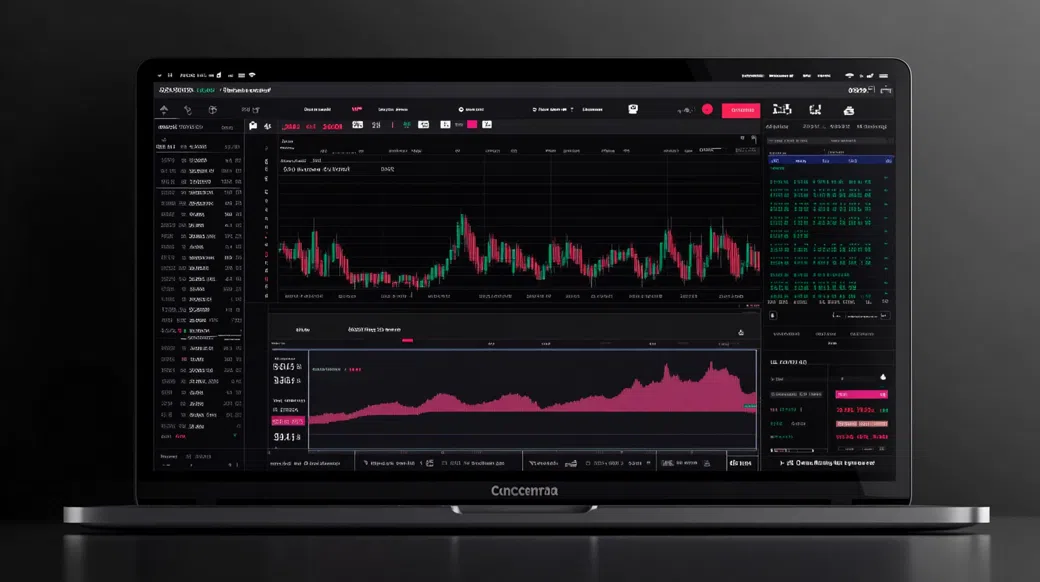
On desktop, the proprietary WebTrader loaded reliably and stayed stable across repeated sessions, with order tickets that cover the essentials (market, limit, stop, and attached SL/TP). I placed a small EUR/USD position around the London open to watch execution behavior during the first liquidity surge; fills were consistent with the quoted price, with only minor slippage when spreads briefly widened. Traders coming from the MT4/MT5 ecosystem should note the difference: the platform is functional, but you won’t get the same third-party indicator marketplace or automation culture without external tooling.
The Debess Telvāva app mirrors the WebTrader layout closely, and the Debess Telvāva login flow supported biometric unlock on my device after the first authentication. Quotes refreshed quickly, and one-tap position management (partial close and full close) was easy to find. Deposit and withdrawal menus are accessible inside the app, which matters when you need to react outside desktop hours; push notifications for price alerts worked, although the alert builder is more basic than specialist charting apps.
Charting covers the usual multi-timeframe view with common indicators (MA, RSI, MACD, Bollinger) and simple drawing tools for levels and trendlines. An economic calendar and a compact news feed are integrated, which is enough for monitoring scheduled risk like CPI or central-bank decisions. The ceiling shows up for systematic traders: compared with MT5/cTrader environments, research depth and advanced analytics are lighter, so serious quant workflows will likely remain external.
Before I could fund the account, the onboarding screens collected standard profile details (residency, experience, and basic suitability prompts) and then routed me into identity checks. KYC required a government-issued photo ID plus a proof of address dated within three months; my verification cleared the same business day after upload. The deposit screen was clear about available rails and showed the account currency before confirmation, which reduces accidental conversion friction.
For readers scanning the Debess Telvāva minimum deposit and onboarding friction: the broker pushes verification early rather than waiting until the first withdrawal, which I generally prefer from an AML standpoint. Account base currency choice matters—if you fund in EUR and the account is set in USD, conversion becomes a recurring cost center.
I tested support using live chat first with a practical question: where to find swap rates for specific symbols and whether the Raw/ECN commission is charged per side or round-turn. The chat agent joined in about three minutes and pointed me to the contract-spec section, clarifying that the $7 figure is round-turn per lot. I also opened an email ticket asking about withdrawal timing to cards versus crypto; the reply arrived in roughly eight hours with a method-by-method estimate and a reminder that KYC must be approved first.
Coverage is consistent with the segment: live chat runs 24/5, with weekend responsiveness noticeably thinner unless you use email. Language support depends on staffing (English is reliable; other European languages vary), and phone help may not be available in every region. Relative to larger multi-regulated brokers, the helpdesk is serviceable, but it’s not built like an institutional desk.
If you’re considering this broker, start by verifying your country eligibility and checking live spreads during your typical trading hours (London, New York, or the overlap). A demo run helps you gauge margin behavior before you commit real funds.
Visit Debess TelvāvaIt can be, provided you treat it as a CFD learning environment and keep leverage low at the start. The interface is not overly complex, and the $10,000 demo is useful for practicing order types and stop-loss discipline. Beginners should still expect a learning curve around swaps, margin calls, and volatility.
Yes, crypto trading is available via CFDs on major coins such as BTC and ETH. You’re trading price exposure, not taking delivery of coins to a wallet, and financing can apply if you hold positions over time. For most users, crypto CFDs are best treated as short-horizon instruments due to weekend pricing and funding effects.
No, my Debess Telvāva scam check did not surface the classic failure modes (blocked cash-outs, forced “bonus” traps, or relentless sales escalation). That said, it operates under an offshore framework (Mauritius FSC), so protections are not identical to top-tier EU regulators. Always manage risk tightly with CFDs, especially if you use higher leverage.
No, Debess Telvāva is not offered to clients in the USA. The platform generally restricts US residents during signup and verification. If you’re US-based, you’ll need a broker regulated to serve US customers.
A Debess Telvāva withdrawal typically clears internal processing within 24–48 hours once KYC is approved. In my test, card rails were quoted at 2–5 business days to land, while crypto transfers can arrive the same day depending on network conditions. Bank wires usually run longer, often 3–7 business days.
The Debess Telvāva minimum deposit is $200. That level is enough to test margin requirements and swap impact without overcommitting capital. If you plan to trade multiple symbols, a larger buffer helps reduce forced liquidations during volatility spikes.
Yes, a Debess Telvāva mobile app is available for iOS and Android. It supports trading, watchlists, alerts, and account actions like deposits and withdrawals. For complex analysis, you may still prefer desktop charting, but mobile is sufficient for monitoring and execution.
Overall Score: 4.0/5
What stands out is coherence: two clear pricing modes, a practical CFD lineup, and a proprietary platform that stays out of your way when you just need to execute. My biggest reservation isn’t the UI—it’s jurisdictional. Offshore registration can be perfectly workable for experienced traders, but it lowers the safety net if something goes wrong and you need formal escalation. If you’re considering Debess Telvāva, treat leverage as a tool, not a default setting, and remember that CFDs are high-risk instruments where losses can exceed expectations when volatility spikes.
Best for: Active CFD traders who want Standard vs Raw/ECN-style pricing and can self-manage risk. Avoid if: You require Tier-1 regulation, investor-compensation schemes, or you’re prone to overleveraging.