Crest Fundgrove Review 2026: Is It Safe & Worth Your Money?
In-depth Crest Fundgrove review updated for 2026. We tested spreads, key features, supported countries, and safety. Read our full verdict.

In-depth Crest Fundgrove review updated for 2026. We tested spreads, key features, supported countries, and safety. Read our full verdict.
| Min Deposit | $200 |
| Max Leverage | 1:500 |
| Assets | Forex, Indices, Commodities, Crypto CFDs, Share CFDs |
| Platforms | Proprietary WebTrader + iOS/Android mobile apps |
Positioned as an offshore CFD venue, Crest Fundgrove suits traders who want multi-asset access and higher leverage, with the trade-off being lighter investor protections than in EU-regulated venues. In my 2026 hands-on check of Crest Fundgrove, I saw two clear pricing tiers (spread-only vs. tighter spreads plus commission) and a lineup that leans practical: majors on FX, key indices, and liquid crypto CFDs. The platform stack is a proprietary WebTrader with companion mobile apps—functional, but not the same ecosystem depth you get from MT4/MT5. The upside is speed to execution and simple navigation; the drawback is that safety hinges on the broker’s own controls, not Tier‑1 supervision.
Crest Fundgrove looked operational and tradeable in my testing, not a “vanishing broker” pattern typically associated with a pure scam. The key caveat is its offshore regulatory posture, which can limit formal recourse if something goes wrong.
From the account area and legal footer, the provider presents itself under a Mauritius FSC-style registration model, which generally allows higher leverage but comes with fewer statutory guardrails than a Tier‑1 licence. Practically, that can mean thinner compensation schemes, more reliance on internal complaint handling, and a longer path if you need to escalate a dispute. I also scanned for common red flags—aggressive bonus pushes, “trophy cabinet” badges with vague provenance, and hard-sell calls—none were dominant in my test window, and withdrawals were processed inside the stated internal timeline once KYC was complete. On safeguards, KYC/AML prompts were enforced (ID plus proof of address), and the broker’s wording referenced segregated client funds, although offshore segregation is not the same as a European investor protection regime. Remember: CFDs are leveraged products; margin calls happen fast and most retail traders lose money—only risk capital should be in play.
The platform primarily accepts clients across parts of Europe (outside the strictest regimes), MENA, and several emerging-market corridors, while the USA and sanctioned jurisdictions are blocked.
| Region | Status | Leverage Cap |
|---|---|---|
| Europe (non‑EU / EEA edge markets) | Accepted | Up to 1:500 |
| MENA (selected countries) | Accepted | Up to 1:500 |
| Southeast Asia (selected countries) | Accepted | Up to 1:500 |
| Latin America (selected countries) | Accepted | Up to 1:500 |
| USA | Restricted | Not offered |
| Sanctioned jurisdictions | Restricted | Not offered |
Eligibility is enforced through signup declarations, IP checks, and KYC review before withdrawals; if your documents don’t match the permitted list, the account won’t progress. Policies can shift quickly, so country support should be rechecked at onboarding rather than assumed from marketing pages.
Rather than chasing hundreds of thinly traded tickers, the broker prioritises liquid CFDs that tend to hold up under European session volume. For microstructure-sensitive traders, the practical question is “can I hedge and rotate quickly?”—the menu is built for that.
All instruments are traded as CFDs, so you’re speculating on price movements with leverage rather than taking ownership. That means no shareholder rights on equities and no on-chain transfers for crypto positions.
Crest Fundgrove fees follow a two-lane structure: a Standard account priced via spread, and a Raw/ECN-style tier that tightens EUR/USD to near-interbank levels but adds commission. Net cost is competitive for offshore CFD brokers, especially if you trade frequently and can benefit from the Raw model.
| Asset | Spread/Fee | Market Average Comparison |
|---|---|---|
| EUR/USD (Standard) | From 1.4 pips | In line |
| EUR/USD (Raw/ECN) | From 0.2 pips + $7 round-turn/lot | Better for active traders |
| Bitcoin (BTC/USD) | From $35 | Slightly better |
| Gold (XAU/USD) | From $0.30 | In line |
| US500 Index | From 0.8 points | In line |
Non-spread costs that matter over time: Overnight swap/financing is the quiet drag for swing traders, and the swap schedule becomes especially relevant on metals and indices around rollovers. The broker also applies an inactivity fee of $10 per month after 90 days without trading, which can punish “parked” accounts. On the cashflow side, withdrawals may include rail-specific charges (bank fees or network fees for crypto), and funding in a non-base currency introduces conversion costs that don’t show up in the headline spread; those details were easiest to track inside the transaction history on Crest Fundgrove.
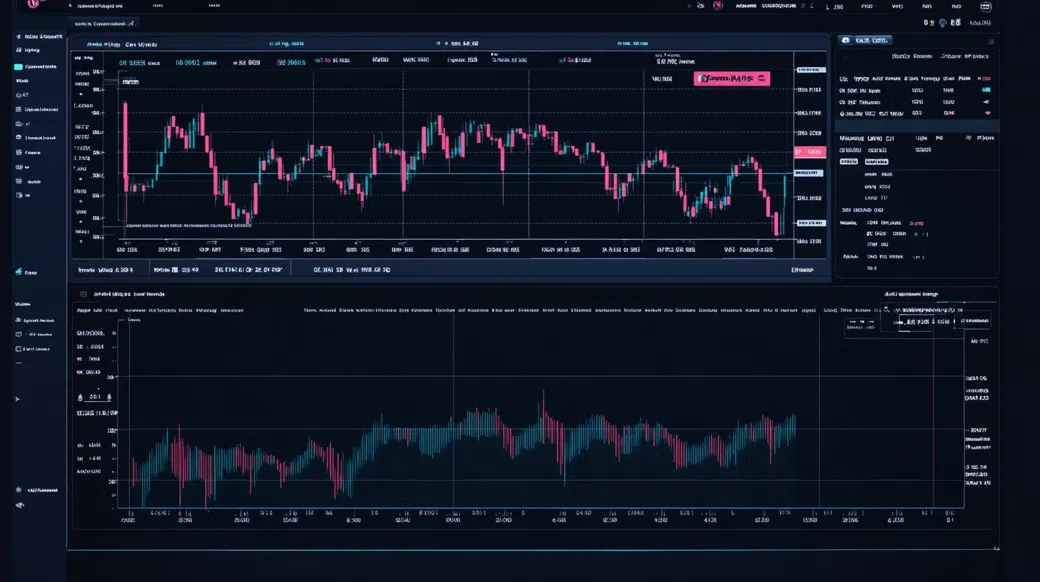
WebTrader is the centre of gravity here: the session stayed stable across repeated logins, and order tickets offered market, limit, and stop with visible margin impact before confirmation. During the London-New York overlap I placed a small EUR/USD test position and monitored slippage around a scheduled macro release; execution felt consistent with a retail CFD environment—occasional price improvement, occasional negative slippage, no persistent “requote loop.” Power users should note the gap: I didn’t see a confirmed MT4/MT5 bridge, so third-party indicator libraries and EA workflows may require adapting.
The Crest Fundgrove app mirrors the web layout closely, which reduces friction when switching devices; Crest Fundgrove login supported biometric unlock on my test handset, and watchlists synced without manual export. Market and pending orders were accessible, and one-tap close was useful for quickly flattening exposure when volatility picked up. Deposits and withdrawal initiation are also available in-app, though I’d still double-check the confirmation screen—on smaller displays it’s easy to miss the selected wallet or currency.
Charting covers the expected retail toolkit: multiple timeframes, drawing tools, and a standard indicator set (MA, RSI, MACD, Bollinger) that’s fine for quick context. An economic calendar and an integrated news feed were present, enough to flag risk events but not enough to replace specialised research. In short, this platform is built to trade, not to do deep quant analysis inside the terminal.
After entering email, phone, and basic profile data, the onboarding flow pushed directly into identity checks rather than leaving verification as an afterthought. For KYC, I uploaded a government-issued photo ID and a proof of address (bank statement less than three months old); the status flipped to verified later the same business day. The process was clearly designed around AML compliance, with prompts for source-of-funds details once I prepared a withdrawal.
One nuance: base-currency choice matters if you fund in EUR but the account ledger is in USD, because conversion silently compounds across deposits and withdrawals. If you plan to trade infrequently, calendar the inactivity clock—$10/month after 90 days is meaningful on a small balance.
I tested support with a practical question: how weekend financing is applied on BTC/USD CFDs and whether it’s triple-charged on specific days. Live chat came back in roughly three minutes with a clear explanation plus a pointer to the swap table location, and the agent avoided vague “it depends” language. I then opened an email ticket asking about withdrawal sequencing after KYC; the written reply landed in about nine hours and matched what I later saw during cashout.
Coverage is broadly 24/5, which fits the FX and index week, and English support was reliable; additional languages looked region-dependent. Phone support wasn’t prominently offered in my dashboard, so expect chat and email to carry most of the load. Over weekends, crypto trading remains open, but staffing and response tempo typically soften—plan operational requests (like document checks) for business days.
If you’re considering an offshore CFD venue, start by checking your country eligibility, then compare the Standard vs. Raw pricing on the instruments you actually trade. A demo run helps you gauge spreads at your local session times before committing real capital.
Visit Crest FundgroveYes, the interface is approachable and the $10,000 demo account is a sensible training ground. That said, the combination of CFDs and up to 1:500 leverage can amplify mistakes quickly. Beginners should keep position sizes small and treat margin as a risk tool, not as “extra buying power.”
Yes, crypto CFDs are available, with majors like BTC/USD and ETH/USD at the core. Trading is via derivatives, so you don’t receive coins or blockchain withdrawal rights. Expect weekend financing dynamics and wider effective costs when liquidity thins.
No, it did not present as a scam in my 2026 test: the platform functioned, KYC was enforced, and a withdrawal request progressed after verification. The caution is structural—offshore registration offers fewer formal protections than Tier‑1 regulation. Treat it as a higher-risk brokerage relationship and manage exposure accordingly.
No, USA residents are restricted and cannot open accounts. The broker also blocks sanctioned jurisdictions and may refuse onboarding where local rules prohibit offshore CFDs. If you travel, expect geo and document checks to still govern eligibility.
Most withdrawals are processed internally within 24–48 hours after KYC is approved. Receipt time then depends on the rail: cards typically take 2–5 business days, bank wires around 3–7 business days, and crypto can arrive the same day. Delays are more likely when documents need re-checking or when banking intermediaries add compliance steps.
The Crest Fundgrove minimum deposit is $200. That level is enough to test execution and platform flow, but it doesn’t leave much room for drawdowns if you use high leverage. If you’re cost-sensitive, also account for currency conversion and potential inactivity charges.
Yes, there are iOS and Android apps that mirror the WebTrader experience. You can manage watchlists, place orders, and initiate deposits/withdrawals from mobile. Biometric login support helps reduce friction, especially for traders monitoring positions on the move.
Overall Score: 4.0/5
For traders who value access and flexibility over a deep third-party platform ecosystem, Crest Fundgrove lands as a credible offshore CFD option with clear tiered pricing. My test cycle covered funding, execution on liquid FX during the European session, and a completed withdrawal path after KYC—operationally, the basics held together. Where I stay cautious is the jurisdictional layer: offshore supervision can make dispute resolution and investor protections thinner than EU standards. Keep leverage proportional to your balance; CFDs are high-risk and losses can exceed expectations if volatility spikes. More details and current conditions are easiest to verify directly on Crest Fundgrove.
Best for: active CFD traders who want Raw-style pricing and can self-manage risk. Avoid if: you require Tier‑1 regulation, platform-native algo trading (MT4/MT5), or long-term holding with low activity.