Credentix GPT Trading Platform Alternatives 2026
Credentix GPT alternatives for 2026: compare regulated brokers, platforms, costs, and safety checks for US/EU traders seeking reliable trading options.

Credentix GPT alternatives for 2026: compare regulated brokers, platforms, costs, and safety checks for US/EU traders seeking reliable trading options.
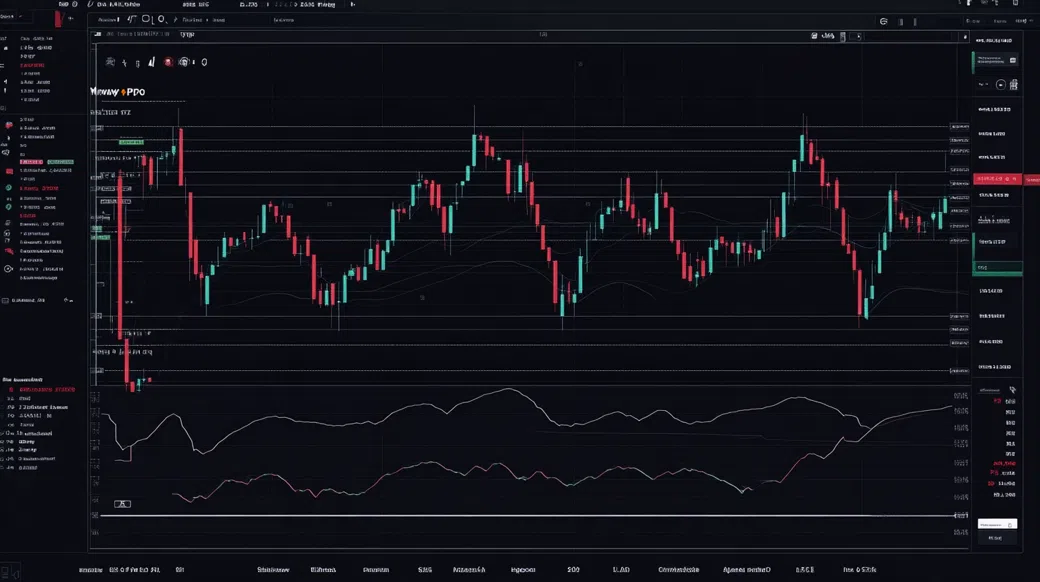
Leverage sells. Execution keeps you alive. That’s the lens I use when readers ask about offshore CFD-style venues such as Credentix GPT—a broker profile that typically clusters around a proprietary WebTrader, mobile access, forex/CFDs as the core menu, and headline leverage that can run as high as 1:500. For many retail accounts, the friction doesn’t show up on the marketing page; it shows up in the microstructure: wider effective spreads in fast markets, uncertain execution model (market maker vs STP-style routing), and limited transparency on how slippage is handled around news or thin liquidity.
On costs, providers in this segment often advertise “from” pricing, yet typical EUR/USD spreads for a standard-style account commonly land around 2.0 pips once you observe real trading hours, not cherry-picked quiet sessions. Add swap/overnight financing, and a strategy that looks fine on paper can bleed slowly. On safety, the bigger issue is governance: if the firm operates offshore (here, I treat it as Seychelles FSA-supervised at best), investor-protection layers differ from FCA/ASIC/CySEC frameworks, including how complaints, compensation, and segregation rules work in practice.
This is why Credentix GPT alternatives are not about “more features.” They’re about clearer rulebooks, better audit trails, and platforms that match your strategy—whether that’s MT4/MT5 automation, DMA-style access for equities, or tighter all-in transaction costs.
Disclaimer: This article is for informational purposes only and does not constitute investment advice. CFDs and other leveraged products carry a high risk of loss and may not be suitable for all investors.
From the patterns I see across Europe’s platform ecosystem, Credentix GPT fits the familiar offshore, CFD-first template: a single-brand interface aimed at retail traders who want quick onboarding, access to major FX pairs and indices, and the option to trade crypto via CFDs. The business model in this bracket often resembles a market-maker setup (or a hybrid), meaning your trade quality can depend heavily on internal execution rules and liquidity sourcing. Regionally, access is usually broad but not universal—US residents are typically excluded, and additional restrictions can apply in sanctioned jurisdictions. For traders comparing brokers similar to Credentix GPT, the core question is whether the platform can deliver predictable fills and a dispute-resolution pathway that feels enforceable.
The platform stack is usually a proprietary WebTrader with a companion iOS/Android app, optimized for convenience rather than deep workflow customization. Expect functional charting with common indicators and drawing tools, but fewer pro-grade controls such as advanced order routing, granular depth-of-market views, or strategy testing. Order types generally cover basics (market, limit, stop), while conditional logic can be limited compared with MT5/cTrader ecosystems. Mobile tends to mirror the web interface well for watchlists and position monitoring, yet heavy chart work and multi-window layouts remain better on desktop. If your edge depends on fast reaction to volatility, execution speed and stability under load matter as much as the toolset.
Pricing in this segment is commonly spread-led, with a typical EUR/USD spread around 2.0 pips on a standard-style account. Some offshore platforms also present tiering (Standard vs “Raw/ECN-like”), where raw spreads can compress toward ~0.0–0.4 pips but add a commission in the neighborhood of $6–$8 round-turn; treat those numbers as a category benchmark rather than a promise. Overnight financing (swap) is a major variable for swing traders, and it can dominate the cost line on indices or crypto CFDs. Minimum deposits are often positioned as accessible—here, I use $250 as a realistic figure—and high leverage (up to 1:500) increases sensitivity to margin calls even when the market barely moves.
The decision to move usually starts with a practical pain point, not an abstract debate about branding. In my inbox, the first trigger is often governance: traders want a clearer regulator perimeter, stronger segregation rules, and an investor-compensation framework that exists on paper and has a track record. That’s the moment Credentix GPT alternatives move from a comparison exercise to a risk-control task. Cost comes next—especially when a strategy trades frequently enough that a 2.0-pip spread becomes a tax. Platform constraints, withdrawal frictions, or limited instrument breadth can then push the final switch.
Selection works best as a fit-to-strategy exercise. Start with the strategy’s hard requirements (assets, leverage tolerance, holding period, automation), then stress-test the broker’s rulebook: regulation, execution model, and the full fee stack. For alternatives to the Credentix GPT trading platform, the goal is not maximum optionality; it’s reducing hidden variables that show up only when markets gap or liquidity thins.
In the US/EU context, the regulator badge changes your downside scenario. FCA oversight can bring FSCS coverage (up to £85,000, eligibility rules apply), while CySEC firms may fall under the ICF (up to €20,000, again subject to conditions). ASIC is strong on conduct and capital requirements, though compensation mechanics differ from the UK/EU. Look for segregated client funds, negative balance protection where required, and a clean public register entry—don’t rely on screenshots or “license numbers” pasted on a website.
Map the product list to your real needs. If you only trade major FX pairs and index CFDs, an FX/CFD specialist can be efficient. If you want stocks, ETFs, options, or futures, a multi-asset broker with exchange connectivity is the correct architecture. Many platforms like Credentix GPT emphasize CFDs; that’s fine for short-term tactics, but it’s a different proposition from owning securities with shareholder rights, voting, and transparent corporate actions.
Spreads are visible; the rest is where traders leak P&L. Compare the round-turn cost: spread + commission + typical slippage. Then add swap/overnight fees if you hold positions past rollover, and scan for inactivity or withdrawal charges. A raw account with $7 round-turn can be cheaper than a “commission-free” account once you factor a 1.2–1.6 pip spread—especially for scalpers and intraday systems.
Platform choice is not cosmetic. MT4/MT5 and cTrader support automation, external analytics, and standardized order handling; proprietary tools can be clean but limit interoperability. Execution model matters: market maker setups can be fine for small tickets, yet STP/ECN or DMA-style routing tends to offer more consistent fill logic for active traders. Measure it: track slippage around liquidity events, note latency to confirmation, and test with small size before committing serious capital.
Support becomes a “feature” the first time something breaks. Check hours across your trading session, the quality of trade-investigation responses, and whether the broker can explain fills with timestamps and logs. Education is secondary for professionals but still useful for product risk—margin policy, stop-out levels, and how negative balance protection is applied. Mobile parity also matters if you manage risk away from the desk.
Forex and CFDs are the natural habitat for offshore venues, but the comparison hinges on effective pricing and execution. A typical setup like Credentix GPT will offer roughly 30–50 FX pairs, a handful of commodities, and major indices, with leverage that can reach 1:500. The trade-off is that a ~2.0-pip EUR/USD spread (and variable slippage) can turn high-frequency strategies into a math problem. Regulated FX/CFD specialists such as Pepperstone or OANDA tend to publish clearer execution policies and provide platform stacks (MT4/MT5/cTrader or robust proprietary tools) that integrate better with risk controls. For traders who scalp, the difference between “headline spread” and “realized spread plus slippage” is often the difference between a stable equity curve and death by a thousand cuts.
Here the structural gap is widest. Offshore CFD-first brokers frequently offer equity exposure mainly as stock CFDs (no ownership, no shareholder rights, and corporate actions handled internally). That may suit short-term hedging, but it’s not a substitute for building a long book of ETFs or single names with transparent exchange prints. Interactive Brokers and Saxo Bank are strong examples of the opposite architecture: multi-venue access, deeper product coverage, and tools designed for portfolio management—not just leveraged bets. If your 2026 plan includes US-listed ETFs, European equities, or options overlays, a broker that provides real securities custody and clear reporting is a more defensible baseline than a CFD-only wrapper.
Crypto on many CFD platforms is exposure, not ownership. You’re typically trading a price feed via derivative contracts—no on-chain withdrawal, no wallet control, and the risk profile looks more like leveraged speculation than spot investing. Credentix GPT-style offerings often include 10–30 crypto CFDs, which can be convenient for short-term directional trades, but spreads and overnight financing can be punitive during volatility clusters. For regulated options vs Credentix GPT in this lane, IG and Plus500 are notable in jurisdictions where crypto CFDs are permitted, because the governance framework and disclosures are clearer. If you specifically want to own crypto, you’re looking beyond CFD brokers entirely; but for derivative exposure, regulation and risk limits matter more than coin count.
Regulation: FCA, DFSA, MAS (jurisdiction-dependent)
Markets: Stocks, ETFs, bonds, options, futures, FX, CFDs
Fees: FX spreads typically from ~0.6–1.2 pips (account/volume dependent); commissions apply on exchange-traded products
Platform: SaxoTraderGO, SaxoTraderPRO
Best For: Cross-asset portfolio traders who want one account for investing + derivatives
Regulation: SEC/FINRA, FCA, IIROC
Markets: Stocks, ETFs, options, futures, bonds, FX
Fees: Tight FX pricing typically associated with commissions/spreads that vary by venue and size; exchange fees/commissions apply for listed products
Platform: Trader Workstation (TWS), IBKR Mobile, Client Portal API
Best For: Execution-sensitive active investors and professionals needing broad market access
Regulation: FCA, ASIC, CySEC, DFSA
Markets: FX, CFDs (indices, commodities, metals; product set varies by entity)
Fees: EUR/USD often ~0.0–0.3 pips on Razor/Raw-style pricing + commission (commonly ~ $6–$8 round-turn); standard spreads typically higher
Platform: MT4, MT5, cTrader
Best For: MT4/MT5/cTrader users running systematic or intraday strategies
Regulation: CFTC/NFA, FCA, ASIC, IIROC
Markets: FX, CFDs (availability depends on region)
Fees: Typically spread-only pricing on many accounts; EUR/USD often around ~1.0–1.6 pips depending on conditions
Platform: OANDA Trade (web/mobile), MT4 (availability varies)
Best For: Risk-first FX traders who value strong regulatory coverage and transparent reporting
Regulation: FCA, ASIC, BaFin
Markets: CFDs (FX, indices, commodities, shares/treasuries in CFD form)
Fees: Competitive FX pricing (often from ~0.7 pips on major pairs on spread-based accounts); CFD financing applies for holds
Platform: Next Generation platform, MT4 (where offered)
Best For: Discretionary CFD traders who want robust charting and scanning tools
Regulation: FCA, CySEC, FSC Bulgaria
Markets: Stocks, ETFs (investing); CFDs (region-dependent)
Fees: Investing accounts often emphasize low explicit commissions; CFD costs are primarily spread/financing (varies by instrument)
Platform: Trading 212 web and mobile platform
Best For: Mobile-first investors mixing long-only stocks/ETFs with occasional CFDs
| Platform | Regulation | Main Markets | Typical Costs | Best For |
|---|---|---|---|---|
| Saxo Bank | FCA/DFSA/MAS (entity dependent) | Multi-asset: stocks, ETFs, options, futures, FX, CFDs | FX ~0.6–1.2 pips; commissions on listed markets | Cross-asset portfolio traders |
| Interactive Brokers (IBKR) | SEC/FINRA, FCA, IIROC | Multi-asset: stocks/ETFs/options/futures/bonds/FX | Venue-based commissions; tight FX pricing with variable all-in | Execution-sensitive active investors |
| Pepperstone | FCA, ASIC, CySEC, DFSA | FX + CFDs | Raw ~0.0–0.3 pips + ~$6–$8 RT; Standard higher spreads | Systematic or intraday MT/cTrader users |
| OANDA | CFTC/NFA, FCA, ASIC, IIROC | FX (+ CFDs in some regions) | Often spread-only; EUR/USD ~1.0–1.6 pips (conditions vary) | Risk-first FX traders |
| CMC Markets | FCA, ASIC, BaFin | CFDs across FX/indices/commodities/share CFDs | Majors often from ~0.7 pips; financing for holds | Discretionary chart-driven CFD traders |
| Trading 212 | FCA, CySEC, FSC Bulgaria | Stocks/ETFs (real), plus CFDs (region dependent) | Investing low explicit commissions; CFDs via spread/financing | Mobile-first hybrid investors |
Switching brokers is operational risk dressed up as admin. Treat it like a controlled migration: verify the new venue, secure access, document everything, then move capital in a way that respects AML/KYC rules. If you’re exiting an offshore setup such as Credentix GPT, assume that timelines can vary and keep your exposure small until the new execution environment proves itself. Leverage amplifies mistakes here—don’t mix a platform transition with oversized positions.
If you’re still evaluating the original venue, review the current onboarding steps, regional eligibility, and the platform stack before funding. Then place it side-by-side with regulated substitutes on execution policy and total cost, not just leverage and “from” spreads.
Visit Credentix GPTThe best choice depends on whether you need multi-asset investing or pure FX/CFDs. For real stocks/ETFs and deep market access, Interactive Brokers or Saxo Bank typically outclass CFD-first competitors to Credentix GPT. For MT4/MT5/cTrader workflows and tighter all-in FX pricing, Pepperstone is often a practical short list entry among the best Credentix GPT alternatives 2026.
Credentix GPT appears to sit in an offshore framework (commonly associated with jurisdictions such as the Seychelles FSA), which generally offers a lighter investor-protection perimeter than FCA/ASIC/CySEC regimes. That doesn’t automatically imply fraud, but it does change your recourse options, compensation coverage, and the robustness of ongoing supervision. If safety is your priority, regulated options vs Credentix GPT should rank higher in your decision tree.
With Credentix GPT-style brokers, forex and CFDs are typically the core, and crypto is commonly offered as crypto CFDs rather than on-chain ownership. Stocks and ETFs—when available—are often provided as CFDs only, while listed futures are usually not part of the standard offshore CFD menu. Traders who want exchange-traded stocks, options, and futures generally end up favoring Credentix GPT trading platform alternatives 2026 like IBKR or Saxo.
First, verify the new broker’s exact legal entity on the regulator register and confirm segregated client funds plus negative balance protection where applicable. Next, model your expected costs using a round-turn lens (spread + commission + typical slippage + swap), because that’s where many Credentix GPT alternatives separate. Finally, withdraw and redeploy in stages so you can validate execution and platform stability before scaling position size.
About the Author: Elena Marchetti is a Milan-based fintech analyst covering market microstructure, broker execution quality, and European trading-platform ecosystems. Her work emphasizes verifiable rules (regulation, disclosures, fee schedules) and observable trading outcomes (spreads, slippage, fill behavior) over marketing claims.