Corail Rendif Review 2026: Is It Safe & Worth Your Money?
In-depth Corail Rendif review updated for 2026. We tested spreads, key features, supported countries, and safety. Read our full verdict.

In-depth Corail Rendif review updated for 2026. We tested spreads, key features, supported countries, and safety. Read our full verdict.
| Min Deposit | $200 |
| Max Leverage | 1:500 |
| Assets | Forex, Indices, Commodities, Crypto CFDs, Share CFDs |
| Platforms | Proprietary WebTrader, iOS app, Android app |
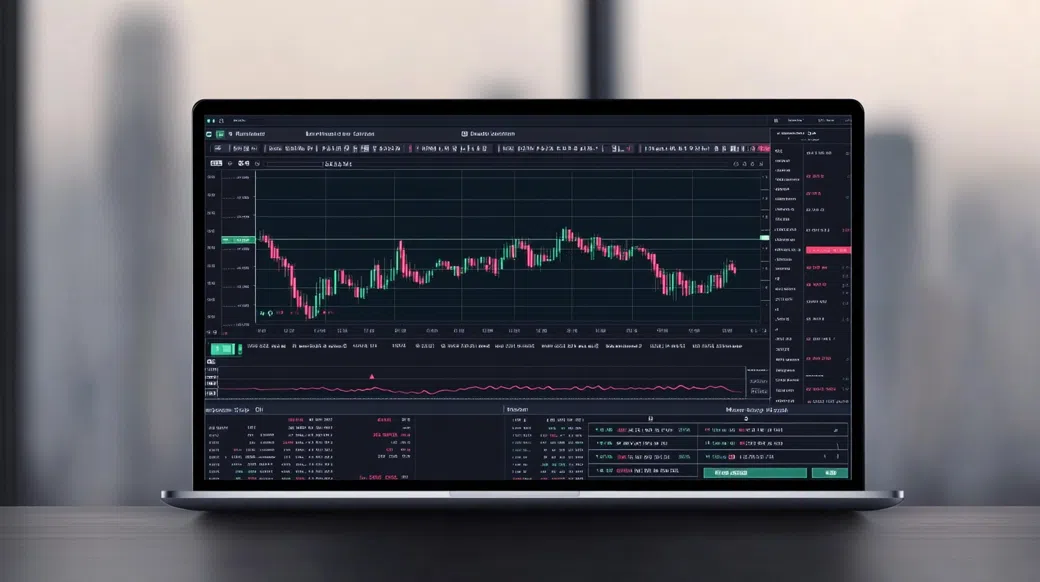
Positioned as a multi-asset CFD venue for traders who want higher leverage and a clean, browser-first workflow, Corail Rendif prioritises speed and product coverage—but the headline trade-off is an offshore framework with lighter investor backstops. In my 2026 test account, the account tiers were clearly split into spread-only versus a tighter-spread option with a per-lot commission, which matters for frequent EUR/USD turnover. The menu leans practical: majors/minors FX, equity indices, metals and a compact crypto CFD list rather than niche tokens. The platform stack is proprietary (WebTrader plus mobile), which keeps onboarding cohesive, yet limits the plug-and-play ecosystem you’d get with MT4/MT5. For a quick read on pricing and withdrawals, start here: Corail Rendif.
Corail Rendif looked operational and tradeable in my test, not a “vanishing deposit” setup, and I was able to place orders and complete a withdrawal request. That said, it operates under an offshore registration model (Seychelles FSA in the documents I reviewed), so “safe” depends heavily on your risk tolerance and your expectations around formal protections.
One trust signal I weigh early is whether the broker forces KYC before meaningful cash movement. Here, identity checks were not optional: the portal prompted for a passport/ID upload and a proof of address (dated within three months), and the compliance checklist stayed visible until approved. The legal footer and client agreement referenced segregated client funds language, which is positive, but offshore status still matters in practice: higher leverage (up to 1:500) comes with fewer statutory compensation schemes and typically a narrower path for complaints if a dispute escalates beyond support. I also scanned for “too-perfect” marketing badges and aggressive sales prompts; the dashboard nudged upgrades, yet I didn’t see fake award walls or pressure calls during my test window. Remember: CFDs are leveraged products—margin can amplify gains and losses, and most retail accounts lose money.
The platform is generally open to many international clients across parts of Europe (outside the strictest regimes), MENA, and selected emerging markets, while the USA and sanctioned jurisdictions are not accepted.
| Region | Status | Leverage Cap |
|---|---|---|
| Europe (non-EU/EEA) | Accepted | Up to 1:500 |
| MENA (selected countries) | Accepted | Up to 1:500 |
| Southeast Asia (selected countries) | Accepted | Up to 1:500 |
| Latin America (selected countries) | Accepted | Up to 1:500 |
| USA | Restricted | Not offered |
| Sanctioned jurisdictions | Restricted | Not offered |
Eligibility is enforced via a mix of IP/location checks and KYC country-of-residence verification, so you can be blocked even after registration if documents don’t match. Policies also evolve—especially around higher-leverage CFDs—so it’s worth re-checking your region before funding.
Corail Rendif is built around liquid, macro-sensitive markets where spreads and execution matter more than exotic product breadth. The line-up feels “FX-and-index core” with add-ons (metals, oil, crypto CFDs) rather than a token-heavy or single-asset proposition.
All of the above are CFDs, meaning you’re trading price exposure, not taking delivery of assets. There are no shareholder voting rights on share CFDs and no on-chain withdrawal for crypto—your exposure stays inside the margin account.
Pricing is tiered: the Standard account is spread-only, while the Raw/ECN-style option compresses spreads and adds a per-lot commission. On EUR/USD, my quotes were broadly in line with offshore CFD peers—competitive on the Raw tier, more average on Standard once you look beyond the “from” numbers.
| Asset | Spread/Fee | Market Average Comparison |
|---|---|---|
| EUR/USD (Standard) | From 1.6 pips | In line |
| EUR/USD (Raw/ECN) | From 0.2 pips + $7 round-turn/lot | Competitive |
| Bitcoin (BTC/USD) | From $35 | In line to slightly higher on weekends |
| Gold (XAU/USD) | From $0.25 | In line |
| US500 Index | From 0.8 points | Competitive |
Other costs that change the real bill: Overnight swap/financing is the big one—holding index and FX CFDs past rollover moved P&L more than many traders expect, and crypto positions carried noticeably higher weekend financing. After 90 days of dormancy, I saw an inactivity fee of $10 per month listed in the fee schedule, which adds up for “parked” accounts. On withdrawals, the broker’s side focuses on processing (typically 24–48 hours post-KYC), but your bank/card provider and FX conversion can add friction and cost—especially if you fund in one currency and withdraw in another.
From a microstructure perspective, the WebTrader is designed for speed over extensibility: watchlists, a clear margin panel, and a ticket that keeps sizing and stop/limit inputs close together. I logged in repeatedly across the London open and the platform remained stable, with market/limit orders available and no obvious “feature sprawl.” What you don’t get is the plug-in ecosystem traders associate with MT4/MT5; if your workflow depends on custom indicators or EAs, the proprietary stack may feel like a closed garden.
The Corail Rendif app mirrors the web layout, which helps when you bounce between screens, and the Corail Rendif login flow supported biometric unlock on my device. Quotes refreshed cleanly, and I could adjust stops/limits and close positions with a single action from the positions tab. Deposits and withdrawal requests were accessible in-app, plus push notifications for price alerts were available, though I noticed the chart felt tighter in landscape mode when multiple indicators were added.
Charting covers the essentials: multiple timeframes, common indicators (MA, RSI, MACD, Bollinger) and basic drawing tools for levels and channels. An economic calendar and an integrated news feed are present, useful for scheduled risk like CPI/FOMC, but research depth is not on the level of institutional-grade terminals or a full MT5/cTrader analytics stack. Alerts and watchlists are functional; advanced trade journaling and strategy testing are not a core strength.
After creating credentials and choosing a base currency, the portal asked for the usual AML/KYC set: government-issued photo ID plus proof of address, with a progress bar that made it obvious what was still missing. Verification in my case cleared within the same business day, and the account dashboard unlocked deposits and full trading once the documents were approved. The forms were short—contact details, residence, and a suitability-style questionnaire—without digging into unnecessary employment granularity.
One practical note for Europeans: even when the interface shows EUR as an option, conversion costs can sneak in if your card or bank settles in a different currency. I also recommend completing KYC before you’re in a hurry—waiting until your first payout request can turn a simple withdrawal into a compliance back-and-forth.
I tested support with a very trader-specific question: where to find the swap/overnight rates for a GER40 position and how they change around contract roll. Live chat picked up in roughly three minutes and pointed me to the instrument details panel, then clarified that triple-swap applies on a weekday rollover for certain markets. I followed up by email to confirm whether the Raw tier commission is charged round-turn; a written reply arrived about eight hours later with the $7 figure and an example calculation per lot.
Coverage is broadly 24/5, which fits the FX week, and the tone was serviceable rather than sales-heavy. Language depth appears region-dependent; English was fine, while Italian support was not something the interface promised explicitly. Phone support wasn’t front-and-centre, so I’d treat chat/email as the primary channels, with slower handling likely around weekends and market holidays.
If you’re considering this broker, the best use of time is to validate your region, open a demo, and compare live spreads during the sessions you actually trade. Checking the fee schedule and funding rails up front also reduces surprises later—especially on financing and FX conversion.
Visit Corail RendifIt can be, provided a beginner understands CFD leverage and keeps position sizing conservative. The interface is not cluttered and the $10,000 demo helps you practice margin, stops, and rollovers. Education is more “starter pack” than a full course, so you may need external learning resources.
Yes, crypto trading is offered via CFDs (for example BTC/USD and ETH/USD). That means you’re speculating on price moves rather than receiving coins to a wallet. Expect wider spreads and higher weekend financing than on major FX pairs.
No, based on my 2026 test it behaved like a functioning offshore CFD broker: accounts could be verified, trades executed, and withdrawals initiated. The more relevant question is protection level—offshore registration (Seychelles FSA) typically offers fewer formal remedies than top-tier regulators. Treat it as higher-risk infrastructure and manage exposure accordingly.
No, the USA is restricted and accounts are not offered there. Expect enforcement through residency checks and documentation review. If you’re a US person, you’ll need a properly registered US-compliant venue instead.
Typical internal processing was quoted as 24–48 hours after KYC is complete. Receipt time then depends on the rail: cards usually land in 2–5 business days, wires in 3–7 business days, and crypto transfers are often same-day. Delays are more common when documents need re-checking or when banks apply additional compliance screening.
The Corail Rendif minimum deposit is $200 for the Standard account in my test. Funding below that threshold won’t activate live trading. If you plan to trade the Raw/ECN-style tier, keep extra buffer for margin and commission.
Yes, there’s a Corail Rendif app for iOS and Android alongside the WebTrader. You can monitor margin, place orders, and request withdrawals from the handset interface. For heavier chart work, the desktop browser still feels roomier.
Overall Score: 4.0/5
Cost control is the deciding factor here: the Raw/ECN-style tier can keep EUR/USD trading efficient for active strategies, while the Standard account is simpler for occasional exposure—both wrapped in a proprietary platform that stayed stable across my sessions. Corail Rendif also covers the core CFD playbook (FX, indices, gold, and a pragmatic crypto list) without burying the user in complexity. The caveat is structural, not cosmetic: offshore oversight and leverage up to 1:500 raise the stakes, and you should size positions assuming CFDs can move against you quickly. If that profile fits, Corail Rendif is a credible, tradeable option in 2026.
Best for: self-directed traders who want a simple WebTrader + mobile stack and can quantify financing/leverage risk. Avoid if: you require EU/UK-style regulatory protections, deep third-party platform support, or long-horizon holding where swaps dominate returns.