Colombe Rendif Review 2026: Is It Safe & Worth Your Money?
In-depth Colombe Rendif review updated for 2026. We tested spreads, key features, supported countries, and safety. Read our full verdict.

In-depth Colombe Rendif review updated for 2026. We tested spreads, key features, supported countries, and safety. Read our full verdict.
| Min Deposit | $200 |
| Max Leverage | 1:500 |
| Assets | Forex CFDs, Index CFDs, Commodity CFDs, Crypto CFDs, Share CFDs |
| Platforms | Proprietary WebTrader + iOS/Android mobile apps |
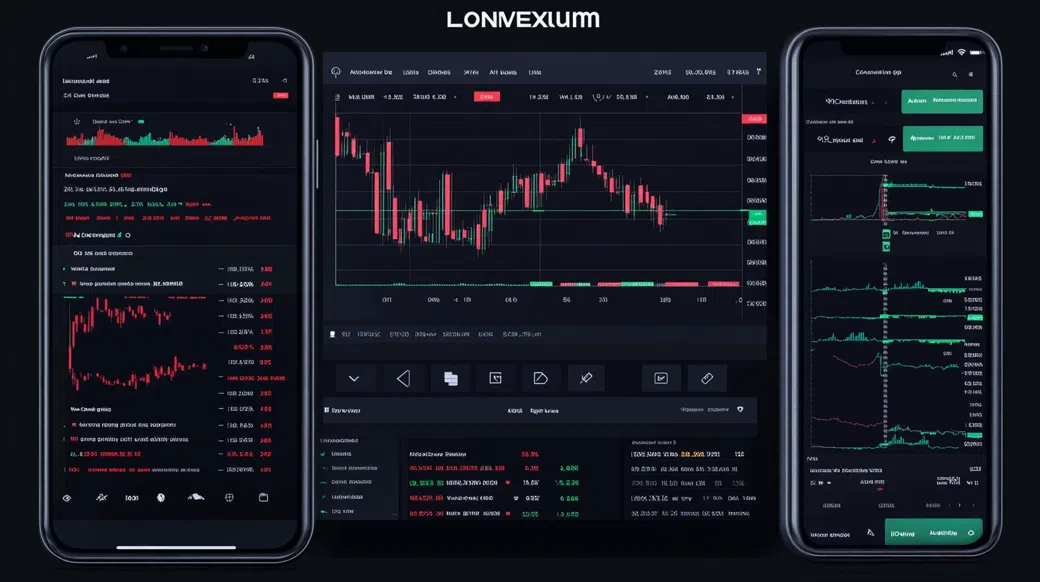
Designed as a multi-asset CFD venue with a forex-first spine, Colombe Rendif suits traders who want high leverage and a simple platform stack—while accepting the practical limits of offshore oversight. In my test account, the Standard tier leaned on spread-only pricing, and an ECN-style option targeted faster, more active flow. Coverage spans majors and key indices with a predictable selection of crypto CFDs for out-of-hours volatility. The WebTrader is clean and functional, and the mobile apps handle monitoring and funding without forcing you to the desktop. The headline compromise: protections and dispute routes aren’t on the same rails as a Tier‑1 regulated broker, so position sizing matters. Colombe Rendif
Colombe Rendif presented as an operating broker rather than a “vanishing” storefront: I could verify identity, trade, and withdraw a test amount. That said, its safety profile is shaped by offshore registration, which typically means fewer formal backstops than top-tier regulators.
What anchored my view was process discipline: KYC was enforced (photo ID plus a proof of address dated within three months), and the client-area copy repeatedly referenced segregated client funds—language I look for when stress-testing basic safeguards. The registration I encountered was framed under the Mauritius FSC jurisdiction, a common setup for international CFD providers aiming for broader leverage (up to 1:500 here) and more flexible onboarding. Offshore status cuts both ways: access and leverage expand, but formal compensation schemes and dispute escalation are thinner, and chargebacks or regulator-led mediation are less straightforward. I also scanned for classic red flags—aggressive sales scripts, “guaranteed returns,” or trophy-style badges that don’t link to verifiable sources—and didn’t see those pushed in-platform. Still, CFDs are leveraged products and most retail traders lose money; treat margin and stop placement as non-negotiable risk controls.
This broker is geared to international clients across parts of Europe (outside the strictest regimes), MENA, and selected emerging markets, with availability confirmed through KYC. The USA is not supported, and sanctioned jurisdictions are blocked.
| Region | Status | Leverage Cap |
|---|---|---|
| UK & Ireland | Restricted | Not offered |
| EEA (most EU countries) | Restricted | Not offered |
| Non-EU Europe (selected) | Accepted | Up to 1:500 |
| MENA (selected) | Accepted | Up to 1:500 |
| Sub-Saharan Africa (selected) | Accepted | Up to 1:500 |
| USA | Restricted | Not offered |
| Sanctioned jurisdictions | Restricted | Not offered |
In practice, eligibility is enforced through a mix of signup checks, IP screening, and document review during AML/KYC. If your residency or nationality changes, expect the provider to reassess access and leverage limits.
Colombe Rendif feels built for traders who rotate between FX and index momentum, then use commodities or crypto as volatility satellites. The instrument list is not “everything under the sun,” but it covers the benchmarks that dominate retail flow.
All of the above are CFDs, meaning you’re trading price movements rather than owning the underlying asset. You don’t receive shareholder voting rights, and “crypto trading” here is synthetic exposure rather than on-chain custody.
Pricing is split across a spread-only Standard account and a tighter-spread Raw/ECN-style tier that adds commission. On EUR/USD, my quotes aligned with what you’d expect from an offshore CFD broker: not the cheapest in calm markets, but competitive when the ECN lane is used. The real cost picture depends on whether you scalp (commission matters) or hold (financing matters).
| Asset | Spread/Fee | Market Average Comparison |
|---|---|---|
| EUR/USD (Standard) | From 1.6 pips | In line with offshore spread-only accounts |
| EUR/USD (Raw/ECN) | From 0.2 pips + $7 round-turn/lot | Competitive for active FX, especially at peak liquidity |
| Bitcoin (BTC/USD) | From $35 | Typical for CFD crypto, can widen on weekends |
| Gold (XAU/USD) | From $0.30 | Close to the segment midpoint |
| US500 Index | From 0.8 points | Reasonable versus retail CFD averages |
Non-spread costs that changed my P&L math: Overnight swap/financing is the big one—holding indices or FX through rollover is rarely “free,” and weekend financing makes crypto carries expensive. Dormant accounts can be charged an inactivity fee of $10 per month once 90 days pass with no trading activity. Finally, conversion costs show up if you fund in one currency and your account base is another, and some rails may embed third‑party withdrawal charges outside the broker’s control.
From a microstructure angle, I care less about glossy panels and more about how the platform behaves when liquidity thins. The proprietary WebTrader held its session without disconnects, and market/limit/stop orders were easy to find, with position-level modification available from the open-trades blotter. Execution on liquid FX around the London open showed no odd “price jumps,” though I did see small slippage when I intentionally clicked into a fast candle on NAS100 during the US cash open. If you’re married to MT4/MT5 indicators and EAs, note that I did not see MT4/MT5 offered as a confirmed download inside the client area.
The Colombe Rendif app is built for monitoring and quick decisions rather than deep analysis. Colombe Rendif login supported biometric unlock on my device, and I could manage deposits and initiate withdrawals without switching to the web. Orders included market and pending types, plus a one-tap close that’s useful for trimming risk. Push notifications worked reliably for price alerts, but chart work on smaller screens still feels cramped when stacking indicators.
Charting covers the essentials—multiple timeframes, common studies (MA, RSI, MACD, Bollinger), and drawing tools for levels and channels. The provider also includes an economic calendar and a lightweight news feed, enough to contextualize volatility but not a substitute for institutional research. For systematic traders, the ceiling is obvious: you won’t find the depth of cTrader/MT5 analytics or a mature third‑party plugin ecosystem.
After creating credentials, the signup flow asked for standard AML inputs (residency, tax-related declarations, and a short appropriateness check). Verification required a government-issued ID and a recent proof of address; my documents cleared within the same business day, and trading permissions appeared immediately in the dashboard. The back-office UI makes it clear when your profile is “pending” versus “approved,” which reduces the guesswork before you fund.
One practical note for EU-based readers: the broker’s onboarding is international in posture, so your account base currency options may not mirror what you get at a locally regulated venue. I deposited via card and received an on-screen confirmation plus an email receipt; withdrawals triggered additional prompts to confirm funding-source ownership, which is consistent with AML rules. For readers who want to compare the client-area screens, I kept a checklist against Colombe Rendif so the settings and fee lines were easy to reconcile.
I tested support with a practical trading question: where the swap rates are displayed and whether they differ between Standard and Raw/ECN. Live chat connected in about three minutes, and the agent pointed me to the contract-spec section inside the platform, then explained that financing is instrument-specific and can change with market rates. I followed up by email asking about withdrawal sequencing for card deposits; a ticket reply landed in roughly eight hours with a clear timeline and a reminder that KYC must be fully approved before cashouts.
Coverage is broadly 24/5, which matches the rhythm of FX and index trading. Language options depend on the desk on duty—English was consistent in my interactions, while regional language support looked more variable. Phone support wasn’t emphasized in the client area, so I’d treat chat and email as the primary channels, especially outside European business hours.
If you’re considering this broker, start by checking whether your residency is accepted and whether the ECN pricing tier is available in your region. I’d also recommend running a demo around major data releases to see how spreads and slippage behave before committing live capital.
Visit Colombe RendifIt can be, provided you keep leverage conservative and use the demo first. The platform UI is not overloaded, and order entry is understandable, but the offshore framework and 1:500 leverage mean risk can escalate quickly. Beginners should focus on position sizing, stop-loss discipline, and avoiding overnight holds until they understand swaps.
Yes, crypto is offered as CFDs (for example BTC/USD and ETH exposure). That means you’re trading a derivative price feed, not receiving coins to a wallet. Financing and weekend spread widening are the two costs to watch most closely.
No, in my 2026 test it behaved like a functioning brokerage service: KYC was enforced, trades executed, and a withdrawal request progressed through the back office. The more accurate framing is “offshore broker with higher leverage,” which comes with fewer formal protections than Tier‑1 regulated firms. As always with CFDs, only fund what you can afford to lose.
No, the USA is restricted and the platform does not offer accounts there. In my checks, the signup funnel and compliance messaging pointed clearly to non-US availability. If you’re a US resident, you’ll need a CFTC/NFA-compliant venue instead.
Card withdrawals typically arrive in 2–5 business days once processed, while the broker’s internal approval step took about 24–48 hours after KYC in my test. Bank wires can take 3–7 business days depending on correspondent banks. Crypto payouts are often same-day, but timing depends on network conditions and internal checks.
The minimum deposit is $200 for a live account. That level is enough to test execution and fees, but it’s not automatically “sufficient” for high-leverage trading—margin requirements and drawdowns still apply. If you plan to hold positions overnight, budget for swaps as well.
Yes, there are iOS and Android apps alongside the WebTrader. You can monitor positions, place orders, and manage funding from mobile, which is useful for risk control on the go. For heavy chart work, the desktop browser view remains more comfortable.
Overall Score: 3.9/5
If your priority is a lean platform that covers the core CFD benchmarks—FX majors, US indices, gold, and a handful of crypto pairs—Colombe Rendif gets many of the basics right. The pricing structure makes sense (spread-only for casual flow, Raw/ECN for tighter quotes), and my small card withdrawal settled inside the expected window after approval. The limiting factor is structural: offshore registration reduces the comfort you’d get from stronger compensation and dispute mechanisms, so I’d keep leverage modest and treat risk limits as mandatory. For more details, see Colombe Rendif.
Best for: active CFD traders who want 1:500 leverage and can monitor swaps and margin closely. Avoid if: you require Tier‑1 regulation, guaranteed negative-balance safeguards by law, or MT4/MT5-dependent automation.