Clear Termélance Trading Platform Alternatives 2026
Compare Clear Termélance alternatives for 2026: regulated brokers, execution quality, platforms, and migration steps for US/EU-focused traders.

Compare Clear Termélance alternatives for 2026: regulated brokers, execution quality, platforms, and migration steps for US/EU-focused traders.
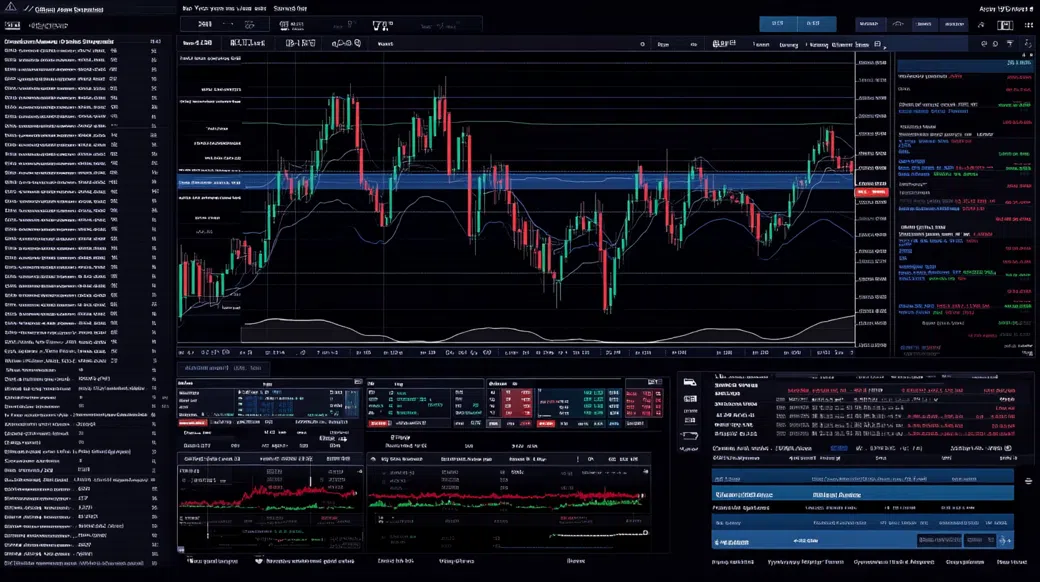
Across Europe, I see the same pattern in trading forums and payment flows: traders tolerate a lot—until execution or withdrawals become the story. Clear Termélance sits in a familiar offshore/CFD-only bracket: a proprietary WebTrader paired with mobile apps, a product shelf built around forex and CFDs (often including crypto CFDs), and marketing that leans heavily on high leverage. Public signals in this segment are typically consistent with a Seychelles-style offshore framework rather than top-tier supervision, which matters because the “rules of the game” change when you’re outside FCA/ASIC/CySEC oversight.
On paper, the offer can look straightforward: a minimum deposit around $250, leverage up to 1:500, and EUR/USD spreads commonly starting near 2.0 pips on standard-style pricing. In practice, the trade experience is defined by microstructure details—execution model, slippage behavior in fast markets, and how transparent the cost stack is once swaps/overnight fees and withdrawal handling enter the picture. That is the real reason many readers end up comparing Clear Termélance alternatives: not for novelty, but for better controls—segregated client funds, negative balance protection where applicable, and regulator-backed dispute frameworks.
In this guide, I map alternatives to the Clear Termélance experience with a data-first lens: what you can realistically trade (CFDs vs real assets), what you pay (spread + commission + financing), and what protections exist if something goes wrong.
Disclaimer: This article is for informational purposes only and does not constitute investment advice. Trading leveraged products such as CFDs involves a high risk of loss and may not be suitable for all investors.
From a product-design perspective, Clear Termélance fits the “CFD-first” mold rather than a true multi-asset brokerage. The typical user is a retail trader focused on forex pairs and index/commodity CFDs, with crypto CFDs often added to the menu. Account onboarding in this category generally follows standard KYC/AML steps (identity and address checks), but the real differentiator is governance: offshore supervision (commonly associated with jurisdictions such as Seychelles) does not mirror the client-money, conduct, and disclosure standards you’d expect from FCA, ASIC, CySEC, or NFA-regulated firms.
The platform stack is usually anchored by a proprietary WebTrader with basic-to-mid depth: functional charting, a handful of timeframes, common indicators, and drawing tools that cover the essentials (trendlines, Fibonacci, support/resistance markup). Order entry tends to support market and limit orders, and sometimes stop orders, but advanced workflows—complex conditional orders, depth-of-market tooling, or strategy automation—are typically lighter than what you’d find on MT4/MT5 or cTrader. Mobile apps on iOS/Android usually mirror core functions (watchlists, positions, deposits/withdrawals), yet parity on chart templates and multi-chart layouts can be uneven—an important point when comparing platforms like Clear Termélance to more mature ecosystems.
Pricing signals for this segment are often “spread-led.” A standard-style account commonly quotes EUR/USD around 2.0 pips in typical conditions, with the full cost varying once volatility widens spreads. Some firms in the same bracket advertise a Raw/ECN-style tier with tight spreads (often near 0.0–0.4 pips) plus a commission in the rough range of $6–$8 per round turn, though the execution model behind those labels can differ. Expect overnight financing (swap) to be a meaningful line item for positions held beyond a day, and watch for non-trading fees—withdrawal charges, payment-provider costs, or inactivity policies—because those can dominate outcomes for smaller accounts.
One trigger tends to arrive quietly: you start measuring outcomes trade-by-trade and the gap between “strategy edge” and “realized edge” keeps widening. That’s where Clear Termélance alternatives enter the conversation—especially when execution quality, protection rules, or product access is mismatched with your risk budget. Offshore CFD setups can function for some traders, but they also concentrate operational risk (dispute handling, client money treatment, and leverage-driven drawdowns) into a single point of failure.
Selection works best as “fit-to-strategy” engineering: define what you trade, how you enter/exit, and what failure modes you cannot accept. Then evaluate regulated options vs Clear Termélance using a short list of measurable attributes—regulatory perimeter, product structure (real assets vs CFDs), and total cost per round trip.
Start with the regulator’s public register: FCA (UK), ASIC (Australia), CySEC (Cyprus/EU), and NFA/CFTC (US) have searchable databases. Investor-compensation schemes differ—FSCS in the UK can cover eligible claims up to £85,000, while Cyprus’ ICF is commonly cited up to €20,000 under specific conditions. Segregated client funds and negative balance protection (where required) are not marketing extras; they are structural guardrails that reduce tail risk when markets gap.
Match instruments to objectives. If you hedge a European equity portfolio, access to real stocks/ETFs (and the relevant venues) matters more than adding a few extra CFD tickers. FX-only traders may prioritize major/minor pairs, indices, and commodities with consistent liquidity. If you need options or futures for defined-risk structures, that pushes you toward true multi-asset infrastructure rather than CFD-only shelves.
Compare “round-turn” cost-of-trade: spread paid on entry/exit plus any commission, then add expected slippage for your trade style. A 2.0-pip EUR/USD spread can be a real drag for frequent trading; over a month, it often matters more than headline leverage. Don’t ignore swaps/overnight fees for swing positions, and treat inactivity and withdrawal costs as part of the total cost stack, not footnotes.
Platform choice is a workflow choice. MT4/MT5 and cTrader support automation, indicators, and a broader tooling ecosystem; proprietary terminals can be clean but narrower. Execution model matters: market maker setups can be fine for some flows, while STP/ECN/DMA structures may provide more transparent routing for others. If your fills look worse in fast tape, it’s worth testing with small size and logging slippage, rather than assuming the platform is the only variable.
Support becomes critical exactly when you don’t want it to be—margin calls, platform outages, withdrawal questions, corporate actions on equities. Evaluate hours, languages, and response times with a live ticket before funding heavily. Education is useful when it’s specific (margin policy, swap calculations, order-type behavior), not generic. Also check mobile parity: if you manage risk on the move, missing order controls on the app is a practical hazard.
Forex/CFDs are the natural home market for Clear Termélance-style venues: expect roughly 30–50 FX pairs, 8–15 indices, and a handful of commodities. The question isn’t “can you trade EUR/USD?”—it’s whether you can trade it efficiently. With typical standard pricing around 2.0 pips on EUR/USD and leverage often marketed up to 1:500, the math pushes many accounts toward overtrading and sharper drawdowns. Regulated FX/CFD specialists such as Pepperstone or OANDA tend to compete on execution stability, clearer disclosures, and broader platform stacks (MT4/MT5/cTrader or strong proprietary tools). For active traders, the difference often shows up as lower friction: tighter effective spreads, more predictable slippage patterns, and better risk controls (including negative balance protection in relevant jurisdictions).
Here the product-structure gap is usually the deciding factor. Brokers similar to Clear Termélance commonly offer equity exposure primarily via CFDs (if offered at all), which means no shareholder rights, financing costs on leveraged positions, and different treatment around dividends and corporate actions. By contrast, Interactive Brokers is built for real-market access: listed stocks/ETFs, options, futures, and bonds sit on the same account infrastructure, which matters for serious portfolio construction and hedging. Saxo Bank also serves multi-asset traders with a platform stack designed for cross-asset risk management rather than single-instrument speculation. If your goal is long-horizon investing, those differences aren’t cosmetic—they define custody model, reporting, and the set of instruments you can use when volatility rises.
Crypto exposure in offshore CFD catalogs is typically delivered as crypto CFDs (often 10–30 coins), meaning you’re trading price movements without on-chain ownership. That can be fine for short-term directional views, but it removes wallet custody, transfers, and “use” of the asset—everything is a derivative contract with margin requirements and overnight financing dynamics. For traders who still want crypto-style volatility inside a regulated wrapper, IG and Plus500 commonly provide crypto CFDs in jurisdictions where they are permitted, with clearer risk labeling and standardized client protections relative to offshore providers. From a risk standpoint, leverage on crypto CFDs can amplify losses rapidly; treat position sizing and margin-call behavior as first-order inputs, not afterthoughts.
Regulation: SEC/FINRA (US), FCA (UK), IIROC (Canada)
Markets: Stocks, ETFs, options, futures, FX, bonds, funds
Fees: FX spreads vary by venue/liquidity; commissions depend on market and pricing plan (tiered/fixed)
Platform: Trader Workstation (TWS), IBKR Desktop/Mobile, Client Portal, API
Best For: Multi-asset portfolio builders who want real-market access
Regulation: FCA (UK), ASIC (Australia), CySEC (Cyprus), DFSA (Dubai)
Markets: FX, CFDs (indices, commodities, some crypto CFDs where permitted)
Fees: EUR/USD from ~0.0–0.3 pips on Razor/Raw-style pricing plus commission; ~1.0+ pip typical on Standard-style spreads
Platform: MT4, MT5, cTrader, TradingView (integration varies by region)
Best For: Cost-sensitive FX traders running automation or scalping workflows
Regulation: FCA (UK), MAS (Singapore), DFSA (Dubai)
Markets: Stocks, ETFs, bonds, FX, options, futures, CFDs
Fees: Pricing varies by tier; FX spreads typically tighter at higher service tiers; commissions apply on listed markets
Platform: SaxoTraderGO, SaxoTraderPRO
Best For: Cross-asset risk managers who trade from one margin framework
Regulation: CFTC/NFA (US), FCA (UK), ASIC (Australia), IIROC (Canada)
Markets: FX (and CFDs in certain regions)
Fees: Spreads typically variable; often ~0.6–1.2+ pips on majors depending on region/account; financing costs apply overnight
Platform: OANDA web/mobile, MT4 (availability varies)
Best For: FX-first traders who prioritize supervision and transparent pricing
Regulation: FCA (UK), ASIC (Australia), BaFin (Germany)
Markets: CFDs (FX, indices, commodities, shares), share trading in some regions
Fees: FX spreads often competitive (majors frequently around ~0.7+ pips, account/region dependent); non-trading fees depend on jurisdiction
Platform: Next Generation platform, MT4 (limited offering in some regions)
Best For: Active discretionary CFD traders who want robust charting and tools
Regulation: FCA (UK), CySEC (Cyprus), ASIC (Australia), MAS (Singapore)
Markets: CFDs (FX, indices, commodities, shares, crypto CFDs where permitted)
Fees: Spread-only model; costs vary by instrument and volatility; overnight funding applies on leveraged positions
Platform: Plus500 proprietary WebTrader and mobile apps
Best For: Simplicity seekers who prefer a clean CFD-only interface
| Platform | Regulation | Main Markets | Typical Costs | Best For |
|---|---|---|---|---|
| Interactive Brokers (IBKR) | SEC/FINRA, FCA, IIROC | Real stocks/ETFs, options, futures, FX, bonds | Market-dependent commissions; FX pricing varies by liquidity/venue | Multi-asset portfolio builders who want real-market access |
| Pepperstone | FCA, ASIC, CySEC, DFSA | FX + CFDs | Raw: ~0.0–0.3 pips + commission; Standard: ~1.0+ pip typical | Cost-sensitive FX traders running automation or scalping workflows |
| Saxo Bank | FCA, MAS, DFSA | Multi-asset (listed + CFDs) | Tiered pricing; FX spreads generally tighter at higher tiers; commissions on exchanges | Cross-asset risk managers who trade from one margin framework |
| OANDA | CFTC/NFA, FCA, ASIC, IIROC | FX (plus CFDs in some regions) | Variable spreads often ~0.6–1.2+ pips on majors; swaps/financing apply | FX-first traders who prioritize supervision and transparent pricing |
| CMC Markets | FCA, ASIC, BaFin | CFDs across FX/indices/commodities/shares | Majors often ~0.7+ pips (varies); additional fees depend on product/region | Active discretionary CFD traders who want robust charting and tools |
| Plus500 | FCA, CySEC, ASIC, MAS | CFDs (incl. crypto CFDs where permitted) | Spread-only; overnight funding on leveraged positions | Simplicity seekers who prefer a clean CFD-only interface |
Switching brokers is less about “closing an account” and more about controlling operational risk while you change plumbing: custody, margin rules, and platform behavior. Treat the move as a staged rollout. Small tests first, documentation throughout, and no assumption that positions or pricing logic will match one-to-one—especially when leaving an offshore CFD venue such as Clear Termélance. Leverage magnifies both gains and mistakes, so keep exposure modest during the transition.
If you’re benchmarking brokers, it can be useful to review the current onboarding steps, instrument list, and fee disclosures directly, then compare them line-by-line against regulated competitors. Check regional eligibility before you commit time to verification, and read the margin and withdrawal terms as carefully as you read spreads.
Visit Clear TermélanceThe best alternative depends on whether you want CFDs-only or real multi-asset access. For real stocks/ETFs plus derivatives, Interactive Brokers and Saxo Bank are strong references; for FX/CFD trading with MT4/MT5/cTrader ecosystems, Pepperstone is often a better functional match. If you want a proprietary CFD experience with strong regulation, CMC Markets or Plus500 may fit better than offshore venues.
Clear Termélance appears aligned with an offshore/unregulated profile (commonly associated with jurisdictions such as Seychelles), which usually provides fewer investor protections than FCA/ASIC/CySEC/NFA frameworks. That does not automatically mean fraud, but it does raise the impact of operational risks: dispute resolution, client-money rules, and leverage controls. If safety is the priority, compare regulated options vs Clear Termélance where segregation of funds and compensation schemes are clearer.
Most brokers in the Clear Termélance category focus on forex and CFDs; stocks and ETFs are often offered only as CFDs rather than real ownership. Futures access is typically limited compared with true multi-asset brokers. Crypto exposure, where available, is commonly via crypto CFDs (price exposure without on-chain ownership), which comes with leverage and overnight financing considerations.
Before switching, verify the new broker’s legal entity on the regulator’s register and read the margin, negative balance protection, and withdrawal terms in full. Then test execution with small size and log spread and slippage during the hours you actually trade. Finally, download statements from Clear Termélance and withdraw using the original funding method to reduce AML-related delays.
About the Author: Elena Marchetti is a Milan-based fintech analyst covering European trading platforms, market microstructure, and broker ecosystem dynamics. Her work focuses on execution quality, cost-of-trade, and the practical investor protections that matter when capital is at risk.