Cap Dividaval Trading Platform Alternatives 2026
Compare Cap Dividaval alternatives for 2026 across regulation, costs, execution, and platforms. A risk-aware guide to safer US/EU broker options.

Compare Cap Dividaval alternatives for 2026 across regulation, costs, execution, and platforms. A risk-aware guide to safer US/EU broker options.
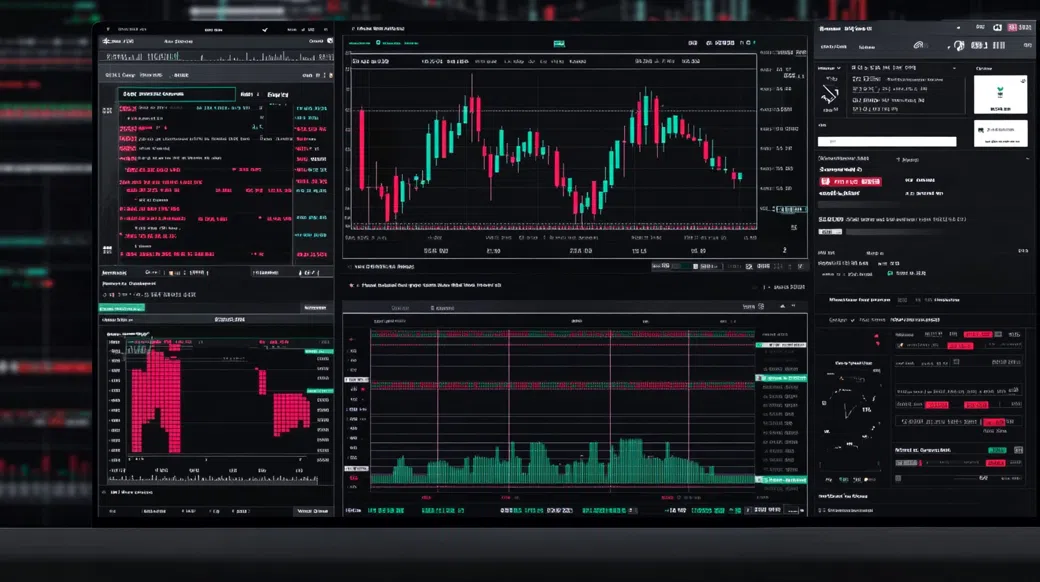
In European trading circles, the fastest way to spot platform risk is to look at the plumbing: where the broker sits legally, how orders are routed, and whether the product is “real” (cash equities) or synthetic (CFDs). Cap Dividaval sits in the latter camp in the way many offshore CFD brands do—typically offering forex and CFDs, a proprietary WebTrader, and a mobile app aimed at quick onboarding rather than deep execution analytics. Public signals for this segment often include high maximum leverage (commonly around 1:500), a relatively low entry point (often about $250), and headline spreads that are workable for casual trading but not especially sharp for high-frequency styles (EUR/USD frequently around 2.0 pips on a standard setup).
That mix can appeal to newcomers who prioritize simplicity. It can also frustrate systematic traders who want MT4/MT5 or cTrader, detailed reporting, and tighter control over slippage. Add the regulatory question—offshore frameworks such as Seychelles FSA are not the same as FCA/CySEC/NFA regimes—and the search for Cap Dividaval alternatives becomes less about “features” and more about lowering operational risk. In this guide, I map Cap Dividaval against regulated brokers with clearer rulebooks, stronger client-funds handling expectations, and platform stacks built for different strategies.
Disclaimer: This article is for informational purposes only and does not constitute investment advice. CFDs and other leveraged products carry a high risk of loss and may not be suitable for all investors.
From a market-structure standpoint, Cap Dividaval looks like a CFD-first venue built around a proprietary interface rather than a multi-venue broker with direct market access. The product mix typically centers on forex pairs and index/commodity CFDs, with crypto CFDs often included for price exposure. Access from the US is generally restricted in this category, and additional restrictions can apply for sanctioned jurisdictions. This is the segment where account opening can feel “fast,” while the harder questions—legal entity, dispute pathway, and client-fund safeguards—require extra effort from the user. If you’re comparing brokers similar to Cap Dividaval, assume your edge will come less from headline leverage and more from predictable execution and transparent costs.
The platform stack is usually a browser-based WebTrader with basic-to-mid charting and a companion iOS/Android app. Expect common indicator sets (moving averages, RSI/MACD), drawing tools, and a watchlist-driven workflow rather than extensive market-depth analytics. Order entry is typically streamlined for market and limit orders; advanced order types (OCO brackets, server-side trailing stops) can be limited or implemented in a simplified way. Mobile parity tends to be decent for monitoring and quick execution, but power features—multi-chart layouts, detailed fill reports, exportable logs—often remain thinner than on MT4/MT5 or cTrader ecosystems.
Cost-wise, offshore CFD providers commonly present tiered accounts with a “Standard” pricing model and, sometimes, a tighter-spread tier that adds commission. A reasonable expectation for EUR/USD on a standard setup is around 2.0 pips, while a raw-style tier—if offered—may show 0.0–0.4 pips plus roughly $6–$8 round-turn commission per standard lot. Beyond the spread, the real P&L drag can come from swap/overnight financing on leveraged CFD holds, plus potential withdrawal or inactivity charges depending on the account terms. For 2026 comparisons, focus less on the advertised “from” spread and more on typical fills during active sessions.
Execution friction is usually the first crack: your strategy can be sound, yet the realized entry/exit differs because of slippage, requotes, or a platform that doesn’t show enough context around fills. That’s when Cap Dividaval alternatives move from a casual search to an operational necessity—especially for traders who scalp, hedge, or run time-sensitive event trades. A second driver is product intent: some traders discover they don’t want CFD exposure on everything, particularly when they compare the economics of holding real equities versus rolling a leveraged derivative position.
Think of broker selection as a fit-to-strategy exercise with constraints: legal protections, cost-of-trade, and execution quality. A platform that “looks good” can still be expensive if the spread widens at the wrong time or if swap costs surprise you after a week of holding. The strongest competitors to Cap Dividaval are the ones that make the trade lifecycle auditable—clear pricing schedules, consistent fills, and clean cashflow mechanics for deposits and withdrawals.
Start with the regulator’s public register, not a logo on a landing page. In the US, that means CFTC/NFA oversight for retail FX; in the UK, FCA authorization with FSCS coverage up to £85,000 (where applicable); in the EU, CySEC oversight with ICF coverage up to €20,000 for eligible clients. Look for segregated client funds and a well-defined complaints process. Offshore setups (for example, Seychelles FSA entities) operate under a different protection envelope—this is the core risk gap many regulated options vs Cap Dividaval are trying to close.
Match instruments to intent. If your plan is FX and index CFDs, a specialist with strong execution and platform choice can be sufficient. If you want to build a long-term allocation, you’ll care about real stocks/ETFs, options, and futures access—areas where multi-asset brokers tend to dominate. Also separate “crypto exposure” from “crypto ownership”: CFDs track price; they don’t give you on-chain transfer rights. That distinction shapes both risk and operational flexibility.
The clean comparison unit is the all-in, round-turn cost: spread plus commission for an open-and-close cycle. For example, a 2.0 pip EUR/USD spread is a very different cost profile from a 0.2 pip raw spread plus $7 commission, depending on trade size and frequency. Then add non-obvious line items: swap/overnight rates on leveraged CFDs, inactivity fees, and withdrawal charges. Platforms like Cap Dividaval can look cheap on the headline spread while being expensive once financing and execution are included.
Platform stack is not cosmetic; it’s a control surface. MT4/MT5 and cTrader enable automation, robust backtesting workflows, and third-party tooling. Proprietary platforms can be fine for discretionary trading but often limit how you analyze fills and latency. Ask how the broker routes orders (market maker vs STP/ECN/DMA), whether negative balance protection applies in your region, and how slippage is handled during volatility. If you can’t reconcile your fills to market conditions, your strategy evaluation becomes guesswork.
Support quality shows up when something breaks: a corporate action, a margin call, or a deposit/withdrawal mismatch under AML rules. Prioritize brokers with multilingual coverage, transparent ticketing, and documentation that explains margin methodology and swap calculations. Education matters too, but not as “motivation”—as clarity on order types, risk limits, and platform mechanics. For active traders, mobile parity is critical: you want the ability to reduce risk fast, not just to watch charts.
Cap Dividaval’s core proposition, as typically observed in offshore CFD venues, is straightforward: a compact list of FX pairs (often 30–50), a handful of indices and commodities, and high maximum leverage (commonly around 1:500). The trade-off is that pricing and execution transparency can be thinner, and a standard EUR/USD spread near 2.0 pips can become a meaningful drag if you trade frequently. With regulated FX/CFD specialists like Pepperstone or OANDA, the value proposition is less about leverage and more about repeatability: clearer execution policies, established platform ecosystems (MT4/MT5/cTrader depending on the broker), and cost structures that can better align with scalping or intraday strategies. If your P&L depends on shaving fractions of a pip, the venue’s microstructure—slippage behavior, order handling, and stability—matters as much as the quoted spread.
Equities are where many traders discover the difference between “trading” and “investing infrastructure.” On offshore CFD platforms, stocks and ETFs—if present—are often delivered as CFDs. That means no shareholder voting rights, no direct custody, and financing costs that can penalize long holding periods. Multi-asset brokers such as Interactive Brokers (IBKR) and Saxo Bank address this gap by offering access to real stocks and ETFs across venues, often with routing choices and reporting that supports portfolio-level governance. For US/EU readers in 2026, this is a practical dividing line among top substitutes for Cap Dividaval: are you building a cash portfolio, or renting price exposure with leverage? The answer determines whether you should even be in a CFD-first ecosystem.
Crypto on CFD venues is usually about directional exposure—BTC, ETH, and a broader list (often 10–30 coins) quoted as derivatives. That can be useful for hedging or short-term views, but it is not the same as holding coins on-chain or moving them between wallets. Regulated brokers like IG and Plus500 often provide crypto CFDs (where permitted), with clearer regional restrictions and risk disclosures; for many traders, that regulatory perimeter is the point, not a “feature.” If your objective is a long-term crypto allocation or self-custody, a CFD product won’t satisfy it by design. For alternatives to the Cap Dividaval trading platform, be explicit: do you need a hedging instrument, or do you need ownership and transferability?
Regulation: SEC/FINRA (US), FCA (UK), IIROC (Canada)
Markets: Stocks, ETFs, options, futures, bonds, FX (spot), funds (availability varies by region)
Fees: FX pricing is typically tight with commission-based schedules; equity commissions vary by venue and plan (review region-specific rates)
Platform: Trader Workstation (TWS), IBKR Desktop, WebTrader, mobile app, API
Best For: Multi-asset traders who want real-market access and professional reporting
Regulation: FCA (UK), ASIC (Australia), CySEC (EU), DFSA (Dubai)
Markets: FX and CFDs (indices, commodities; availability varies by entity)
Fees: Standard spreads often around ~1.0+ pip EUR/USD; Razor/Raw-style pricing can be ~0.0–0.3 pips plus commission (commissions vary by platform/entity)
Platform: MT4, MT5, cTrader, TradingView (in supported regions), mobile apps
Best For: Scalpers and algorithmic traders optimizing spread-plus-commission
Regulation: FCA (UK), MAS (Singapore), DFSA (Dubai)
Markets: Stocks, ETFs, options, futures, FX, bonds, CFDs (product set varies by jurisdiction)
Fees: Pricing depends on account tier; FX spreads are commonly competitive on major pairs, and equity/ETF commissions vary by exchange
Platform: SaxoTraderGO, SaxoTraderPRO
Best For: Portfolio builders who also trade tactically across asset classes
Regulation: FCA (UK), ASIC (Australia), MAS (Singapore)
Markets: CFDs (indices, FX, commodities, shares where available), spread betting (UK/IE), limited stock dealing in some regions
Fees: Costs are primarily spread-based on CFDs; typical FX spreads can be competitive on majors depending on market conditions
Platform: IG web platform, mobile app, MT4 (supported regions)
Best For: Active CFD traders who value a long-standing, disclosure-heavy framework
Regulation: CFTC/NFA (US), FCA (UK), ASIC (Australia), IIROC (Canada)
Markets: FX (core), CFDs in some regions (indices/commodities; availability varies)
Fees: Typically spread-based pricing; EUR/USD spreads often around ~0.6–1.2 pips in liquid hours (varies by region and volatility)
Platform: OANDA Trade (web/mobile), MT4 (supported regions), APIs
Best For: FX-first traders prioritizing regulated access (including US eligibility for FX)
Regulation: FCA (UK), CySEC (EU), ASIC (Australia), MAS (Singapore)
Markets: CFDs (FX, indices, commodities, shares; crypto CFDs where permitted)
Fees: Primarily spread-based; financing/overnight costs apply on leveraged CFD holds
Platform: Plus500 proprietary WebTrader and mobile app
Best For: Simplicity-focused CFD traders who prefer a clean proprietary UI
| Platform | Regulation | Main Markets | Typical Costs | Best For |
|---|---|---|---|---|
| Interactive Brokers (IBKR) | SEC/FINRA, FCA, IIROC | Real stocks/ETFs, options, futures, bonds, FX | Commission-based schedules; tight FX pricing typical (plan/venue dependent) | Multi-asset traders who want real-market access and professional reporting |
| Pepperstone | FCA, ASIC, CySEC, DFSA | FX + CFDs | ~0.0–0.3 pip raw + commission, or ~1.0+ pip standard (varies) | Scalpers and algorithmic traders optimizing spread-plus-commission |
| Saxo Bank | FCA, MAS, DFSA | Stocks/ETFs, options, futures, FX, CFDs | Tiered pricing; exchange commissions for equities; competitive major-FX spreads typical | Portfolio builders who also trade tactically across asset classes |
| IG | FCA, ASIC, MAS | CFDs (broad), spread betting (UK/IE), some investing (region-dependent) | Mostly spread-based CFDs; financing applies on holds | Active CFD traders who value a long-standing, disclosure-heavy framework |
| OANDA | CFTC/NFA, FCA, ASIC, IIROC | FX (core), CFDs in some regions | Spread-based; EUR/USD often ~0.6–1.2 pips in liquid hours (variable) | FX-first traders prioritizing regulated access (including US eligibility for FX) |
| Plus500 | FCA, CySEC, ASIC, MAS | CFDs (multi-asset), crypto CFDs where permitted | Spread-based; overnight financing is a key cost driver | Simplicity-focused CFD traders who prefer a clean proprietary UI |
Switching brokers is less a “transfer” and more a controlled unwind and rebuild. Treat it like operational risk management: you reduce exposure, confirm cashflow routes, and only then scale. If you’re moving away from offshore conditions toward stricter rulebooks, expect more documentation and slower friction points—especially around AML checks and payment-method matching. And remember: leverage magnifies execution errors, so keep position sizes small until the new environment behaves predictably.
If you’re benchmarking platforms, it can help to review the current onboarding flow, instrument list, and fee schedule side-by-side with regulated competitors—especially your region’s leverage limits and protections. Make sure eligibility and funding methods match your jurisdiction before committing time or capital.
Visit Cap DividavalThe best option depends on whether you need real-market access or mainly trade FX/CFDs. For real stocks/ETFs and broad diversification, Interactive Brokers (IBKR) or Saxo Bank are hard to beat on market coverage; for FX/CFD execution and platform choice, Pepperstone is often a better fit. In practice, the “best Cap Dividaval alternatives 2026” list splits by strategy: long-term allocation versus short-horizon trading.
Cap Dividaval appears to operate under an offshore framework (commonly associated with jurisdictions such as the Seychelles FSA), which is not the same protection set you get under FCA, CySEC, or NFA oversight. That doesn’t automatically mean “unsafe,” but it does mean fewer structural safeguards, less standardized dispute resolution, and typically no FSCS/ICF-style compensation scheme. If safety is your priority, regulated options vs Cap Dividaval generally offer clearer client-funds rules and more transparent supervision.
With platforms like Cap Dividaval, the core menu is usually forex and CFDs, with crypto commonly offered as crypto CFDs for price exposure rather than coin ownership. Stocks and ETFs—if present—are often delivered as CFDs, while exchange-traded futures are typically not the focus of this model. If you want real stocks/ETFs or listed futures, brokers such as IBKR or Saxo are better aligned with that requirement.
Before switching, verify the new broker’s legal entity on the regulator’s register, confirm your region’s product availability, and model your all-in trading cost (spread + commission + swap). Also check platform fit—MT4/MT5/cTrader versus proprietary—and whether negative balance protection applies to your account type. Finally, document your history and plan the withdrawal process from Cap Dividaval to avoid AML-related delays.
About the Author: Elena Marchetti is a Milan-based fintech analyst covering European broker ecosystems, execution quality, and trading-platform design. Her work focuses on measurable factors—cost-of-trade, market access, and operational safeguards—so readers can separate marketing from mechanics.