Bravo Fondencia Trading Platform Alternatives 2026
Compare Bravo Fondencia alternatives for 2026: regulated brokers, platforms, costs, execution quality, and safety checks for US/EU-focused traders.

Compare Bravo Fondencia alternatives for 2026: regulated brokers, platforms, costs, execution quality, and safety checks for US/EU-focused traders.
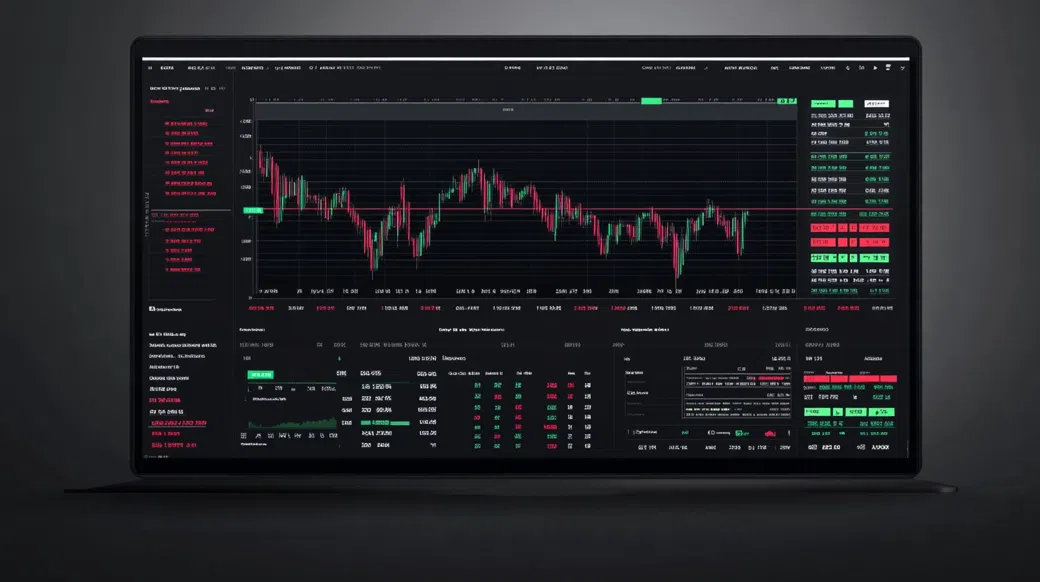
Execution is where marketing meets reality. If you trade FX and CFDs actively, a 0.3–0.8 pip difference on EUR/USD, a few milliseconds of latency, or a slightly wider stop-out policy can decide whether a strategy is viable. That’s the lens I use when mapping Bravo Fondencia against the wider European platform ecosystem. Bravo Fondencia appears positioned as an offshore-style CFD-first venue: a proprietary WebTrader with a companion mobile app, a relatively low entry point (often around a $250 minimum deposit), and headline leverage that can run up to 1:500. Those ingredients are common in the segment, but they also explain why search interest for Bravo Fondencia alternatives keeps rising in 2026.
For many traders, the “switch” conversation is less about features and more about safeguards. Offshore frameworks can mean fewer formal protections, limited dispute channels, and less clarity around how client funds are ring-fenced. At the same time, platform limitations—no deep order types, no robust automation stack, thin reporting—tend to surface once you scale from “testing a strategy” to “running a process.” Add the practical points (withdrawal friction, restricted regions like the US, or a narrower list of instruments), and the case for looking at regulated options vs Bravo Fondencia becomes easier to quantify.
This guide to Bravo Fondencia trading platform alternatives 2026 is built for a global audience with a US/EU focus. I’ll keep the framing data-led: what matters for risk controls, cost-of-trade, and execution quality—then which regulated brokers are typically better fits for specific trading styles.
Disclaimer: This article is for informational purposes only and does not constitute investment advice. CFDs and other leveraged products carry a high risk of loss and are not suitable for all investors.
Across platforms like Bravo Fondencia, the product mix typically centers on leveraged CFDs: major/minor FX pairs, index CFDs, a short menu of commodities, and often crypto CFDs. The operating feel is closer to a retail trading venue than a full brokerage—fast onboarding, simplified interface, and a strong emphasis on margin trading. That setup can suit short-term speculators, but it also means your experience hinges on execution quality (slippage around news, requotes if any, order handling) and on the broker’s operational standards rather than on exchange-level transparency.
The platform stack is usually a proprietary WebTrader with a mobile app for iOS/Android. Charting tends to be serviceable rather than institutional: enough indicators for common workflows, basic drawing tools, and one-screen order entry. Where traders notice ceilings is in workflow depth—limited order types beyond market/limit/stop, fewer alerts and conditional logic, and less robust reporting compared with MT4/MT5/cTrader ecosystems. Mobile parity is often decent for monitoring positions and managing risk, but advanced analysis and multi-chart layouts generally feel more constrained on smaller screens.
Cost-wise, offshore CFD providers frequently quote variable spreads with a “standard” account feel. For EUR/USD, a typical headline in this category is around 2.0 pips on a standard-style offering, while “raw/ECN-like” tiers—when offered—may advertise ~0.0–0.4 pips plus a commission in the neighborhood of $6–$8 round-turn. Traders should also model swap/overnight financing (especially on indices and crypto CFDs), plus any non-trading fees such as inactivity or withdrawals. In practice, the relevant comparison is what you actually pay per round trip under your trade frequency and holding time.
One signal shows up early: the moment you treat trading as a repeatable process rather than a series of one-off bets, you start measuring frictions. That’s when Bravo Fondencia alternatives come onto the radar—because the gaps are easiest to spot in real metrics: rejected orders, uneven slippage during volatility, or costs that look acceptable on a single trade but become material across a month of activity. Regulation also matters more once account balances grow; investor protection frameworks are uneven across offshore arrangements, and dispute resolution can be thinner.
Selection works best as “fit-to-strategy plus risk-budget.” Start by writing down what you must have (markets, leverage limits you can tolerate, platform requirements), then eliminate any broker that fails basic safety checks. Only then does it make sense to compare spreads, tools, and UX. For traders moving from brokers similar to Bravo Fondencia, this sequence reduces the temptation to chase headline conditions that don’t survive real execution.
In the EU/UK/AU/US universe, oversight isn’t just a label—it’s a set of rules around conduct, reporting, and client money. Look for entities regulated by the FCA, ASIC, CySEC, or (for US FX) the NFA/CFTC. Where available, investor compensation schemes matter: the UK’s FSCS can cover eligible claims up to £85,000, while Cyprus’ ICF can cover eligible claims up to €20,000. Confirm whether client funds are segregated and whether negative balance protection applies to your jurisdiction and product.
Write down the exposures you actually need. FX and index CFDs are fine for macro-driven strategies, but portfolio-style traders often need cash equities/ETFs, options, or futures. A multi-asset broker can be a structural upgrade because it separates “investing exposure” (owning the security) from “tactical exposure” (CFDs on margin). If you’re mainly trading commodities and indices intraday, a strong CFD venue may still be the right tool—just make sure the instrument list matches your playbook.
Compare costs as an all-in round-turn number: spread + commission + expected slippage, then add swap for holding trades overnight. A raw-spread account can be cheaper for active traders, but only if commission and execution are competitive. Also scan for friction costs: inactivity fees, withdrawal charges, and conversion fees. If your reference point is Bravo Fondencia, don’t anchor on advertised “from” spreads—model typical spreads during your trading hours.
Platform choice is more than preference; it defines what you can test, automate, and audit. MT4/MT5 ecosystems are rich for EAs and third-party tools, while cTrader is popular with execution-focused traders. Proprietary platforms can be clean and fast, but they’re harder to extend. Then comes execution model: market maker vs STP/ECN vs DMA. For latency- or slippage-sensitive strategies, look for transparent execution policies, clear order handling, and evidence of stable fills during high volatility.
Support quality becomes visible when something breaks: a deposit mismatch, a corporate action, or a sudden margin change. Check coverage hours, language options (European desks can be materially better for EU clients), and response speed via ticket and live chat. Education is useful, but documentation is critical—fee schedules, product specs, and margin tables should be easy to find and consistent across web and mobile. Finally, confirm that key risk controls (stop-loss editing, alerts, margin monitoring) work smoothly on mobile.
On FX/CFDs, the main differentiator is rarely the number of pairs (a typical set might be 30–50). The real edge is execution plus cost-of-trade. A standard-style EUR/USD spread around ~2.0 pips can be workable for swing traders, but it’s expensive for high-frequency approaches where a few pips of gross edge are the entire strategy. In regulated venues, you can often choose between Standard and Raw pricing and pair it with platform stacks built for active risk management. Pepperstone and IC Markets, for example, are widely used for MT4/MT5/cTrader workflows and for traders who care about tight pricing and repeatable execution. Also note the leverage point: 1:500 looks attractive, yet it compresses your margin-of-error; regulated caps can act as a guardrail rather than a limitation.
This is where many offshore CFD-first models show their boundaries. If stocks and ETFs are offered, they’re frequently presented as CFDs—meaning you typically don’t receive shareholder rights, and the product behaves differently around dividends, financing, and corporate actions. Traders who want long-term exposure, portfolio reporting, and broader market access often migrate to brokers that provide real equity/ETF dealing with robust market coverage. Interactive Brokers is the obvious reference for breadth (equities, ETFs, options, futures, and more), while Saxo is strong for multi-asset access with a platform experience that suits advanced retail and semi-pro users. For EU-based traders, the distinction between “owning the asset” and “renting exposure via CFD” is a material risk-management choice, not semantics.
Crypto exposure, when available in this segment, is commonly via crypto CFDs, not on-chain ownership. That means you’re trading price movements with leverage, plus you’ll face financing costs and wider spreads during fast markets. There’s no wallet withdrawal of the underlying coin in a CFD framework, and counterparty risk sits with the broker. If your goal is regulated CFD exposure to crypto price action, brokers like IG and Plus500 are frequently used by EU/UK clients (jurisdiction rules apply) because they sit inside clearer supervisory regimes than offshore providers. If, instead, you want actual crypto ownership, that’s usually a different category of platform altogether—outside the typical CFD broker stack and with different custody considerations.
Regulation: SEC/FINRA (US), FCA (UK), IIROC (Canada) (entity depends on region)
Markets: Stocks, ETFs, options, futures, bonds, FX (spot), funds
Fees: FX pricing is typically commission-based with tight spreads; stock/ETF commissions vary by region and plan
Platform: Trader Workstation (TWS), IBKR Desktop, web platform, mobile, APIs
Best For: Multi-asset traders who want exchange access and deep tools
Regulation: FCA, ASIC, CySEC, DFSA
Markets: FX and CFDs (indices, commodities, some crypto CFDs depending on entity)
Fees: Standard spreads typically from ~1.0+ pip; Raw-style accounts often from ~0.0–0.3 pips plus commission (varies by platform/entity)
Platform: MT4, MT5, cTrader, TradingView (availability varies)
Best For: Systematic FX traders using MT4/MT5/cTrader automation
Regulation: FCA, ASIC, MAS
Markets: CFDs (FX, indices, commodities, shares), spread betting (UK), some stocks/ETFs depending on region
Fees: FX spreads often competitive (commonly around sub-1 pip on majors in normal conditions); CFDs include spread and financing
Platform: IG web platform, mobile apps, MT4 (region-dependent)
Best For: Broad CFD access with strong risk tools and research
Regulation: FCA, MAS, DFSA
Markets: Stocks, ETFs, bonds, options, futures, FX, CFDs
Fees: Tiered pricing; FX spreads typically tighten with higher account tiers; commissions apply on exchange-traded products
Platform: SaxoTraderGO, SaxoTraderPRO
Best For: EU/UK investors blending long-term portfolios with tactical trading
Regulation: ASIC, CySEC
Markets: FX and CFDs (indices, commodities, some crypto CFDs depending on entity)
Fees: Raw spreads commonly from ~0.0–0.2 pips plus commission; Standard accounts typically higher all-in spread
Platform: MT4, MT5, cTrader
Best For: Cost-focused scalpers prioritizing low spread + commission
Regulation: FCA, ASIC, BaFin
Markets: CFDs (FX, indices, commodities, shares)
Fees: Spreads can be sharp on major FX pairs in normal conditions; CFD financing applies for overnight holds
Platform: Next Generation platform, mobile apps, MT4 (region-dependent)
Best For: Discretionary traders who value advanced charting and pattern tools
| Platform | Regulation | Main Markets | Typical Costs | Best For |
|---|---|---|---|---|
| Interactive Brokers (IBKR) | SEC/FINRA, FCA, IIROC (by entity) | Stocks/ETFs, options, futures, bonds, FX | Commission-led; tight FX pricing; regional stock fees | Multi-asset traders who want exchange access and deep tools |
| Pepperstone | FCA, ASIC, CySEC, DFSA | FX + CFDs (indices/commodities; crypto CFDs by entity) | Raw ~0.0–0.3 pips + commission; Standard ~1.0+ pip | Systematic FX traders using MT4/MT5/cTrader automation |
| IG | FCA, ASIC, MAS | CFDs across FX/indices/commodities/shares | Often sub-1 pip majors in normal conditions; financing on holds | Broad CFD access with strong risk tools and research |
| Saxo Bank | FCA, MAS, DFSA | Stocks/ETFs, options/futures, FX, CFDs | Tiered spreads/commissions; tighter at higher tiers | EU/UK investors blending long-term portfolios with tactical trading |
| IC Markets | ASIC, CySEC | FX + CFDs (indices/commodities; crypto CFDs by entity) | Raw ~0.0–0.2 pips + commission; Standard higher all-in spread | Cost-focused scalpers prioritizing low spread + commission |
| CMC Markets | FCA, ASIC, BaFin | CFDs (FX, indices, commodities, shares) | Competitive spreads on majors; financing for overnight exposure | Discretionary traders who value advanced charting and pattern tools |
Switching brokers is operational risk before it’s market risk. Treat the migration like a controlled rollout: validate the new venue’s legal entity, make sure funding rails work in your region, and only then scale position size. If you’re moving away from offshore-style providers, keep in mind that withdrawal processing and compliance checks can be the slowest step—plan around that so you’re not forced into trades to “stay active.”
If you’re benchmarking platforms, it can help to review the current onboarding flow, instrument list, and fee schedule directly—then compare those terms against regulated substitutes in your region. Eligibility and conditions can change by jurisdiction, so verify which entity you would actually be onboarded under before funding an account.
Visit Bravo FondenciaThe best alternative depends on whether you need real multi-asset access or primarily FX/CFDs. For broad market coverage (stocks/ETFs/options/futures alongside FX), Interactive Brokers is a common upgrade path; for FX/CFD execution with MT4/MT5/cTrader, Pepperstone or IC Markets are frequent picks. For a simpler, research-heavy CFD experience in regulated entities, IG or CMC Markets may fit better than offshore-style platforms like Bravo Fondencia.
Bravo Fondencia appears to fit the offshore/unregulated end of the CFD broker spectrum rather than the FCA/ASIC/CySEC/NFA-regulated tier. That doesn’t automatically mean a trader will have a negative experience, but it typically implies fewer formal protections, weaker compensation frameworks, and less transparent oversight. If account safety is your top constraint, regulated brokers with segregated client funds and clear dispute channels generally provide stronger guardrails.
With Bravo Fondencia, the core offering is usually forex and CFDs, and “stocks” (if offered) are often stock CFDs rather than real share dealing. Futures access is commonly absent in CFD-first WebTrader setups; traders needing exchange-traded futures typically use Interactive Brokers or Saxo. Crypto exposure, when present, is generally via crypto CFDs—price speculation with leverage, not on-chain ownership or wallet withdrawal.
Before switching, verify the new broker’s exact legal entity on the relevant regulator register and confirm which protections apply in your jurisdiction (segregated funds, negative balance protection, compensation schemes). Then map your strategy to platform requirements—MT4/MT5/cTrader vs proprietary—and compare all-in costs including swap and expected slippage. Finally, make sure you can fund and withdraw using your preferred rails and that you’ve exported statements for records.
About the Author: Elena Marchetti is a Milan-based fintech analyst focused on European trading platforms, market microstructure, and broker ecosystems. She writes with a data-first approach, translating execution quality, fee design, and regulatory structure into practical decisions for active traders.