Aur Trhovina Alternatives 2026: Safer Trading Options
Aur Trhovina trading platform alternatives 2026: compare regulated brokers, costs, execution, and migration steps to switch with lower operational risk.

Aur Trhovina trading platform alternatives 2026: compare regulated brokers, costs, execution, and migration steps to switch with lower operational risk.
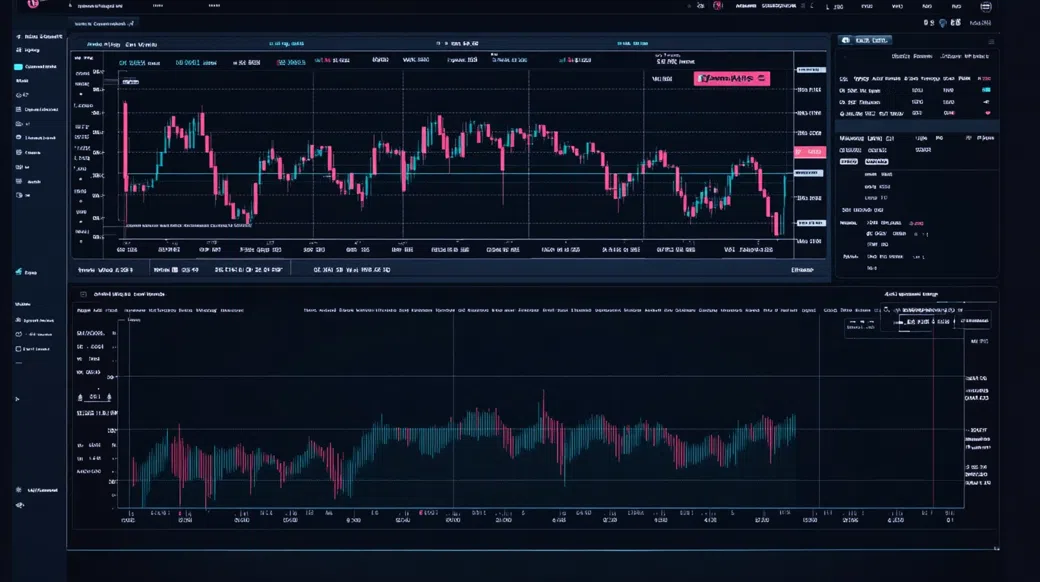
Across EU trading forums, the same pattern repeats: a slick WebTrader appears, leverage is generous, onboarding is fast—and only later do traders start asking harder questions about execution quality, fund handling, and what happens when a withdrawal becomes “manual review.” That context matters when discussing Aur Trhovina. Based on what is commonly observable for offshore CFD-first providers, Aur Trhovina typically sits in the Forex/CFD lane, runs a proprietary browser platform plus a mobile app, and markets high leverage (often around 1:500). The offer can look straightforward: major FX pairs, a handful of indices and commodities, and crypto CFDs for directional exposure.
Yet microstructure details—spread stability during news, slippage controls, and the clarity of the execution model—are where trading costs and operational risk hide. If EUR/USD is around 2.0 pips on a standard-style account and the product set is mostly CFDs, a trader with frequent turnover can quickly discover that “headline leverage” doesn’t compensate for friction. That is why Aur Trhovina alternatives are not just a branding choice; they’re a workflow decision: better investor protections, tighter cost measurement (round-turn), more robust platform stacks (MT4/MT5/cTrader or DMA), and clearer rules around negative balance protection and client money segregation.
Disclaimer: This article is for informational purposes only and does not constitute investment advice. Trading CFDs and other leveraged products involves a high risk of loss and may not be suitable for all investors.
Rather than a full multi-asset brokerage, Aur Trhovina presents like a CFD-centric trading venue aimed at retail clients who prioritize quick access to FX and index CFDs. In this segment, the legal wrapper is often offshore; a common setup is an entity operating under the Seychelles FSA framework, with service restrictions for the United States and frequently for other sanctioned jurisdictions. The practical implication is less about “style points” and more about process: how client funds are held, what dispute channels exist, and which rulebook governs margin calls and negative balance outcomes. For traders comparing brokers similar to Aur Trhovina, the key is to separate the platform experience from the legal protections sitting behind it.
The platform stack is typically a proprietary WebTrader with an iOS/Android companion app. Expect competent basics—watchlists, one-click trading, and standard charting—rather than a deep quant toolbox. Charting usually supports common indicators and drawing tools, but the ceiling shows up in advanced order logic and workflow: fewer conditional order types, limited depth-of-market visibility, and less transparency around the execution path during fast markets. Mobile parity is often decent for monitoring and simple entries, while account dashboards focus on margin level, P/L, and deposit/withdrawal flows. If your strategy relies on MT4/MT5 or cTrader ecosystems (EAs, custom indicators, VPS routines), platforms like Aur Trhovina can feel boxed-in.
Cost disclosure in offshore CFD venues tends to be spread-led, with EUR/USD commonly around 2.0 pips on a standard-style account. Some providers in this category advertise “raw” pricing with tight spreads (near 0.0–0.4 pips) plus a commission in the neighborhood of $6–$8 per round turn, but terms differ by account tier and jurisdiction. Beyond the spread, the real bill often comes from swap/overnight financing on multi-day positions, plus any withdrawal or inactivity charges embedded in the fee schedule. A practical baseline for this segment is a minimum deposit around $250 and maximum leverage around 1:500—numbers that look attractive, but amplify the cost of mistakes and gaps.
The first trigger is usually operational rather than strategic: when execution and cash management stop feeling “automatic.” Traders scanning Aur Trhovina alternatives often do so after seeing spreads widen at the wrong time, receiving repeated KYC/AML prompts mid-withdrawal, or realizing their platform can’t support the tooling their strategy requires. Leverage cuts both ways; at 1:500, a small adverse move can turn into a margin event before you even have time to re-quote the market. In Europe, the comparison also becomes regulatory: the difference between offshore terms and FCA/ASIC/CySEC rulebooks is visible in complaint channels, client-fund safeguards, and compensation schemes.
Think of the selection process as a fit-to-strategy exercise with a compliance overlay. Your “best” choice depends on what you trade, how often you trade, and which risks you refuse to outsource—execution, custody, or legal recourse. The shortlist should survive three filters: regulatory quality, cost-of-trade under realistic turnover, and platform/execution alignment with your method.
Start with the regulator, then drill into the protections that regulator enforces. FCA oversight in the UK typically connects to FSCS coverage up to £85,000 (eligibility rules apply), while CySEC-regulated firms may fall under the ICF with coverage up to €20,000. ASIC and NFA/CFTC frameworks emphasize conduct and reporting, with different consumer protection structures. Look for segregated client funds, negative balance protection where applicable, and a clean public register entry—this is where regulated options vs Aur Trhovina often diverge in practical, not cosmetic, ways.
Map instruments to your actual need. FX and index CFDs can be enough for short-horizon macro trading, but portfolio builders often need real stocks and ETFs, and hedgers may want listed options or futures. If a broker offers “stocks” as CFDs only, you’re trading price exposure without shareholder rights and with financing costs that can surprise longer holds. Competitors to Aur Trhovina that are multi-asset typically provide a cleaner separation between cash equities and leveraged CFDs.
Cost is a system, not a headline. Compare round-turn cost: spread + commission (if any) + expected slippage for your order size and session. Then add swap/overnight fees for holding periods, plus non-trading charges such as inactivity or withdrawals. A scalper doing 200 round turns per month will experience “2.0 pips on EUR/USD” as a materially different P/L environment than 0.6–1.0 pip equivalents, even before you price in execution quality.
Platform choice is really an execution choice. MT4/MT5 and cTrader support mature ecosystems (automation, plug-ins, VPS hosting), while proprietary WebTraders can be fast for basics but thin on auditability. Ask how orders are routed: market maker internalization versus STP/ECN/DMA makes a difference in how slippage behaves in volatile moments. If you’re coming from Aur Trhovina, test the new broker’s fills with small size during both liquid and stressed conditions; the tape tells the truth faster than the brochure.
Support is part of your risk controls. Check service hours, language coverage (important for EU clients), and how quickly the broker resolves trade queries with verifiable ticket trails. Education matters less for experienced traders, but platform documentation and margin-policy clarity matter a lot—especially around stop-out levels and margin calls. Finally, confirm mobile parity: you should be able to monitor margin, adjust stops, and manage withdrawals without feature gaps.
In FX/CFDs, the main comparison is the “effective spread” you pay once slippage is included. Offshore CFD venues commonly show EUR/USD around 2.0 pips on standard-style pricing and pair that with leverage near 1:500, which can entice small-account traders but also magnifies execution mistakes and weekend gap risk. Regulated FX/CFD specialists like Pepperstone and IC Markets are frequently chosen by active traders because their pricing models are easier to benchmark: raw-style accounts often combine very tight spreads with a transparent per-lot commission, and platform choice (MT4/MT5/cTrader) supports repeatable workflows. If your strategy is sensitive to latency and re-quotes, the execution model—STP/ECN-like routing versus pure market making—becomes as important as the headline spread.
Equities are where “CFD-first” architecture shows its limits. Many platforms like Aur Trhovina provide equity exposure, if at all, mainly through stock CFDs—useful for short-term directional views, but structurally different from owning shares (no voting rights, different tax documentation, and financing costs via swaps). Multi-asset brokers such as Interactive Brokers and Saxo Bank are built for real stocks and ETFs with broader market access and more granular order types, including routing choices and, in some cases, DMA-style execution. For EU traders, this distinction also affects reporting: corporate actions, dividends, and portfolio analytics are generally more robust in platforms designed around cash equities rather than synthetic exposure.
Crypto is often offered as CFDs in offshore environments: you trade price changes without holding coins on-chain, and overnight financing can be meaningful if you keep positions open. That format can be acceptable for short-term risk-taking, but it’s not the same as spot ownership or transferability. Among regulated brokers, IG and Plus500 commonly provide crypto CFD access in jurisdictions where permitted, with clearer risk disclosures and leverage limits aligned to local rules. If crypto is a minor sleeve of your book, a regulated CFD broker can be a cleaner operational choice; if crypto is central, consider whether you need spot custody, staking, or transfers—features that CFD-only structures don’t provide.
Regulation: SEC/FINRA (US), FCA (UK), IIROC (Canada) (entities vary by region).
Markets: Stocks, ETFs, options, futures, FX, bonds, funds (broad global market access).
Fees: Varies by product and venue; FX pricing is typically commission-based with tight spreads; equity commissions depend on plan and exchange.
Platform: Trader Workstation (TWS), IBKR Desktop, web and mobile apps, APIs.
Best For: Multi-asset traders who care about market access and routing controls.
Regulation: FCA (UK), ASIC (Australia), CySEC (Cyprus), DFSA (Dubai) (entity depends on residency).
Markets: FX and CFDs (indices, commodities, some crypto CFDs where permitted).
Fees: Standard accounts typically from ~1.0–1.3 pips on EUR/USD; Razor/Raw-style pricing often from ~0.0–0.3 pips plus commission (commonly around $7 per round turn, varies by platform/entity).
Platform: MT4, MT5, cTrader, TradingView integration (availability varies), mobile apps.
Best For: Active FX traders optimizing spread/commission efficiency.
Regulation: FCA (UK), MAS (Singapore), DFSA (Dubai) (regional entities apply).
Markets: Stocks, ETFs, bonds, FX, CFDs, listed options, futures (product set varies by jurisdiction).
Fees: FX spreads typically tiered by account level; costs vary by instrument with transparent ticket charges for exchange-traded products.
Platform: SaxoTraderGO, SaxoTraderPRO.
Best For: Portfolio-style traders who want strong reporting and multi-venue access.
Regulation: FCA (UK), ASIC (Australia), MAS (Singapore).
Markets: CFDs (FX, indices, commodities, shares), and other offerings depending on region (e.g., spread betting in the UK).
Fees: Spread-based pricing on many CFD markets; FX spreads can be competitive on major pairs, with costs varying by volatility and session.
Platform: IG web platform, mobile apps; MT4 support in many regions.
Best For: Macro-driven CFD traders who want broad market coverage under top-tier oversight.
Regulation: FCA (UK), ASIC (Australia), BaFin (Germany).
Markets: CFDs across FX, indices, commodities, treasuries, and shares (availability varies).
Fees: FX spreads can be low on majors (often from ~0.7 pips on EUR/USD on spread-only models); other markets priced via spreads and, for shares, sometimes commissions depending on region/account.
Platform: Next Generation platform, mobile apps; MT4 offered in some jurisdictions.
Best For: Chart-first discretionary traders who lean on platform analytics.
Regulation: FCA (UK), CySEC (Cyprus), ASIC (Australia), MAS (Singapore) (entity depends on country).
Markets: CFDs on FX, indices, commodities, shares, and crypto CFDs where permitted.
Fees: Primarily spread-based; overnight funding applies to leveraged CFD positions; costs vary by instrument and market conditions.
Platform: Plus500 proprietary WebTrader and mobile apps.
Best For: Simplicity-focused traders who prefer a clean proprietary interface.
| Platform | Regulation | Main Markets | Typical Costs | Best For |
|---|---|---|---|---|
| Interactive Brokers (IBKR) | SEC/FINRA, FCA, IIROC | Stocks/ETFs, options, futures, FX, bonds | Commission-led; FX typically tight with commissions; equities vary by plan/venue | Multi-asset traders who care about market access and routing controls |
| Pepperstone | FCA, ASIC, CySEC, DFSA | FX and CFDs | EUR/USD ~1.0–1.3 pips (Standard) or ~0.0–0.3 + commission (Raw/Razor-style) | Active FX traders optimizing spread/commission efficiency |
| Saxo Bank | FCA, MAS, DFSA | Stocks/ETFs, FX, options, futures, bonds, CFDs | Tiered spreads/fees; exchange-traded products priced with transparent ticket charges | Portfolio-style traders who want strong reporting and multi-venue access |
| IG | FCA, ASIC, MAS | CFDs across FX/indices/commodities/shares | Mostly spread-based; majors often competitive, variable by session/volatility | Macro-driven CFD traders who want broad market coverage under top-tier oversight |
| CMC Markets | FCA, ASIC, BaFin | CFDs across FX/indices/commodities/shares | Often low spread models on FX (e.g., ~0.7 pips on EUR/USD), plus market-dependent pricing | Chart-first discretionary traders who lean on platform analytics |
| Plus500 | FCA, CySEC, ASIC, MAS | CFDs on FX/indices/commodities/shares/crypto (where allowed) | Spread-only pricing; overnight funding on held CFD positions | Simplicity-focused traders who prefer a clean proprietary interface |
Switching brokers is less about “closing an app” and more about reducing operational exposure while preserving your trading records. Done properly, you avoid being forced into urgent decisions during open positions or volatile markets. Before you move money, verify the destination broker’s legal entity and product permissions for your country; then migrate in controlled steps, because leverage and CFDs can turn small timing errors into large losses.
If you’re still evaluating the current platform, check today’s onboarding flow, product list, and fee schedule against your region and strategy. Then benchmark it side-by-side with the regulated substitutes above using the same order sizes and trading hours to see the real cost of execution.
Visit Aur TrhovinaThe best option depends on whether you need multi-asset access or mainly FX/CFDs. For real stocks/ETFs and advanced routing, Interactive Brokers or Saxo Bank are strong benchmarks; for FX/CFD execution and platform choice, Pepperstone is often a better match. In practice, the “best Aur Trhovina alternatives 2026” shortlist should be built around your cost-of-trade and toolchain requirements, not leverage ceilings.
Aur Trhovina appears to operate under an offshore framework consistent with providers regulated outside major retail regimes (often associated with the Seychelles FSA), which typically offers a different level of investor protection than FCA/ASIC/CySEC supervision. “Safe” therefore hinges on your definition: platform usability can be fine while legal safeguards and dispute pathways remain thinner than top-tier regulated brokers. If safety is your priority, regulated options vs Aur Trhovina are usually the cleaner comparison because segregation rules and oversight are more explicit.
With Aur Trhovina, the common structure in this category is FX and CFDs, with crypto typically offered as crypto CFDs rather than on-chain ownership. Stocks and ETFs, if present, are often provided as CFDs (price exposure without ownership), while listed futures are more typical at multi-asset brokers like Interactive Brokers or Saxo. If you specifically want regulated crypto CFD access, brokers such as IG or Plus500 may be available depending on jurisdiction.
Before switching, verify the new broker’s exact legal entity on the regulator’s public register, confirm product permissions for your country, and read the margin/stop-out and negative balance rules. Next, compare round-turn costs (spread + commission + typical slippage) on the markets you actually trade, at the times you trade them. Finally, export your statements and close or hedge positions so you don’t carry unmanaged leveraged exposure across the transition.
About the Author: Elena Marchetti is a Milan-based fintech analyst focused on European trading platforms, market microstructure, and how broker ecosystems shape real-world execution. Her work emphasizes measurable costs (spreads, slippage, financing) and operational safeguards (regulation, segregation, withdrawal mechanics) over marketing claims.