AI GPT Trader Trading Platform Alternatives 2026
AI GPT Trader alternatives for 2026: compare regulated brokers, platforms, spreads, execution, and safety checks to pick a reliable US/EU-focused option.

AI GPT Trader alternatives for 2026: compare regulated brokers, platforms, spreads, execution, and safety checks to pick a reliable US/EU-focused option.
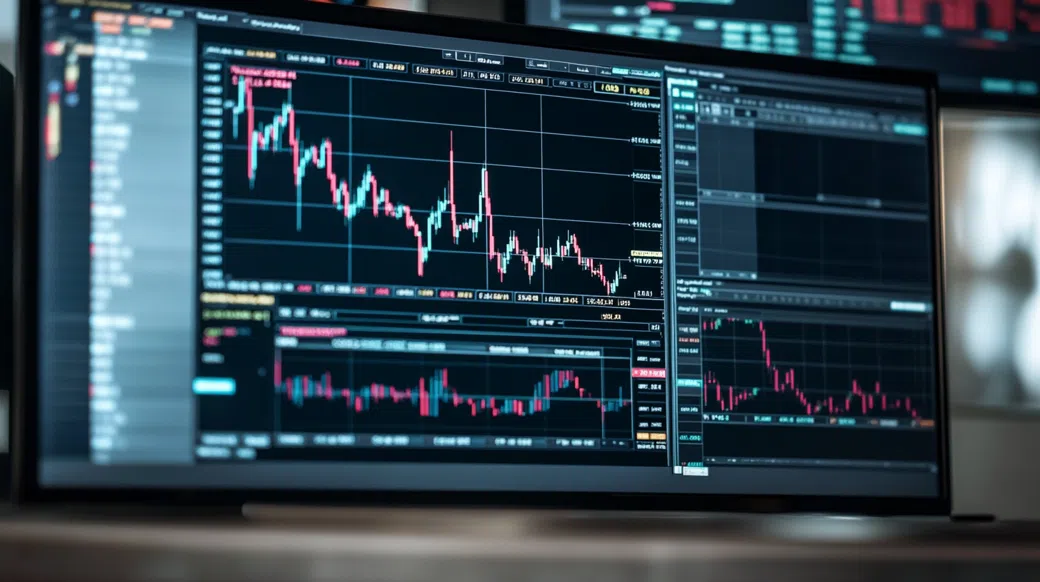
Across European retail flow, I see the same pattern repeat: traders start with a lightweight WebTrader, then hit the edges—execution transparency, product depth, or simply the administrative friction that arrives the first time you request a larger withdrawal. That’s usually the moment “AI-driven” branding stops being the differentiator, and the plumbing matters: regulator oversight, how orders are filled, what you actually own, and what you can prove on paper.
In that context, AI GPT Trader sits in a familiar bracket of offshore CFD-first venues. Public-facing terms in this segment often point to Forex and CFD trading, commonly including crypto CFDs, via a proprietary WebTrader plus mobile apps. Typical parameters for this category include a $250 minimum deposit, leverage that can reach 1:500, and a standard EUR/USD spread that often starts around 2.0 pips. Those numbers are not “good” or “bad” by themselves; what changes the risk profile is the surrounding architecture—investor protection, segregation of client funds, complaint handling, and the practical ability to verify the firm on a major regulator register.
This guide maps credible, regulated AI GPT Trader alternatives for 2026 with a US/EU lens. I’ll keep it data-led: cost-of-trade (spread + commissions + swap), platform stack (MT4/MT5/cTrader vs proprietary), and market access (CFDs versus real shares/ETFs), with a migration checklist designed to reduce operational mistakes.
Disclaimer: This article is for informational purposes only and does not constitute investment advice. CFDs and other leveraged products carry a high risk of loss and may not be suitable for all investors.
From a market-structure point of view, AI GPT Trader appears positioned as an offshore-style, CFD-centric brokerage: Forex pairs, index and commodity CFDs, and frequently a menu of crypto CFDs for directional exposure. The operating model in this segment is commonly market maker or hybrid (client orders internalized with external hedging at the broker’s discretion), which can be functional for small tickets but matters when you care about slippage, re-quotes, and how stops behave in fast markets. Regionally, US residents are typically excluded, and other high-compliance jurisdictions can be restricted as well.
The platform stack is usually a proprietary WebTrader with a companion iOS/Android app rather than a full third-party ecosystem. Expect mid-level charting (enough for routine discretionary work), a standard set of indicators, drawing tools, and a simple order ticket for market/limit/stop orders. The account dashboard tends to emphasize deposits, open positions, and margin metrics, while deeper analytics—tick-level reporting, execution-quality stats, and granular order logs—are often lighter than what you get at established regulated brokers. For competitors to AI GPT Trader, the practical differentiator is not the chart itself; it’s the surrounding tooling (risk controls, API options, and stability under volatility).
Cost disclosure for offshore CFD venues often centers on spreads, with a “Standard” style account where EUR/USD typically starts around 2.0 pips. Some providers in this category advertise a raw/ECN-like tier (often 0.0–0.4 pips) paired with a commission in the ballpark of $5–$8 round-turn, but the real question is whether execution and fill quality match the headline. Beyond the spread, traders should scan for swap/overnight financing on CFD positions, plus operational charges such as inactivity or withdrawal fees, which can dominate total cost for low-frequency accounts.
Pressure points tend to show up in the unglamorous places: the first time you need a regulator-backed complaint channel, the first time a margin call happens during a data release, or the first time you realize your “stocks” exposure is only a CFD with financing costs attached. Those are common catalysts for searching AI GPT Trader alternatives, especially for EU/UK traders who want clear rules on negative balance protection, fund segregation, and what happens if the firm fails.
Think of selection as a fit-to-strategy exercise with guardrails. Start with the non-negotiables (jurisdiction, regulator, product permissions), then quantify cost-of-trade for your expected volume, then evaluate platform/execution. That ordering avoids a classic retail mistake: choosing a slick interface first and discovering later that the underlying market access—or protections—don’t match your risk budget.
For a US/EU audience, the regulator is the first datapoint because it dictates rules on leverage limits, disclosures, and client-money handling. In the UK, FCA-authorised firms can fall under FSCS protection (up to £85,000, eligibility dependent). In Cyprus, CySEC supervision can connect to the ICF (up to €20,000, eligibility dependent). Australia’s ASIC is another high-scrutiny framework. Also look for segregated client funds, negative balance protection (common in the UK/EU retail regimes), and clear complaint processes.
Match the menu to your actual objectives. FX and index CFDs cover many short-term strategies, but longer-horizon portfolios often need real stocks and ETFs (not CFDs) for corporate actions and cleaner holding costs. Options and futures matter if you hedge properly rather than “just reduce leverage.” Crypto is a special case: many regulated brokers offer only crypto CFDs, which is trading exposure, not ownership. As you compare regulated options vs AI GPT Trader, write down the instruments you must have, not the ones that look exciting.
Use a round-turn lens: spread paid on entry/exit plus any commission, then add swaps if you hold overnight. A 2.0 pip spread on EUR/USD can be perfectly manageable for occasional trades, yet expensive for active intraday systems. Raw accounts often look cheaper but commission adds up; the only fair comparison is “all-in” cost for your trade size and frequency. Finally, operational fees (withdrawal, inactivity) can quietly dominate for small accounts.
Platform is a workflow decision. MT4/MT5 support a large ecosystem of indicators and EAs; cTrader is popular with execution-sensitive traders; proprietary platforms can be excellent, but you are locked into that broker’s roadmap. Execution model matters too: market maker, STP, ECN, or DMA each imply different routing and potential conflicts. Check how slippage is handled in volatile windows and whether the broker provides meaningful reporting—this is where brokers similar to AI GPT Trader often feel opaque.
Operational quality shows up in response time, not slogans. Consider local language coverage, support hours aligned to your trading session, and whether the broker can answer technical questions (margin methodology, swap calculations, corporate actions on CFDs vs shares). Education is useful when it’s specific—platform walkthroughs, risk modules, and product disclosures. Mobile parity is also practical: can you adjust stops, review margin, and access statements without needing a desktop?
On FX/CFDs, the decisive variables are all-in cost and execution behavior. In offshore CFD setups, EUR/USD around 2.0 pips on a standard account is common, and leverage may run to 1:500—attractive on a landing page, unforgiving in a drawdown. Regulated FX/CFD specialists such as Pepperstone or IC Markets typically compete on tighter pricing (often via raw spreads plus commission) and broader platform choice (MT4/MT5/cTrader). The other difference is “process”: clearer margin call rules, more explicit risk disclosures, and a compliance framework that shapes how the broker handles conflicts. If your strategy is sensitive to spreads, slippage, or stop execution, platforms like AI GPT Trader are harder to evaluate without robust execution statistics.
Here the product definition matters: real shares/ETFs versus CFDs on shares. Many CFD-first brokers offer equity exposure primarily through CFDs, which means no shareholder rights and ongoing financing costs when held. For investors who want direct market access, brokers like Interactive Brokers or Saxo Bank are built around multi-asset custody and routing—useful if you care about order types, venues, and holding assets without embedded leverage. Even if you still trade CFDs tactically, having the option to switch between “invest” (real assets) and “trade” (derivatives) is a structural advantage. For alternatives to the AI GPT Trader trading platform, this is often the biggest functional upgrade.
Crypto offering is usually framed as “trade Bitcoin, Ethereum, and altcoins,” but the mechanism is often a CFD: you are speculating on price without on-chain ownership, wallets, or transfer capability. That can be fine for short-term directional trades, yet it changes counterparty risk and introduces swap/financing considerations depending on the product. Among regulated CFD providers, IG and Plus500 commonly provide crypto CFDs in permitted jurisdictions, with clearer disclosures and risk controls. If you want spot crypto ownership, you generally need a dedicated crypto exchange rather than a CFD broker—an important distinction when comparing top substitutes for AI GPT Trader for 2026.
Regulation: SEC/FINRA (US), FCA (UK), IIROC (Canada)
Markets: Stocks, ETFs, options, futures, bonds, FX (spot), some CFDs (region-dependent)
Fees: FX spreads vary by venue/size; commissions apply on many exchange products; overall pricing tends to reward active, disciplined execution
Platform: Trader Workstation (TWS), IBKR Desktop, mobile apps, APIs
Best For: Multi-asset traders who need DMA-style tooling and deep market access
Regulation: FCA (UK), ASIC (Australia), CySEC (Cyprus), DFSA (Dubai)
Markets: FX and CFDs (indices, commodities, some crypto CFDs where permitted)
Fees: Standard spreads often from ~1.0 pip; Razor/Raw pricing can be ~0.0–0.3 pips plus commission (varies by entity)
Platform: MT4, MT5, cTrader, TradingView integration (availability varies)
Best For: Execution-focused FX/CFD traders running systematic or short-horizon strategies
Regulation: FCA (UK), MAS (Singapore), DFSA (Dubai)
Markets: Stocks, ETFs, bonds, options, futures, FX, CFDs (product set depends on jurisdiction)
Fees: FX spreads typically competitive for larger sizes; commissions/fees apply on exchange-traded products; custody-style pricing for investors
Platform: SaxoTraderGO, SaxoTraderPRO
Best For: Portfolio-style traders who want both investing and derivatives in one regulated stack
Regulation: CFTC/NFA (US), FCA (UK), ASIC (Australia), IIROC (Canada)
Markets: FX (core), CFDs in some regions (indices/commodities depending on entity)
Fees: Spreads commonly around ~1.0–1.6 pips on major FX pairs (varies by account and region); typically spread-only pricing for many retail accounts
Platform: OANDA Trade (web/mobile), MT4 (availability varies)
Best For: Risk-conscious FX traders prioritizing strong regulatory coverage (including US)
Regulation: FCA (UK), ASIC (Australia), MAS (Singapore)
Markets: CFDs across FX, indices, commodities, shares (CFD), crypto CFDs where permitted
Fees: FX spreads often from ~0.6–1.2 pips on majors (account/region dependent); financing applies on CFD holdings
Platform: IG web platform, mobile apps, MT4 (in supported regions)
Best For: Macro-driven CFD traders who want broad markets and robust risk tools
Regulation: FCA (UK), CySEC (Cyprus), FSC (Bulgaria)
Markets: Stocks and ETFs (investing), CFDs (region-dependent)
Fees: Investing accounts typically focus on low explicit commissions; CFD spreads/financing apply on leveraged products (costs vary by instrument)
Platform: Proprietary web and mobile platform
Best For: Mobile-first investors who want simple stock/ETF access alongside CFDs
| Platform | Regulation | Main Markets | Typical Costs | Best For |
|---|---|---|---|---|
| Interactive Brokers (IBKR) | SEC/FINRA, FCA, IIROC | Real stocks/ETFs, options, futures, bonds, FX | Exchange commissions + variable FX pricing; often efficient at scale | Multi-asset traders who need DMA-style tooling and deep market access |
| Pepperstone | FCA, ASIC, CySEC, DFSA | FX and CFDs | From ~1.0 pip (Standard) or ~0.0–0.3 + commission (Raw/Razor) | Execution-focused FX/CFD traders running systematic or short-horizon strategies |
| Saxo Bank | FCA, MAS, DFSA | Stocks/ETFs, options/futures, FX, CFDs | FX spreads competitive; commissions on exchange products | Portfolio-style traders who want both investing and derivatives in one regulated stack |
| OANDA | CFTC/NFA, FCA, ASIC, IIROC | FX (core), some CFDs by region | Often ~1.0–1.6 pips on majors (varies); generally spread-led pricing | Risk-conscious FX traders prioritizing strong regulatory coverage (including US) |
| IG | FCA, ASIC, MAS | CFDs across FX/indices/commodities/shares; crypto CFDs where allowed | Majors often ~0.6–1.2 pips; CFD financing for holds | Macro-driven CFD traders who want broad markets and robust risk tools |
| Trading 212 | FCA, CySEC, FSC Bulgaria | Stocks/ETFs (real), plus CFDs in supported regions | Low explicit commissions on investing; CFD spreads + financing apply | Mobile-first investors who want simple stock/ETF access alongside CFDs |
Switching brokers is operational risk before it’s market risk. The goal is continuity: keep access to funds, keep clean records, and avoid being forced to trade during the transition. Treat the move as a staged rollout—new account verified and tested first, old exposure reduced second, capital transferred last. If you are currently using AI GPT Trader, assume positions won’t “port” across brokers, and plan accordingly.
If you’re benchmarking AI GPT Trader trading platform alternatives 2026, it can still be useful to review the current onboarding flow and terms side-by-side with regulated competitors. Check your region’s eligibility, confirm fees in the instrument’s contract specs, and compare platform features you actually use (order types, reporting, risk controls) before committing capital.
Visit AI GPT TraderThe best option depends on whether you need real multi-asset access or mainly FX/CFDs. For broad investing plus derivatives, Interactive Brokers and Saxo Bank are strong baselines; for FX/CFD execution and platform choice, Pepperstone is a frequent short-list candidate. If you want a US-eligible, regulation-heavy FX venue, OANDA is often the cleanest comparison point. This is how I’d structure “best AI GPT Trader alternatives 2026” by use-case rather than hype.
Based on how offshore CFD platforms are commonly structured, AI GPT Trader appears to sit outside top-tier regulators such as the FCA, ASIC, CySEC, or the US NFA/CFTC framework. That doesn’t automatically mean fraud, but it does mean fewer enforceable protections and weaker recourse if a dispute arises. If you choose to use AI GPT Trader, keep position sizing conservative—high leverage (up to 1:500 in this segment) can amplify losses quickly.
AI GPT Trader is typically positioned around Forex and CFDs, with crypto CFDs often included in that product mix. Stocks and ETFs, when present on CFD-first venues, are commonly offered as CFDs rather than real share ownership, and exchange-traded futures are often not part of the core offering. If you need real stocks/ETFs or futures, look to multi-asset brokers like Interactive Brokers or Saxo Bank; for crypto exposure within a regulated CFD framework, IG can be relevant where permitted.
Before switching, verify the new broker’s regulator entry on the official register, then confirm product rules (CFD leverage, margin close-out, negative balance protection) for your jurisdiction. Next, compare all-in costs for your main instruments—spread plus commission plus swap—using your expected trade frequency. Finally, make sure your workflow is supported (MT4/MT5/cTrader, APIs, or a robust proprietary platform) and test with a small deposit before moving full capital.
About the Author: Elena Marchetti is a Milan-based fintech analyst focused on European trading platforms, execution quality, and broker ecosystems. Her work emphasizes market microstructure—costs, routing, and rulebooks—so readers can separate interface polish from the mechanics that protect capital.