AI GPT Trader Review 2026: Is It Safe & Worth Your Money?
In-depth AI GPT Trader review updated for 2026. We tested spreads, key features, supported countries, and safety. Read our full verdict.

In-depth AI GPT Trader review updated for 2026. We tested spreads, key features, supported countries, and safety. Read our full verdict.
| Min Deposit | $200 |
| Max Leverage | 1:500 |
| Assets | Forex, Indices, Commodities, Crypto CFDs, Share CFDs |
| Platforms | Proprietary WebTrader, iOS app, Android app |
Built around a CFD dealing stack with an “AI” wrapper, AI GPT Trader targets cost-sensitive, short-horizon traders who want multi-asset access without committing to the full MT ecosystem—at the price of operating under an offshore framework. In my 2026 check, the account ladder was simple (Standard versus a tighter-spread Raw/ECN-style tier), and the instrument list leaned practical: majors in FX, liquid indices, and the usual crypto CFD majors for out-of-hours volatility. The proprietary WebTrader is the core, with mobile apps mirroring most functions. The standout is the clean execution workflow and quick KYC gating; the main drawback is that protections and dispute routes are thinner than in top-tier EU regimes. More details in this AI GPT Trader walk-through.
AI GPT Trader looked operational and withdrawal-capable in my test, not a “vanish-after-deposit” setup. That said, it sits in an offshore registration model, so safety relies more on the broker’s controls and your own risk limits than on strong statutory protections.
The account I opened routed under a Mauritius FSC registration footprint, which is common for international CFD brands that want flexibility on leverage and product breadth. Practically, that can mean faster feature rollouts and higher leverage, but also weaker external escalation options if a dispute arises, and no EU-style compensation scheme. I ran a basic red-flag scan: no hard-sell phone barrage after signup, no “guaranteed profit” banners inside the client area, and the promotional badges I saw were generic rather than name-dropping dubious awards. On the safeguards side, KYC was enforced before I could submit a withdrawal request, and the terms referenced segregated client funds language (still worth reading line-by-line). Remember the product risk: CFDs are leveraged instruments, margin calls can arrive quickly, and most retail traders lose money when position sizing is careless.
The platform is primarily positioned for international clients across parts of Europe (non-EU focus), MENA, and LATAM, while the USA and sanctioned jurisdictions are blocked. Availability is ultimately verified at signup and again at KYC.
| Region | Status | Leverage Cap |
|---|---|---|
| United Kingdom | Accepted | Up to 1:500 |
| Europe (non-EU/EEA) | Accepted | Up to 1:500 |
| MENA (selected countries) | Accepted | Up to 1:500 |
| LATAM (selected countries) | Accepted | Up to 1:500 |
| USA | Restricted | Not offered |
| Sanctioned jurisdictions | Restricted | Not offered |
Expect eligibility checks via ID verification and proof-of-address matching; IP signals may also trigger additional review. Country rules can shift with compliance policy, so I treat “accepted” as conditional until the account passes KYC.
Rather than chasing novelty, this broker concentrates on liquid CFDs where spreads and execution matter most: index benchmarks, FX majors, and the headline commodities/crypto pairs that drive most retail flow.
All exposure here is via CFDs: you’re trading price movements, not taking delivery of assets. That means no shareholder voting rights, no on-chain withdrawals for crypto, and any “dividend” effect is typically handled as an account adjustment rather than ownership.
Pricing is split into a spread-only Standard account and a Raw/ECN-style tier where the spread tightens and commission carries more of the cost. On EUR/USD, my quotes aligned with what you’d expect from an offshore CFD venue: workable for active trading, but not always the cheapest once you include all-in transaction costs.
| Asset | Spread/Fee | Market Average Comparison |
|---|---|---|
| EUR/USD (Standard) | from 1.6 pips | Near market average for offshore CFD brokers |
| EUR/USD (Raw/ECN) | from 0.2 pips + $7 round-turn/lot | Competitive for active traders when volume is consistent |
| Bitcoin (BTC/USD) | from 0.35% | In line with typical crypto CFD pricing |
| Gold (XAU/USD) | from $0.35 | Slightly better than average during liquid hours |
| US500 Index | from 0.8 points | Comparable to mainstream CFD offerings |
Non-spread costs matter more than most marketing pages admit: overnight swap/financing can dominate P&L for multi-day holds, and crypto CFDs often carry heavier weekend financing. After 90 days of no trading activity, I saw an inactivity charge of $10 per month specified in the client terms. On withdrawals, the provider’s side processing didn’t add a separate “handling” line in my ticket, but your bank/card issuer can still add fees, and FX conversion costs apply if you fund in a currency different from your account base.
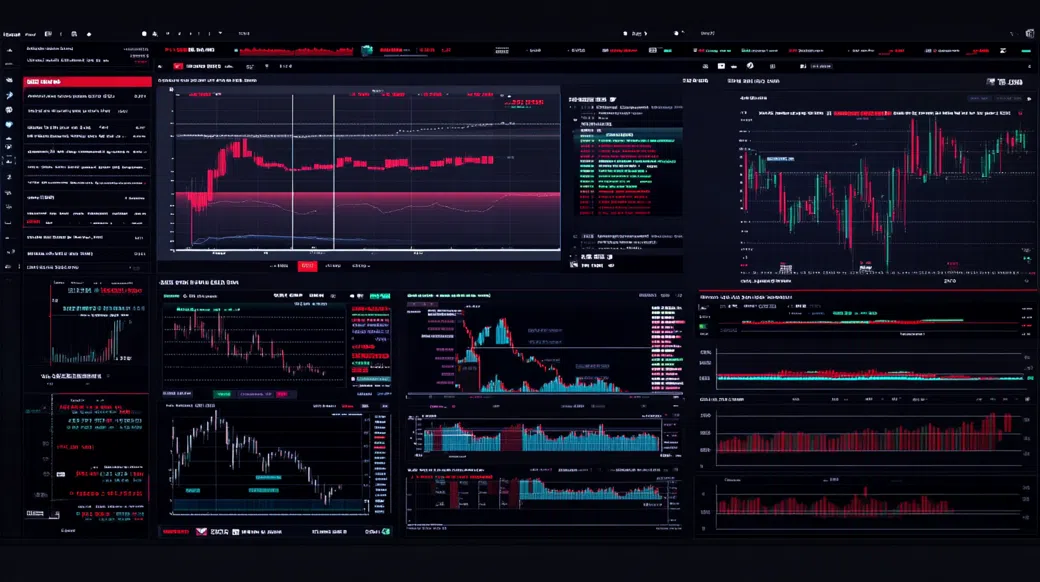
From a microstructure angle, the WebTrader felt engineered for speed over customization: watchlists, one-click dealing, and a clean margin panel that updates without forcing page reloads. Login stability held up across repeated sessions, and order tickets supported market, limit, and stop with basic take-profit/stop-loss attachments. MT4/MT5 weren’t presented as confirmed options in my account area, which is a trade-off if you rely on third-party EAs or the broader indicator marketplace.
The AI GPT Trader app mirrored the web layout closely, which reduced friction when switching devices; biometric unlock was available on my test handset, and push notifications could be toggled for fills and margin alerts. Quotes updated smoothly, and I could place market and pending orders, then adjust stops from the position list. Importantly, deposits and withdrawals were accessible inside the app, so the AI GPT Trader login isn’t just for monitoring—account actions are genuinely mobile-first. The only quirk I noted was tighter chart real estate in landscape mode when multiple indicators were stacked.
Tooling is functional rather than institutional: multi-timeframe charts, common indicators (MA, RSI, MACD, Bollinger) and drawing tools covered most discretionary needs. An economic calendar and a compact news feed were integrated, handy for tracking scheduled risk like CPI or rate decisions. The ceiling shows up if you want advanced strategy testing, order-routing analytics, or cTrader-style depth features—this is not a full workstation replacement.
Onboarding starts with a short form (email, phone, residence), followed by a suitability-style questionnaire that’s typical for leveraged CFD access. For KYC, I uploaded a passport photo page plus a bank statement dated within three months; verification cleared later the same business day. The flow nudged me to set a base currency before funding, and AML prompts appeared again when I moved from demo to live.
The AI GPT Trader minimum deposit is low enough for controlled testing, but I’d still recommend starting with the demo to map margin usage at 1:500 leverage. I funded via USDT to keep banking friction out of the equation, and the credit posted after network confirmation; the account ledger made the conversion rate and timestamp easy to audit. If you want to compare the live ticket layout before committing capital, open the client area at AI GPT Trader and inspect the order screen carefully.
I tested support with a practical question: how swaps are calculated on XAU/USD when holding past the New York close, and whether triple-swap timing applies. Live chat replied in roughly three minutes with a clear explanation and pointed me to the symbol-specifications panel; the agent also confirmed that crypto CFD financing is applied over weekends. I followed up by email asking whether withdrawals are queued if KYC is incomplete, and received a ticket response in about nine hours on a business day.
Coverage is broadly 24/5, which fits the FX and index trading week but leaves weekend crypto queries to slower channels. Language availability looked region-dependent; English was consistent, while local-language options were not prominently advertised in my session. Phone support wasn’t surfaced as a default path in the dashboard, so expectations should be set around chat and email as the primary routes.
If you’re evaluating execution and pricing, the quickest way is to open a demo first, then compare Standard versus Raw/ECN quotes during a liquid session (London/NY overlap). Check your country eligibility during signup, and read the financing schedule before holding CFDs overnight.
Visit AI GPT TraderIt can be, provided you treat leverage conservatively and use the demo first. The interface is not cluttered, and the Standard account keeps pricing easy to understand. Beginners should still be aware that CFDs are high-risk products and losses can exceed expectations quickly without strict stops.
Yes, crypto is offered as CFDs, with BTC/USD and ETH/USD as the core pairs. You’re trading price exposure rather than moving coins on-chain, so there’s no wallet withdrawal of the underlying asset. Weekend financing and wider spreads than FX are normal in this product set.
No, I was able to operate the account end-to-end, including KYC and a test withdrawal request, without the classic scam signals (blocked access, unreachable support, or “pay to unlock” conditions). The bigger concern is structural: it’s an offshore-registered CFD provider, so legal protections are not the same as with a top-tier EU regulator. Treat it as a higher-risk venue and size positions accordingly.
No, the USA is restricted and accounts are not offered there. The signup flow and KYC checks are designed to filter restricted jurisdictions. If you travel frequently, expect additional verification when your location signals change.
Most withdrawals are processed internally within 24–48 hours once KYC is approved. Receipt time then depends on the rail: cards commonly land in 2–5 business days, bank wires can take 3–7 business days, and crypto payouts are often completed the same day. In my test, the request moved to “processed” status the next day.
The AI GPT Trader minimum deposit is $200. That level is enough to test fills and platform behavior, but it’s not a safety net against leverage risk at 1:500. If you’re new, start with smaller position sizes and avoid holding leveraged CFDs through major news.
Yes, there are iOS and Android apps that replicate most of the WebTrader functions. You can manage orders, adjust stops, and handle deposits/withdrawals from within the app. Biometric login and push alerts were available in my test setup.
Overall Score: 4.0/5
For traders who care about liquid-market coverage and a tidy, modern dealing interface, AI GPT Trader does a lot right—especially the Standard vs Raw/ECN split and the mobile parity with the web terminal. My key reservation is jurisdictional: offshore registration can widen the gap between “policy” and “enforceable protection,” so you must bring your own discipline on leverage, margin, and overnight financing. If you keep position sizing tight and treat this as a CFD venue rather than a long-term investment account, AI GPT Trader is credible enough to trial with controlled risk.
Best for: active CFD traders who want simple platform UX and the option of Raw/ECN pricing. Avoid if: you require Tier-1 regulatory safeguards, deep research, or MT4/MT5-based automation.